Key answer
Vietnam healthcare costs 30–50% of Singapore and Thailand, one-fifth of US prices. 1,600 hospitals, JCI accreditation, government investment — why dental tourists are choosing Vietnam.
Vietnam ranked 89th out of 110 countries in the 2024 Global Healthcare Index — a number that initially seems underwhelming. But that ranking tells only part of the story. Vietnam’s healthcare system has been transforming at a pace few observers predicted, and the gap between its current position and regional leaders like Thailand and Singapore increasingly looks less like a permanent ceiling and more like a commercial opportunity waiting to be realized.
The core fact that draws international patients is price. Vietnamese healthcare costs run 30 to 50 percent below Singapore and Thailand, and roughly one-fifth of what Americans pay for equivalent care. A country that already attracted 300,000 foreign medical visitors per year before COVID-19 — and where the government has now committed to a structured 2025–2030 medical tourism expansion plan — is positioning itself to capture a meaningful share of a global health tourism market currently worth tens of billions of dollars annually.
This article examines what Vietnam’s healthcare system actually offers today, where it is heading, and why forward-thinking international patients are increasingly looking beyond Thailand and Singapore.
How Vietnam’s Healthcare Costs Compare to the Region
The price differential between Vietnam and comparable Asian medical tourism destinations is significant enough to change patient decisions on complex, high-cost procedures. Across dental implants, IVF, cardiovascular surgery, oncology, and traditional medicine and rehabilitation, Vietnam consistently prices below Thailand, Singapore, South Korea, and the United States.
These figures are averages and vary by facility, physician, and complexity. However, the magnitude of the differential is consistent: for most high-cost procedures, Vietnam delivers savings of 50 to 80 percent compared to Western countries, and 30 to 50 percent compared to Thailand and Singapore.
For dental work in particular, Vietnam’s implant pricing compares favorably with costs in the United States. For a patient requiring four to six implants, the arithmetic — even after flights and accommodation — becomes compelling. See current dental pricing at picassodental.vn/dental-costs.
Vietnam’s Healthcare Infrastructure
Vietnam’s healthcare system is larger and more diverse than many international patients assume. The country operates approximately 1,600 public hospitals and more than 400 private hospitals, supported by 52,000 registered clinics spanning urban centers and provincial towns. Total healthcare workers number in the hundreds of thousands, including a growing cohort of physicians and dentists who have trained at universities in the United States, France, Japan, and Australia before returning to practice domestically.
The question of international accreditation is where Vietnam has historically lagged. As of 2025, only one public hospital has achieved Joint Commission International (JCI) certification — the global benchmark for hospital quality and patient safety. The government’s 2025–2030 plan targets 15 JCI-accredited hospitals, of which five are designated to be public institutions.
The private sector has moved faster. Vinmec International Hospital, a subsidiary of the Vingroup conglomerate, became the first healthcare system in Vietnam to achieve JCI certification and now operates multiple hospitals and outpatient clinics across the country. Vinmec’s certification marked a turning point: it demonstrated that the clinical and administrative standards required for international accreditation were achievable within Vietnam’s environment.
Beyond accreditation, the physical infrastructure at leading private hospitals has undergone rapid modernization. Robotic surgery systems, digital pathology platforms, hybrid operating theatres, and advanced imaging equipment that would be unremarkable in a Singapore private hospital are now available at select Vietnamese facilities. The trajectory of investment is clearly upward.
The Specialties Attracting International Patients
Vietnam draws international patients across a broader range of specialties than dental tourism alone, though dentistry remains the highest-volume entry point for first-time medical visitors.
Aesthetic dentistry is the headline category. The combination of internationally trained dentists, premium implant systems from Straumann and Nobel Biocare, digital smile design software, and prices well below Western costs positions Vietnam’s leading dental clinics competitively with any destination in Asia. Hanoi and Ho Chi Minh City both have established clusters of internationally oriented dental practices.
IVF and reproductive medicine has seen rapid growth. Vietnam’s IVF clinics, particularly in Ho Chi Minh City, have achieved international success rates while pricing single cycles well below costs in Singapore, Australia, or the United Kingdom. Clinics operate under Ministry of Health oversight, and leading facilities have published outcome data consistent with international benchmarks.
Cardiovascular care attracts patients primarily from neighbouring countries in the Mekong region and from the Vietnamese diaspora. Vietnam’s top cardiovascular centres perform open-heart surgery, valve replacements, and interventional procedures at a fraction of Western costs, though this specialty remains more dependent on facility-specific quality than dental or IVF services.
Oncology is an emerging category. Several leading hospitals have invested in linear accelerators, PET-CT imaging, and multidisciplinary tumour boards, enabling cancer treatment pathways that are increasingly comparable to regional benchmarks.
Traditional medicine and rehabilitation represents a uniquely Vietnamese advantage. The country’s 2,000-year tradition of Vietnamese traditional medicine — distinct from Chinese traditional medicine though related — has been codified into a formal healthcare specialty. International visitors seeking rehabilitation, pain management, or integrative wellness programmes find Vietnam offers authentic, evidence-informed traditional medicine in a clinical rather than spa context.
The Government’s 2025–2030 Medical Tourism Plan
Vietnam’s government has formally acknowledged that the country’s medical tourism sector is underperforming relative to its potential. In a statistic that crystallises the problem: Thailand earns approximately USD 6 billion annually from medical tourism; Singapore earns USD 2 billion. Vietnam’s medical tourism revenue remains at “a few hundred million dollars.” The opportunity cost is substantial.
Equally telling is the domestic outflow. Approximately 40,000 high-income Vietnamese travel abroad for medical treatment each year — primarily to Singapore, Thailand, Japan, and South Korea — spending money that could circulate within the domestic healthcare economy. An estimated 20,000 Vietnamese medical tourists travel to Seoul annually, making Vietnam one of South Korea’s top 10 source countries for inbound medical tourism. The irony of Vietnamese patients travelling to receive care that Vietnam’s own system could plausibly provide is not lost on policymakers.
The 2025–2030 national plan addresses the problem directly. Priority investments include accelerating JCI accreditation across both public and private facilities, developing coordinated medical tourism infrastructure in key cities, training healthcare workers in English and other international languages, and streamlining the administrative processes that currently complicate medical visa applications and cross-border insurance claims.
Dr. Ha Anh Duc, Director of Medical Services Administration at Vietnam’s Ministry of Health, has identified the country’s core competitive strengths as its “favorable geography, political stability, safety, natural attractions, and skilled healthcare workforce.” These are genuine structural advantages — Vietnam’s crime rate is low by regional standards, its political environment is stable, and its location between Northeast and Southeast Asia makes it logistically accessible to a wide catchment of potential patients.
The plan is ambitious. Whether Vietnam achieves all 15 JCI certifications by 2030 is less important than the directional signal the commitment sends: the Vietnamese government is treating medical tourism as a strategic economic priority, not a peripheral concern.
World-Class Dental Care at Picasso Dental Clinic
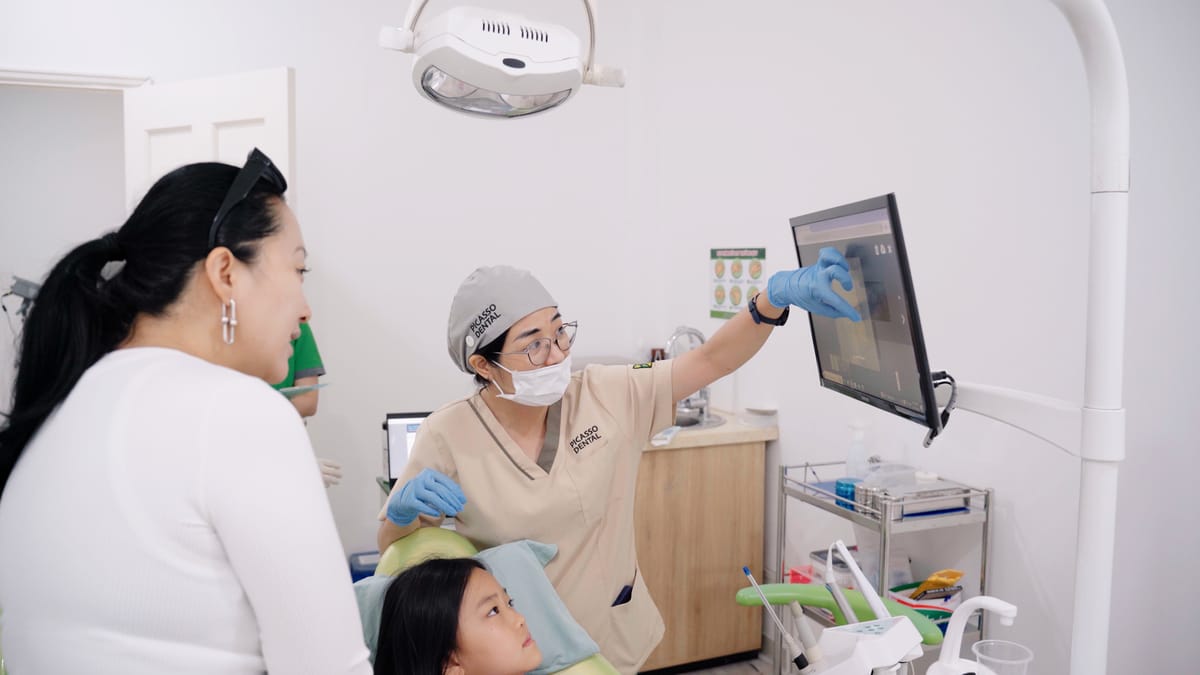
Within Vietnam’s expanding dental tourism sector, Picasso Dental Clinic has built a reputation among international patients for clinical quality, transparent pricing, and English-language service across multiple locations in Hanoi.
The clinic operates under ADA and WHO infection control standards, with Class B autoclaves validated to EN 13060 European norms — the same sterilisation standard required of dental practices in Germany, France, and the United Kingdom. Every instrument cycle is tracked and logged. Patients can review the clinic’s full infection control procedures before committing to treatment.
Implant systems used at Picasso Dental Clinic include Straumann (Switzerland) and Nobel Biocare (Switzerland) — the same brands that anchor implant programmes at leading clinics in Singapore and Australia. Dr. Emily Nguyen, DDS, leads the clinical team, bringing formal dental training and a commitment to outcomes that meet international standards without the international price tag.
For international patients, savings of 50 to 70 percent compared to home-country pricing are typical. Full details of available treatments are listed on the services page, and current dental pricing is available at picassodental.vn/dental-costs. To discuss your specific requirements or request a cost estimate before travelling, contact the clinic directly.
Why Now Is the Right Time to Visit Vietnam for Healthcare
The timing of Vietnam’s medical tourism development creates a practical advantage for patients considering treatment in the near term.
Vietnam is investing in accreditation, infrastructure, and international positioning precisely because it recognises it needs to compete with Thailand and Singapore. That investment is already visible in the facilities and clinical workflows at leading private clinics and hospitals. Patients who visit now benefit from infrastructure that is modern and improving, priced at levels that reflect Vietnam’s current position rather than the premium that will likely accompany greater international recognition in coming years.
Pre-COVID, Vietnam attracted 300,000 foreign medical visitors per year, with Ho Chi Minh City accounting for 40 percent of volume. That baseline demonstrates established patient pathways, experienced international coordinators, and a tourism infrastructure capable of supporting medical visitors. Hanoi, Da Nang, and Ho Chi Minh City all offer international airports with direct connections to Australia, Singapore, Japan, South Korea, and Gulf states, alongside English-language hotel infrastructure and a cost of living that keeps total trip costs well below comparable itineraries in Bangkok or Singapore.
For dental patients specifically, Vietnam’s combination of premium implant systems, internationally trained dentists, rigorous infection control, and prices that remain 50 to 80 percent below Western benchmarks makes it one of the strongest value propositions in global health tourism today.
Ready to explore dental treatment in Vietnam? Review our full range of dental services, read about our infection control standards, or contact Picasso Dental Clinic to request a personalised cost estimate and availability check before booking your trip.
Related Reading
- Vietnam’s Dental Tourism Market Set to Reach USD 5.5 Billion by 2030 — Market projections and growth drivers for Vietnam’s dental tourism sector
- Vietnam Dental Tourism Facts and Figures 2014 — How Vietnam’s dental tourism industry grew from its 2014 origins to today
- Vietnam Enters the Billion-Dollar Medical Tourism Race — Vietnam’s medical tourism revenue hits USD 700 million at 18% annual growth
- Vietnam: A Rising Star on the Global Dental Tourism Map — Vietnam’s position on the global dental tourism map
- 6 Reasons Dental Tourism to Vietnam Has Grown 40% Since 2022 — The structural factors driving Vietnam’s dental tourism surge
- 5 Reasons Expats Living in Vietnam Choose Serenity International Dental Clinic — Why expats trust Vietnamese dental care
- 10 Reasons Dental Implants in Hanoi Cost 70% Less Than in Australia
- Dental Work in Vietnam for Australians: Complete Cost Savings Guide
- What to Pack for Dental Tourism in Vietnam: The Complete List
- Travel Insurance for Dental Work Abroad: What You Need to Know
- When Should You Get Dental Treatment Done in Vietnam
- Dental Work in Vietnam From A to Z
- Complete Dental Tourism Guide to Vietnam 2026 — Everything international patients need to plan a dental trip to Vietnam
- About Picasso Dental Clinic — Meet our clinical team and learn about our commitment to international patients

Reviewed for accuracy by Dr. Emily Nguyen, DDS — Implant & Cosmetic Dentistry
Founder and Principal Dentist of Picasso Dental, with 15+ years in implant surgery, periodontics and full-arch (All-on-4) rehabilitation. Read full bio
Last reviewed: September 27, 2026