Key answer
Sedation dentistry options in Vietnam 2026. Compare nitrous oxide, oral sedation, and IV sedation at Picasso Dental Clinic for patients with dental anxiety or complex procedures.
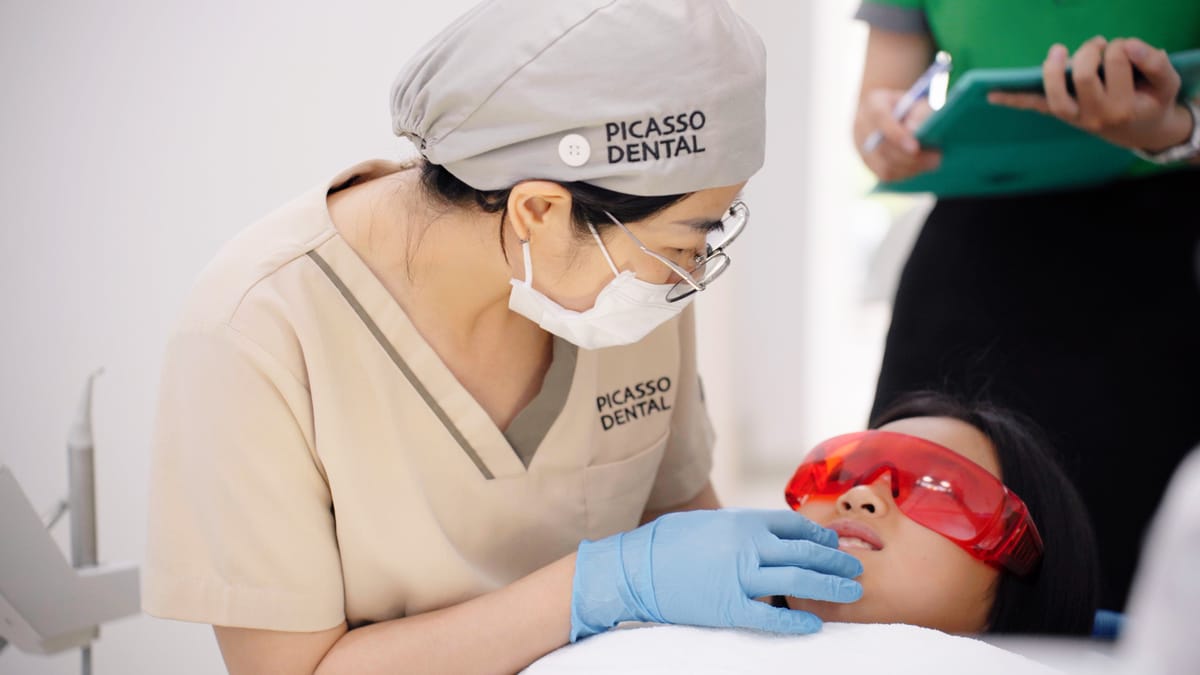
Dental anxiety is not a character flaw. It affects an estimated 36% of the global population, and for roughly 12% of people it rises to the level of dental phobia — a fear intense enough to cause avoidance of necessary treatment for years or decades. For these patients, the question is not just “which crown or implant is best” but “how can I get through this appointment at all?”
The answer, increasingly, is sedation dentistry.
At Picasso Dental Clinic in Hanoi and Ho Chi Minh City, we offer multiple levels of sedation to accommodate patients ranging from mildly nervous to deeply phobic, as well as patients undergoing lengthy or complex procedures who simply want a more comfortable experience. This guide explains every option so you can choose the right approach for your situation.
Why Dental Anxiety Matters — and What Sedation Does About It
Untreated dental anxiety creates a damaging cycle: fear leads to avoidance, avoidance leads to deterioration, deterioration leads to more invasive (and anxiety-provoking) treatment requirements. Patients who might have needed a simple filling at age 30 end up needing implants or dentures at 50 because avoidance was never addressed.
Sedation dentistry breaks this cycle. By making appointments comfortable — or even unconscious — sedation allows patients to receive the care they need without the psychological barrier. It also allows dentists to work more efficiently, which means longer appointments become feasible, reducing the total number of visits required.
Sedation is not only for anxious patients. It is also used for:
- Patients with a strong gag reflex
- Patients undergoing lengthy procedures (full-arch implants, multiple extractions, full-mouth reconstruction)
- Patients with special needs or difficulty sitting still
- Patients who want to maximise comfort during complex oral surgery
Types of Sedation Available at Picasso Dental Clinic
1. Nitrous Oxide (Laughing Gas)
How it works: Nitrous oxide is inhaled through a small mask placed over the nose. It takes effect within 2–3 minutes and produces a state of calm, mild euphoria, and reduced perception of time. The effects wear off within 5 minutes of removing the mask.
Level of sedation: Minimal. You remain fully conscious and responsive throughout.
Best for:
- Mild to moderate anxiety
- Shorter appointments
- Patients who need to drive themselves home after the appointment (nitrous oxide clears the system quickly)
- Children or first-time sedation patients
What it feels like: Most patients describe warmth, tingling in the extremities, a sense of calm, and occasional light-headedness. The sense of time passing is distorted — a 45-minute appointment can feel like 15 minutes.
Limitations: Nitrous oxide does not produce deep sedation or unconsciousness. Patients with very high anxiety may find it insufficient. It is also not appropriate for patients who are pregnant or have certain respiratory conditions.
Cost at Picasso: Generally included or at minimal cost for routine use. Ask your patient coordinator during booking, or see our dental costs guide.
2. Oral Conscious Sedation
How it works: A sedative medication (typically a benzodiazepine such as triazolam or diazepam) is taken in tablet or liquid form approximately 30–60 minutes before your appointment. By the time you sit in the dental chair, you are deeply relaxed and drowsy.
Level of sedation: Moderate. You remain conscious and able to respond to instructions, but you may have little memory of the appointment afterward (anterograde amnesia is common).
Best for:
- Moderate to high anxiety
- Patients who are phobic about injections (the oral route avoids needles)
- Patients undergoing moderately complex procedures
What to know:
- You must arrange a responsible adult to bring you to the clinic and take you home — you cannot drive
- You should not eat for several hours before taking the medication
- The effects can last 4–6 hours after the appointment
Cost at Picasso: Medication cost is relatively low (typically included in the appointment fee). Confirm specifics with your coordinator, or see our dental costs guide.
3. IV Sedation (Intravenous Conscious Sedation)
How it works: Sedative medications are delivered directly into the bloodstream via an intravenous line. This produces a much deeper and more controllable level of sedation than oral or inhaled routes. IV sedation at Picasso is administered and monitored by a trained sedationist.
Level of sedation: Moderate to deep. Most patients have no memory of the procedure at all, though they remain technically conscious and breathing independently. IV sedation is sometimes called “twilight sedation.”
Best for:
- Severe dental phobia
- Complex, lengthy procedures (All-on-4 surgery, multiple implants, full-arch extractions)
- Patients with a severe gag reflex
- Patients who prefer to have no awareness of the procedure
What to know:
- You must fast (no food or water) for 6 hours before the appointment
- A responsible adult must accompany you and take you home
- You should not make any important decisions or operate machinery for 24 hours afterward
- Vital signs are monitored continuously throughout the procedure
Cost at Picasso: Priced per session and dependent on duration; see our dental costs guide for current pricing. For lengthy procedures (All-on-4 surgery, full-arch extractions), the sedation session may last 2–4 hours.
4. General Anaesthesia
How it works: General anaesthesia renders the patient fully unconscious. It requires an anaesthesiologist and a hospital or fully equipped surgical facility.
Level of sedation: Complete unconsciousness — you are fully unaware and do not breathe independently (intubation is required).
When it is used:
- Patients with severe intellectual disabilities or special needs who cannot cooperate in any other way
- Extremely complex oral surgery requiring absolute stillness
- Paediatric cases with extreme phobia or special needs
General anaesthesia is not typically used for routine dental treatment at Picasso. Most patients — including those with severe phobia — find that IV sedation provides a fully comfortable experience without the risks and complexity of full general anaesthesia.
Who Is a Good Candidate for Dental Sedation?
Sedation is appropriate for most adults. However, your dentist or sedationist will assess your suitability based on:
- Medical history: Certain conditions (severe sleep apnoea, respiratory disease, severe liver disease) may require modified protocols or specialist involvement
- Current medications: Some medications interact with sedatives. Always provide a complete medication list
- BMI and airway anatomy: High BMI or certain airway characteristics may increase monitoring requirements during IV sedation
- Pregnancy: Most sedative agents are avoided during pregnancy; nitrous oxide is contraindicated in the first trimester
- Allergies: Any known allergy to anaesthetic agents must be disclosed
If you have concerns about your suitability for sedation, our team can review your medical history in advance and provide a recommendation before you travel to Vietnam.
What Procedures Commonly Use Sedation in Vietnam?
Dental Implant Surgery
Single-tooth implant placement is performed under local anaesthesia for most patients and is generally well-tolerated. However, many patients choose to add oral or IV sedation for comfort, particularly if they are anxious about injections or the sound of drilling.
All-on-4 Surgery
All-on-4 is a full-arch surgical procedure that can take 2–4 hours per arch. IV sedation is widely used for All-on-4 because it allows the procedure to be completed comfortably in a single session. Patients receiving both upper and lower arches often prefer to be fully sedated for the duration.
Wisdom Tooth Removal
Impacted wisdom tooth extractions can be among the most uncomfortable dental procedures to undergo consciously. Oral or IV sedation makes extraction of multiple impacted wisdom teeth a far more manageable experience.
Bone Grafting
Bone grafting involves harvesting or placing bone material and can be a lengthy procedure. Sedation is commonly used, particularly for sinus lifts and large-volume grafting cases.
Multiple Extractions
Patients who need several teeth removed in preparation for implants or full dentures often choose IV sedation so that all extractions can be completed in a single, comfortable session.
Full-Mouth Reconstruction
Patients undergoing comprehensive treatment — combining implants, crowns, extractions, and grafting — can have many procedures “stacked” into sedation appointments, dramatically reducing the number of visits required.
Sedation Dentistry at Picasso: What Sets Us Apart
Experienced sedation team. Our IV sedation is administered by trained dental sedationists with experience managing complex cases. Monitoring includes pulse oximetry, blood pressure, and capnography throughout the procedure.
Modern monitoring equipment. We use the same patient monitoring standards as surgical facilities — not bare-minimum dental chair monitoring.
Pre-sedation assessment. Every IV sedation patient completes a medical history review and, if necessary, a pre-appointment phone or video consultation with our team to confirm suitability.
Post-sedation recovery. After IV sedation, patients recover in our clinic’s recovery area until vital signs are stable and they are alert enough for discharge. We do not rush discharge.
Coordination with your treatment plan. Because sedation allows longer appointments, our team will stack procedures where clinically appropriate — completing extractions, grafting, and implant placement in a single sedation session to minimise your total number of visits.
Cost of Sedation Dentistry in Vietnam vs Abroad
Sedation costs in Vietnam are consistently lower than in Australia or the USA across every level, from nitrous oxide through general anaesthesia. IV sedation in particular — the option most patients choose for All-on-4 and other lengthy procedures — costs a fraction of what the same service adds to a procedure in Australia or the US. For patients having All-on-4 (a lengthy procedure that almost always uses sedation), the sedation saving alone can be substantial compared to Western pricing.
For full, current pricing on sedation and dental procedures in Vietnam, see our full price comparison at picassodental.vn/dental-costs.
FAQ: Sedation Dentistry in Vietnam
Q1: Will I be completely unconscious with IV sedation? Not quite. IV sedation at Picasso is “conscious sedation” — you remain technically awake and continue to breathe independently, but you will have little or no memory of the procedure. It feels like a dreamless sleep. Full unconsciousness (general anaesthesia) is a different, more complex intervention used only in specific circumstances.
Q2: Is sedation dentistry safe? Yes, when administered and monitored by trained professionals. IV sedation carries very small risks (as does any medical procedure), which is why patient selection, pre-treatment assessment, and continuous monitoring are essential. The vast majority of patients complete IV sedation uneventfully.
Q3: Can I have sedation for a routine check-up or cleaning? In theory, yes, if your anxiety is severe. In practice, nitrous oxide is usually sufficient for non-invasive appointments. If a simple cleaning requires IV sedation, our team will discuss whether anxiety management strategies (including referral to a psychologist for phobia treatment) might help in the longer term.
Q4: Can I eat before my sedation appointment? For IV sedation: No. You must fast for at least 6 hours before the appointment (no food or water). For nitrous oxide: Light meals are fine; a heavy meal immediately before is not recommended. For oral sedation: No food for several hours, as directed. Your pre-appointment instructions will specify exactly what is required.
Q5: How long does it take to recover from IV sedation? Most patients are discharged 30–60 minutes after the procedure, once they are stable and alert. Drowsiness, grogginess, and impaired coordination persist for 4–8 hours. You should rest for the remainder of the day, avoid alcohol, and have a responsible adult with you.
Q6: Will I remember anything with IV sedation? Most patients remember very little — typically only sitting in the chair and then waking up in the recovery area. Some patients have brief flashes of memory. This amnesia effect is considered a feature, not a bug, particularly for anxious patients.
Q7: Can I have sedation if I am taking other medications? Possibly, but disclosure is essential. Some medications interact with sedative agents. When you complete your medical history form for Picasso, list every medication you take — including supplements and over-the-counter drugs. Our team will advise on any necessary adjustments.
Q8: How do I book a sedation appointment at Picasso? Book online and note in your booking that sedation is required, or ask our patient coordinator on WhatsApp. You will receive a medical history form to complete in advance. For IV sedation, a brief pre-appointment assessment will be arranged either in person or via video call.
Related Reading
- Dental Implants at Picasso
- All-on-4 Dental Implants
- Single Tooth Dental Implant
- Bone Grafting at Picasso
- 5 Types of Dental Implants Available in Vietnam
- Dental Costs in Vietnam
- Dental Implant Cost in Vietnam
Picasso Dental Clinic — Hanoi: 16 Chau Long, Ba Dinh | HCMC: 25B Nguyen Duy Hieu, Quan 2 | Book online
Related Articles
- Dental Work in Vietnam for Retirees: What You Need to Know 2026
- 7 Best Countries for Dental Tourism for Retirees 2026
- What Happens If Dental Work Goes Wrong Abroad: Your Rights and Options
- Cosmetic and Implant Dentistry for a Complete Smile Makeover
- Planning Your Wedding Day Smile: A Smile Makeover Guide
- 8 Smile Makeover Combinations at Serenity International Dental Clinic
- Top 10 Dental Clinics in Hanoi for Pediatric Dentistry 2026
- Top 10 English-Speaking Dental Clinics in Vietnam 2026
- 8 Red Flags When Choosing a Dental Clinic Abroad
- Dental Tourism vs Dental Insurance: Which Saves More?
- 7 Signs You Need a Root Canal
- 10 Daily Habits That Prevent 80% of Dental Problems
- 7 Reasons Porcelain Crowns Last 15–20 Years
- Zirconia vs Porcelain Crowns in Vietnam 2026
- Dental Tourism ROI Calculator: How Much Will You Really Save?
- Da Nang Hotels Near Serenity International Dental Clinic
- Complete Dental Implant Procedure Guide Vietnam — What to expect at every stage of the implant process, including the surgical appointment
- 9 Post-Implant Care Tips From Serenity International Dental Clinic Specialists — Recovery guidance for implant patients, especially those who used sedation
- Are You a Good Candidate for All-on-4 Dental Implants? — Sedation is frequently used for All-on-4 surgery; understanding candidacy helps you plan
- 7 Things to Know About Sedation Dentistry in Vietnam — A patient-focused guide to sedation options, costs, and what to expect

Reviewed for accuracy by Dr. Emily Nguyen, DDS — Implant & Cosmetic Dentistry
Founder and Principal Dentist of Picasso Dental, with 15+ years in implant surgery, periodontics and full-arch (All-on-4) rehabilitation. Read full bio
Last reviewed: October 25, 2026