Key answer
Compare Invisalign costs in Vietnam vs Australia in 2026. Lite, moderate, and full Invisalign treatment compared, with iTero scanning and retainers included.
Invisalign has become the orthodontic treatment of choice for adults across Australia — but the price hasn’t made it easy to say yes. A full Invisalign treatment in Sydney or Melbourne carries a substantial price tag, and even the shorter Lite plan is a significant investment. For Australians spending time in Vietnam, the comparison is striking: Picasso Dental Clinic, a certified Invisalign provider, offers the same Align Technology trays, the same iTero Element digital scanning, and the same refinement process across its product tiers at a fraction of the Australian cost. Exact current pricing for each tier is available at picassodental.vn/dental-costs.
This guide breaks down Invisalign costs in Vietnam versus Australia in 2026 across every product tier, explains what’s included in a complete Invisalign course, and covers the practical realities of starting treatment in Vietnam and completing it at home in Australia.
What Is Invisalign — and Which Tier Is Right for You?
Invisalign is a clear aligner system manufactured by Align Technology (USA). Rather than metal brackets and wires, treatment uses a series of custom-fabricated, virtually invisible plastic trays that progressively move teeth into their prescribed positions. Each tray is worn for 1–2 weeks before progressing to the next in the series.
Align Technology offers several product tiers, each suited to a different level of case complexity:
Invisalign Lite:
- Up to 14 aligner stages per arch
- Suited for mild crowding, spacing, and minor relapse cases
- Treatment duration: 6–9 months
- Not suitable for significant bite correction or moderate-to-severe crowding
Invisalign Moderate (i7 / Go):
- 7–14 aligner stages
- Designed for minor corrections — front teeth alignment, small gaps
- Often used by general dentists for straightforward cases
- Treatment duration: 3–6 months
Invisalign Full:
- Unlimited aligner stages (refinements included)
- Suitable for mild to moderate crowding, spacing, overbite, underbite, and crossbite
- Treatment duration: 12–18 months
- The most popular tier for adult comprehensive treatment
Invisalign Comprehensive:
- Unlimited aligners + unlimited refinements
- Suited for complex cases including significant bite discrepancies, extractions planned, or severe crowding
- Treatment duration: 18–30+ months
- Full access to all Invisalign auxiliaries (attachments, elastics, precision cuts)
At Picasso Dental, all Invisalign treatment is delivered by certified providers who have completed Align Technology’s clinical training program. The clinic uses the iTero Element intraoral scanner — the official Align Technology scanning system — for impressions, progress tracking, and outcome simulation (ClinCheck). See the full Invisalign service page for further detail.
Invisalign Cost: Vietnam vs Australia 2026
Vietnam pricing includes iTero scan, ClinCheck planning, all aligner trays, attachments, and one set of post-treatment retainers. Australian prices reflect typical private orthodontic practice fees before health fund rebates. Across every product tier — Moderate/Go, Lite, Full, and Comprehensive — Picasso Dental’s Vietnam pricing runs at a significant discount to equivalent Australian private practice fees, and the gap holds for add-on items too, including the iTero scan itself (included free in Vietnam packages), Vivera retainers, additional refinement stages, and whitening add-ons.
For exact, current figures across every tier and add-on, see picassodental.vn/dental-costs.
Health fund note: Some Australian Extras policies with orthodontic cover contribute toward Invisalign costs, subject to waiting periods (typically 12 months) and lifetime limits. Even with maximum rebates, total out-of-pocket costs in Australia generally exceed Vietnam’s full package price.
What’s Included in Invisalign at Picasso Dental?
Picasso Dental Clinic is a certified Invisalign provider, which means Align Technology has verified the clinic’s clinical training and protocols. The treatment process is identical to that offered at Australian practices — the aligners are manufactured in the same Align Technology facilities in the USA and shipped to the clinic.
Consultation and planning:
- iTero Element intraoral digital scan (no physical impressions needed)
- Full clinical and radiographic assessment
- ClinCheck 3D treatment simulation — you see the projected movement before committing
- Case submission to Align Technology
During treatment:
- All aligner sets included (Lite, Full, or Comprehensive as contracted)
- Attachments (small composite bumps bonded to specific teeth to assist complex movements)
- IPR (interproximal reduction — minor smoothing between teeth to create space where needed)
- Progress reviews via Facebook Messenger with clinical photos between in-person visits
After treatment:
- One set of Vivera post-treatment retainers (upper and lower)
- Retention protocol instructions
- ClinCheck final record for your reference
International patient coordination:
- Picasso Dental works with Australian orthodontists and dentists to coordinate mid-treatment reviews for patients who have returned home
- Aligner trays can be shipped internationally if further sets are needed
- Facebook Messenger support throughout the full treatment period
How Does Remote Invisalign Treatment Work for International Patients?
This is the central practical question for any Australian considering starting Invisalign in Vietnam. The good news is that Invisalign, by design, is highly compatible with remote monitoring — and Picasso Dental has an established process for international patients.
Phase 1 — Vietnam visit (5–7 days):
- iTero scan performed
- ClinCheck reviewed and approved
- Aligner trays for the first 3–6 months of treatment shipped to the clinic
- First set of aligners fitted, attachments placed, IPR performed if needed
- Patient departs Vietnam with multiple months of aligner trays to use at home
Phase 2 — At-home progression (Australia):
- Patient progresses through aligner sets every 1–2 weeks as instructed
- Submits progress photos fortnightly via Facebook Messenger for clinician review
- Any concerns (discomfort, attachment loss, aligner fit issues) addressed remotely
Phase 3 — Mid-treatment check (if needed):
- For longer cases (Full or Comprehensive), a mid-treatment review visit to Vietnam or to an Australian orthodontist partner is recommended around month 9–12
- Refinement trays, where needed, are dispatched following clinical review
Phase 4 — Completion and retainers:
- Final review confirms treatment outcome
- Retainers fabricated from final scan and delivered
This process is practical for most Lite and Full cases. Complex Comprehensive cases may benefit from an additional in-person visit, which some patients incorporate into a return trip to Vietnam.
iTero Scanning: What to Expect
The iTero Element is a handheld intraoral scanner that captures a precise 3D digital model of your teeth in approximately 5 minutes — no impression putty, no gagging. The scan is uploaded directly to Align Technology’s ClinCheck software, where the treating dentist plans each tooth movement across the full aligner series.
You will be shown your ClinCheck simulation — an animation of how your teeth move through the full treatment course — before treatment begins. This is not a marketing tool; it is the actual clinical prescription sent to the manufacturer. You can approve or request modifications to the projected outcome before any trays are ordered.
iTero scans are also used at mid-treatment checkpoints to compare actual tooth position against the predicted ClinCheck position, enabling course corrections via refinements if needed.
Invisalign vs Braces: Which Is Better for Adults?
For most adult patients who are candidates for clear aligners, Invisalign offers significant lifestyle advantages over traditional metal braces:
- Aesthetics: Clear aligners are virtually invisible. Braces are not.
- Removability: Aligners can be removed for eating and oral hygiene. Braces cannot.
- Comfort: No metal wires or brackets causing ulcers. Aligners have smooth edges.
- Oral hygiene: Brushing and flossing normally is possible with Invisalign. Braces complicate cleaning significantly.
Limitations of Invisalign (where braces may outperform):
- Requires 20–22 hours/day wear. Patients who frequently remove aligners compromise treatment outcome.
- Complex movements (large vertical corrections, severely rotated teeth, significant skeletal discrepancies) may be better addressed with braces or combined orthodontic-surgical approaches.
- Some attachment-heavy cases are clinically equivalent to braces in terms of visibility.
For adults with mild to moderate crowding and spacing issues — the most common presentation — Invisalign Full delivers excellent clinical outcomes comparable to fixed braces.
Travel Logistics for Australian Invisalign Patients
Flight time: Sydney to Hanoi approximately 10–11 hours direct. Melbourne to Ho Chi Minh City approximately 9–10 hours.
Visa: Australian passport holders receive a 90-day visa exemption.
Trip duration: An Invisalign start visit requires 3–5 days — initial scan, ClinCheck review, and aligner fitting. This is comfortably combined with a short holiday.
Aligner travel: Carrying several months of aligner trays in their original labelled pouches in carry-on luggage raises no customs or biosecurity issues.
Choosing a location: Hanoi (Ba Dinh clinic), Ho Chi Minh City (Quan 2 clinic), and Da Nang are all available. The choice typically depends on which Vietnamese city aligns with your broader travel plans.
Book online with Picasso Dental, or send a WhatsApp message with photos and any existing orthodontic records, to begin the assessment process before your trip.
Frequently Asked Questions
Am I a candidate for Invisalign?
Most adults with mild to moderate alignment issues are candidates. Invisalign works well for crowding, spacing, overbite, underbite, crossbite, and open bite in the mild to moderate range. Severe skeletal discrepancies, significant vertical bite issues, or cases requiring tooth extraction and significant arch development may be better suited to braces or combined orthodontic treatment. The only way to confirm candidacy is a clinical assessment with iTero scanning and ClinCheck planning — Picasso Dental offers virtual consultations for Australian patients before booking a trip, requiring only a set of photographs.
How many hours per day do I need to wear my aligners?
Invisalign recommends 20–22 hours of daily wear for optimal treatment progression. This means aligners are worn at all times except when eating, drinking anything other than water, and brushing teeth. Patients who wear aligners for fewer than 18 hours per day significantly slow their treatment and may require additional aligner stages. Compliance is the single most important factor in Invisalign outcome quality. Unlike braces, which work passively regardless of patient behaviour, Invisalign outcomes depend directly on how consistently you wear the trays.
What happens if I lose an aligner tray?
If an aligner tray is lost or damaged, you have two options: wear the previous tray until a replacement is shipped, or progress to the next tray (if your teeth are close to completing that stage). Replacement trays can be ordered from Align Technology and shipped to your Australian address. The cost per replacement tray varies; under a Full or Comprehensive plan, the first replacement is typically included. Picasso Dental can process replacement requests remotely and coordinate shipping. Carrying your aligners in their case at all times — not wrapping them in napkins — is the most effective prevention.
Will Invisalign affect my speech?
Most patients experience a very mild lisp for the first 2–5 days of wearing aligners as the tongue adjusts to the new surface. This resolves quickly for the vast majority of patients and is rarely noticeable to others after the initial adaptation period. Reading aloud, speaking on the phone, or practising speech during the first few days accelerates adaptation. The lisp returns briefly each time you progress to a new, tighter aligner tray and again resolves quickly. Patients with speech-critical professions (teachers, presenters, voice actors) should factor in this brief adaptation period.
Can I get teeth whitening done at the same time as Invisalign?
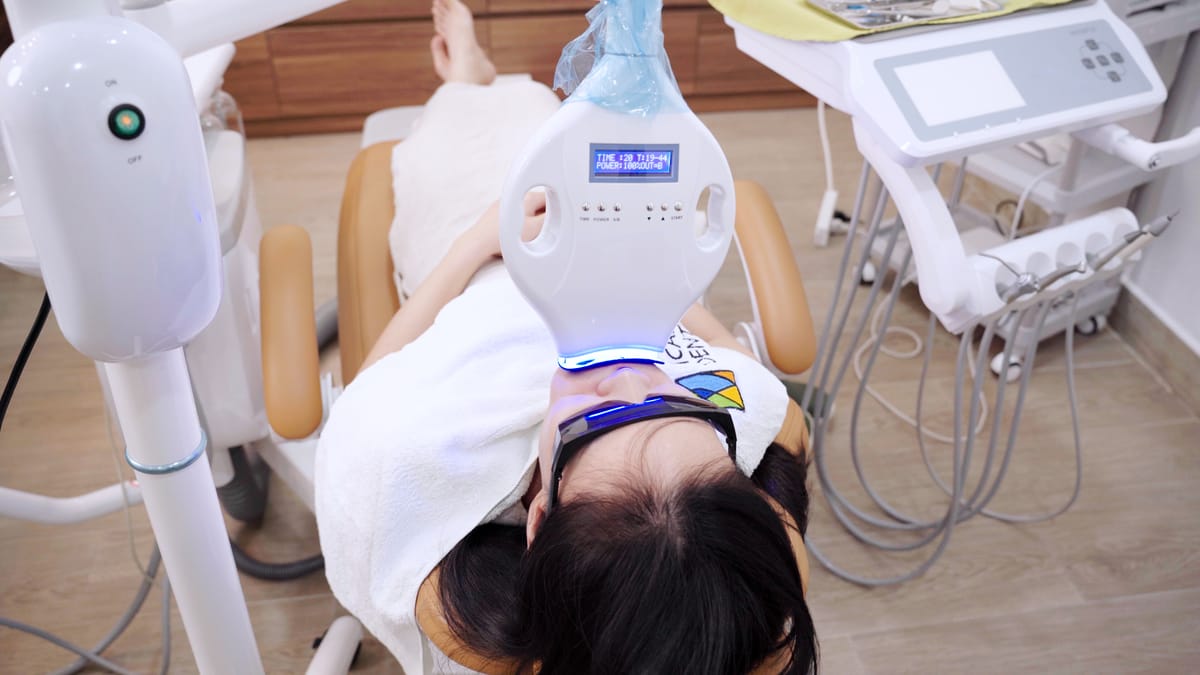
Yes — and this is actually an ideal pairing. Many patients whiten their teeth partway through or at the completion of Invisalign treatment. The custom-fitted aligner trays can double as whitening trays: a take-home whitening gel is applied inside the aligner. Whitening is most effectively done after completing treatment so the final shade is achieved on fully aligned teeth before retainers are made. Picasso Dental offers in-chair and take-home whitening as add-ons to Invisalign packages at a fraction of Australian whitening prices — see picassodental.vn/dental-costs for current pricing.
What are refinements and are they included?
Refinements are additional sets of aligners ordered partway through or at the end of an Invisalign course to address residual tooth movements or adjust the treatment plan. Under Invisalign Lite, refinements may not be included; under Full and Comprehensive plans, they are typically included without additional charge. At the completion of the planned aligner series, your clinician reviews the result against the original ClinCheck and orders refinement trays to finalise any teeth that haven’t fully reached their target position. Refinements are a normal and expected part of most Invisalign treatments — they are not an indication of treatment failure.
How long do I need to wear retainers after Invisalign?
Retainers are permanent. After completing Invisalign, teeth will relapse toward their original position if retainers are not worn. The standard protocol is: full-time wear (20–22 hours/day) for the first 3–6 months, then nightly wear indefinitely thereafter. Vivera retainers, made by Align Technology, are 30% stronger than standard retainers and are the recommended option for Invisalign completers — they are fabricated from the final scan to precisely match the completed tooth positions. Patients who stop wearing retainers typically see noticeable relapse within 12–24 months, particularly in the lower front teeth.
Can I start Invisalign in Vietnam and finish it with an Australian orthodontist?
Yes. Picasso Dental provides all clinical records — the ClinCheck treatment plan, iTero scans, and aligner specifications — in formats compatible with Australian orthodontic practices. Should you prefer to have a local orthodontist take over monitoring partway through treatment, this is straightforward to arrange. Alternatively, many patients complete the entire treatment course remotely with Picasso Dental via Facebook Messenger monitoring, visiting an Australian dentist only for routine check-ups rather than formal Invisalign monitoring appointments. Discuss your preference during the initial consultation so the right arrangement can be structured from the outset.
Related Reading
Dental Work in Vietnam for Australians: Complete Cost Guide 2026 — The full AUD cost breakdown by procedure, total-trip calculator, and patient case studies
Related Articles
- Root Canal Cost: Vietnam vs Australia 2026
- Root Canal Cost: Vietnam vs USA 2026
- Smile Makeover Cost: Vietnam vs Australia 2026
- 10 Dental Procedures and Their Cost in Vietnam vs Australia 2026
- Dental Implant Cost: Vietnam vs Australia 2026
- Dental Veneer Cost: Vietnam vs Australia 2026
- Dental Bridge Cost: Vietnam vs Australia 2026
- Teeth Whitening Cost: Vietnam vs Australia 2026
- Can You Start Invisalign in Vietnam and Continue Treatment at Home?
- 5 Best Countries for Smile Makeovers in 2026

Medically reviewed by Dr. Phùng Văn Thuận, DDS — Orthodontics
Orthodontist with 10+ years and 1,500+ completed cases across fixed appliances, lingual orthodontics and Invisalign clear aligners.
Last reviewed: October 25, 2026