Key answer
Digital Smile Design (DSD) in Vietnam 2026. How the technology works, what procedures it applies to, and how Picasso Dental Clinic uses DSD for smile makeover planning.
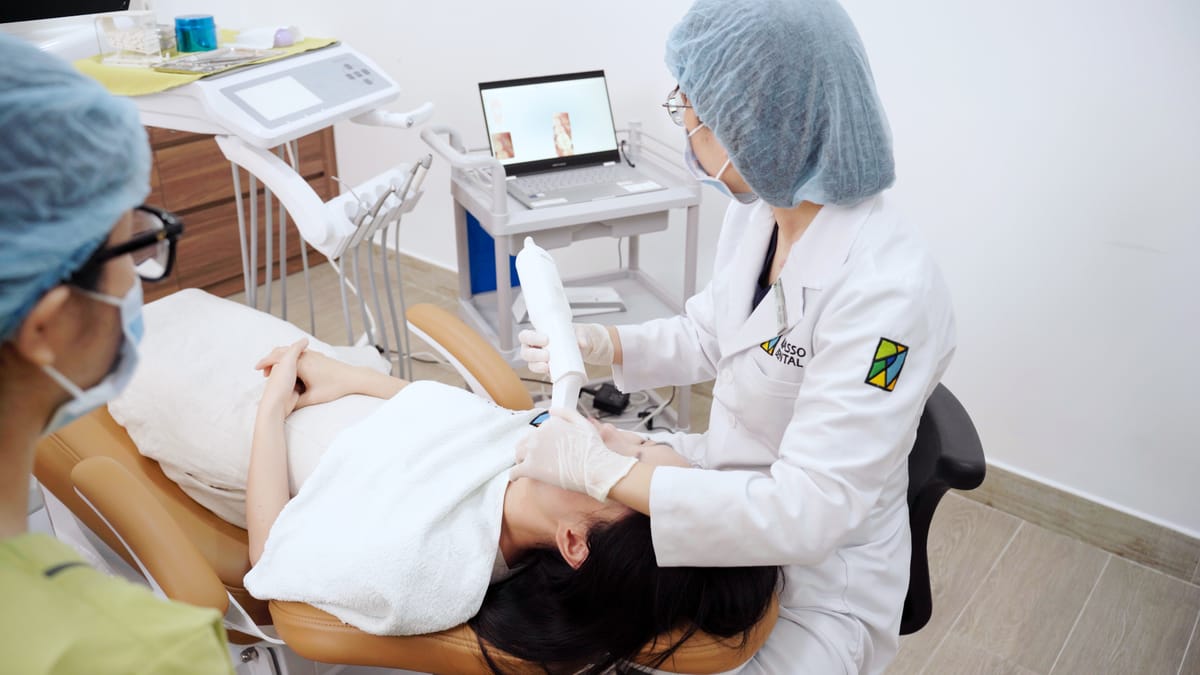
Ten years ago, if you wanted to know what your new smile would look like before treatment, your dentist could show you a physical wax model of your teeth or, at best, a rough digital composite photo. Today, Digital Smile Design (DSD) allows your dentist to build a precise, three-dimensional preview of your new smile that accounts for your facial proportions, lip movement, gum levels, and tooth geometry — before a single tooth is touched.
At Picasso Dental Clinic in Hanoi and Ho Chi Minh City, Digital Smile Design is included free with all smile makeover treatments. It is not an upsell. It is how we plan every cosmetic case — because patients who see their new smile before they commit to treatment make better decisions, have clearer expectations, and achieve better outcomes.
This guide explains exactly how DSD works, what procedures benefit from it, and what you can expect from your DSD consultation at Picasso.
What Is Digital Smile Design?
Digital Smile Design is a planning and communication tool that uses high-resolution photographs, facial analysis software, and digital design protocols to create a customised plan for your new smile. The concept was developed by Brazilian cosmetic dentist Dr. Christian Coachman and has been adopted by leading clinics worldwide.
DSD is not a single piece of software — it is a methodology that combines:
- Standardised clinical photography (facial, smile, retracted, close-up views)
- Digital facial analysis (measuring proportions, symmetry, midlines, golden ratio)
- 2D digital design (overlaying proposed tooth shapes and lengths on your face)
- 3D digital wax-up (translating the 2D design into a physical model)
- Trial smile (applying the wax-up to your actual teeth so you can test-drive the result)
The result is a treatment plan that is grounded in your individual anatomy rather than a generic template — and a final restoration that reflects what you saw and approved before treatment began.
How Digital Smile Design Works: Step by Step
Step 1: Clinical Photography
Your DSD session begins with a comprehensive set of standardised photographs:
- Full-face frontal and profile views (natural lip position, smiling, laughing)
- Close-up of your teeth (natural, retracted, from multiple angles)
- Photos with reference markers to allow precise measurement of proportions
These photographs form the raw material for everything that follows. Consistency in photography is critical — this is why DSD clinics use standardised lighting, camera settings, and positioning protocols rather than casual smartphone photos.
Step 2: Facial Analysis and Digital Design
Your dentist imports the photographs into DSD software and begins a systematic analysis:
- Facial midline: Is your dental midline aligned with your facial midline?
- Smile line: Do your upper teeth follow the curvature of your lower lip?
- Gingival levels: Are your gum heights symmetrical?
- Golden proportions: Do the widths of your central incisors, lateral incisors, and canines follow aesthetically pleasing ratios?
- Tooth length: Are your teeth proportional to your lip and face height?
Once the analysis is complete, the digital design begins. Your dentist (or a specialist DSD designer) draws the proposed new tooth shapes directly onto your facial photographs. You can see how different tooth lengths, widths, and shapes look on your actual face — not on a generic model.
Step 3: 3D Digital Wax-Up
The 2D design is translated into instructions for the dental laboratory, which creates a 3D wax-up — a physical plaster model of your new smile. This wax-up is used to:
- Fabricate a clear matrix (like an Essix retainer) that holds tooth-coloured composite in the exact shape of the planned veneers
- Create the trial smile
Step 4: Trial Smile
The trial smile is the moment everything becomes tangible. Using the matrix fabricated from your wax-up, your dentist places a temporary composite mock-up onto your teeth — no preparation, no permanent changes. You see your new smile in the mirror and in photographs.
This step allows you to:
- Evaluate the shape, length, and proportion of the proposed design
- Check how your lips move with the new teeth
- Ask for adjustments to tooth shape or length before any permanent work begins
- Have a conversation based on something real, not an artist’s impression
Only after the trial smile has been reviewed and approved does treatment proceed. This is the most important quality control step in cosmetic dentistry.
What Procedures Benefit from Digital Smile Design?
DSD is relevant to virtually every cosmetic and restorative procedure, but it provides the most value in:
Veneers and Smile Makeovers
DSD is essentially essential for porcelain veneer cases. It determines the exact length, shape, and shade of each veneer before the laboratory begins fabrication. Cases planned with DSD have dramatically higher patient satisfaction rates because expectations are set and confirmed in advance.
Dental Crowns
When replacing a crown on a visible tooth, DSD ensures the crown integrates seamlessly with the surrounding teeth. For full-mouth reconstruction using dental crowns, DSD maps the entire bite and smile together.
Dental Implants
For patients restoring a missing tooth with a dental implant, DSD plans the emergence profile and crown shape so that the implant crown blends naturally with adjacent teeth. For All-on-4 full-arch cases, DSD designs the entire prosthesis — every tooth — before surgery begins.
Composite Bonding
Composite bonding cases benefit from DSD because the chairside sculpting can follow the trial smile design, giving the dentist clear guidelines rather than working freehand.
Gum Contouring (Crown Lengthening)
DSD maps gum levels precisely and identifies exactly how much gum tissue needs to be removed to create symmetry. Without this planning, gum contouring is estimated rather than precisely engineered.
Orthodontics
For patients combining orthodontics with cosmetic work, DSD establishes the target tooth positions and serves as the north star for the entire treatment sequence.
Teeth Whitening
For patients planning Zoom laser whitening before cosmetic work, DSD determines the target shade and helps coordinate the whitening result with planned veneers or crowns.
DSD at Picasso Dental Clinic
At Picasso, the DSD process is integrated into every cosmetic treatment consultation. Here is what distinguishes our approach:
Free with treatment. Many clinics charge a standalone fee for a DSD consultation. At Picasso, Digital Smile Design is included free when you proceed with treatment. There is no upfront design fee to budget for.
In-house design capability. Our dentists are trained in DSD methodology and collaborate with our dental laboratory directly. This eliminates the miscommunication that can occur when design is outsourced.
Trial smile included. Your consultation includes the physical trial smile appointment so you can test your proposed design on your actual teeth — not just approve a digital image on a screen.
Facial harmony focus. Picasso’s cosmetic dentists analyse your full face — not just your teeth — when designing your smile. The angle of your nose, the fullness of your lips, your facial symmetry, and the position of your pupils all influence what constitutes an aesthetically balanced smile for your specific features.
What to Expect at Your DSD Consultation
Duration: 60–90 minutes for the photography, analysis, and initial design discussion. The physical trial smile is typically scheduled at a second appointment once the wax-up is ready (usually 2–3 days later).
What to bring:
- Photos of smiles you admire (celebrity references, magazine images, or photos of your own smile before any dental work)
- A clear brief on what you dislike about your current smile — length, shape, colour, spacing, gum visibility
What to expect:
- A comprehensive clinical examination to assess your teeth, gums, and bite
- Standardised photography session
- An initial conversation about your goals and concerns
- A brief preview of DSD analysis (full design shown at your second appointment)
- A treatment plan and quote tailored to your specific case
Cost of Digital Smile Design in Vietnam
The DSD consultation itself is free at Picasso when included with treatment — there is no standalone design fee. The overall cost of your smile makeover depends on which restorations you choose (veneers, crowns, composite bonding, or implants) and the materials and brands involved. For current pricing on every procedure, see picassodental.vn/dental-costs.
Note on DSD fees elsewhere: In many Western countries, a dedicated DSD consultation is billed separately before any treatment fee is discussed. Some clinics offer a “DSD package” that is essentially a premium upcharge on their regular veneer price. At Picasso, the DSD planning cost is absorbed into the treatment fee — you do not pay a separate design fee.
FAQ: Digital Smile Design in Vietnam
Q1: Is Digital Smile Design accurate? Will my final result match the preview? DSD is a planning tool, not a guarantee. The final result reflects the approved digital design as closely as clinical reality allows, but factors like gum healing, shade matching, and how materials interact with your unique tooth colour can cause minor variations. The trial smile step is specifically designed to catch and resolve any discrepancies before permanent work begins.
Q2: Does DSD add time to my treatment? Yes, slightly. The photography, design, and wax-up phase typically adds 3–5 days before tooth preparation begins. For patients planning a 10–14 day dental trip to Vietnam, this fits comfortably within the schedule.
Q3: Can I see my DSD design remotely before I fly to Vietnam? We can share preliminary design concepts digitally before your trip. However, the full DSD process — including the facial photography, analysis, and physical trial smile — requires an in-person appointment. We recommend a brief video consultation with our team to discuss your case before booking your flights.
Q4: What if I do not like the DSD design? The design is iterative. If the first draft does not reflect your vision, we revise it. This is precisely why the trial smile exists — you approve the design on your actual face before any tooth preparation occurs. Changes at the design stage cost nothing. Changes after permanent restorations are placed are expensive and avoidable.
Q5: Is DSD suitable for implant patients? Yes. For implant cases — particularly full-arch All-on-4 cases — DSD is especially valuable because it designs the entire prosthesis before surgery. The planned tooth positions can also guide implant placement angles, improving both functional and aesthetic outcomes.
Q6: Does DSD work for patients getting only 2–4 veneers? Yes. Even for small cases involving just 2–4 veneers, DSD ensures the new teeth integrate with your natural teeth rather than standing out. Small cases are sometimes harder to execute seamlessly than full-arch cases, and the planning that DSD provides is equally valuable.
Q7: Can DSD help me decide between composite and porcelain veneers? Yes. The trial smile — which uses composite material — gives you a preview of how your smile looks with the proposed design. This helps many patients decide whether they are satisfied with composite bonding as a final result, or whether they want the superior aesthetics and longevity of porcelain.
Q8: Do other clinics in Vietnam offer Digital Smile Design? Some do, though the level of implementation varies widely. True DSD requires standardised photography, facial analysis software, a physical wax-up, and a trial smile appointment. Many clinics claim to offer “digital design” but provide only a photoshopped image. At Picasso, we follow the full DSD protocol including the trial smile.
Related Reading
- Porcelain Veneers at Picasso
- Composite Bonding at Picasso
- Dental Implants at Picasso
- All-on-4 Dental Implants
- Zoom Laser Teeth Whitening
- E.Max vs Zirconia Veneers in Vietnam 2026
- Dental Costs in Vietnam
- 7 Advanced Dental Technologies at Serenity Dental Clinic
- Why Technology Investment Earns Patient Trust
- CAD/CAM Same-Day Crowns: Why They Beat Lab-Made Alternatives
- Digital Smile Design: How It Makes Consultations More Productive
- How AI-Assisted Diagnosis Is Entering Vietnamese Dentistry
- 7 Equipment Items to Check Before Choosing a Clinic in Vietnam
- Laser Teeth Whitening Cost in Vietnam
- Teeth Whitening: An Easy and Effective Way to Improve Your Smile
- 3 Types of Dental Bridge: Which Is Right for You?
Picasso Dental Clinic — Hanoi: 16 Chau Long, Ba Dinh | HCMC: 25B Nguyen Duy Hieu, Quan 2 | Book online
Related Pages
Cosmetic Dentistry at Picasso Dental Clinic — Veneers, whitening, composite bonding, and smile makeovers
7 Anti-Aging Dental Treatments for a Youthful Smile — How smile design connects with facial rejuvenation

Medically reviewed by Dr. Nguyễn Thị Thu Hường, DDS — Cosmetic Dentistry
Cosmetic and general dentist with 7 years' experience in veneers and table-tops, trained under Dr. Juergen Walmann; Invisalign-certified.
Last reviewed: October 25, 2026