Key answer
Serenity Dental Clinic uses 7 advanced dental technologies rarely found in standard dental clinics — from CBCT scanning to digital smile design.
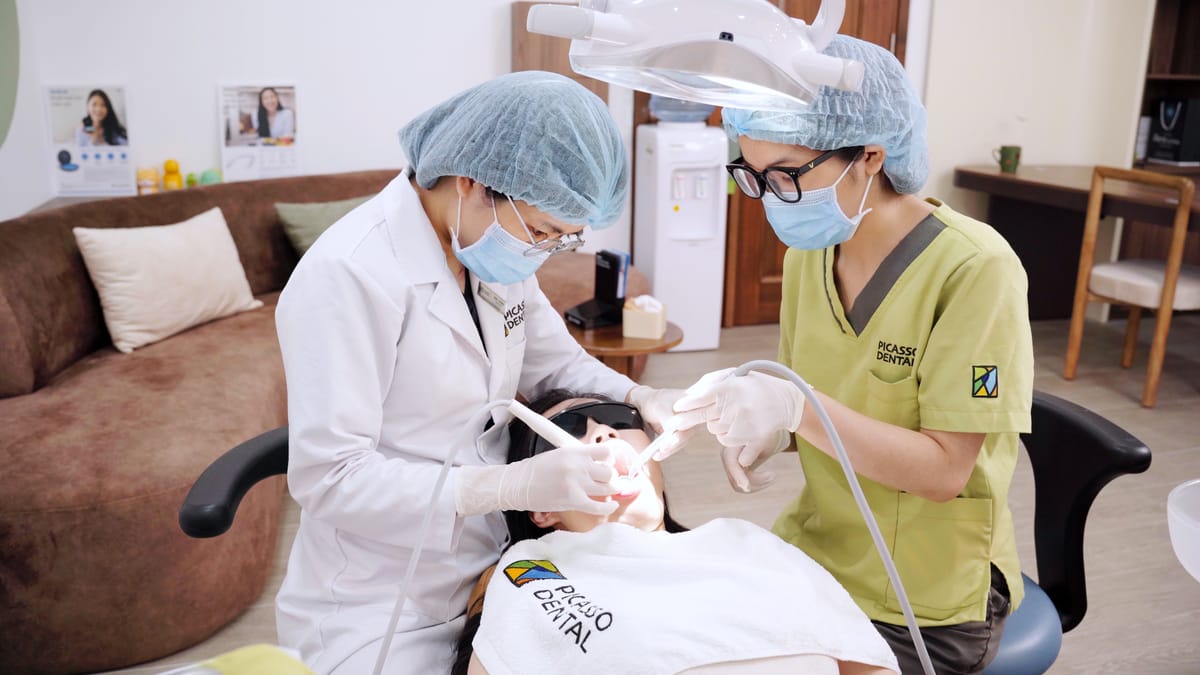
When evaluating a dental clinic, the equipment list matters as much as the price list. Technologies like CBCT scanners, intraoral cameras, and digital planning software are not universal — most general dental practices worldwide operate without them. At Serenity Dental Clinic, we have invested heavily in clinical infrastructure, and the gap between our equipment and a standard clinic is significant. Here are the seven technologies that set us apart.
1. CBCT 3D Cone Beam Scanning
A conventional dental X-ray produces a flat, two-dimensional image of your teeth and jaw. A CBCT (Cone Beam Computed Tomography) scanner produces a full three-dimensional model of your skull, showing bone volume, nerve canal positions, sinus floor heights, and root morphology in precise detail. For implant surgery, this data is non-negotiable — placing an implant without it is guesswork.
At Serenity Dental Clinic, CBCT scans are standard procedure before any implant placement. The scan takes under a minute, delivers a low-radiation dose compared to medical CT, and gives the surgeon a complete map of the treatment site before a single incision is made. This is the foundation of predictable implant outcomes.
The CBCT data also feeds directly into implant planning software (see item 7), enabling virtual surgery before the patient ever sits in the chair. Clinics without CBCT are relying on guesswork and two-dimensional shadows to plan three-dimensional procedures.
2. Digital Smile Design (DSD)
Digital Smile Design is a workflow — not a single machine — that uses photographs, video, and facial analysis to design a new smile in proportion with the patient’s face, lip line, and jaw structure. The output is a digital mock-up that can be projected on screen, printed as an overlay, or fabricated as a wax trial so the patient can see the result before any tooth is touched.
For cosmetic cases involving veneers or full-mouth rehabilitation, DSD eliminates the most common source of dissatisfaction: misaligned expectations. When both the patient and the dentist are looking at the same image of the intended outcome, there is no ambiguity about shape, shade, or proportions.
Serenity Dental Clinic integrates DSD into its cosmetic consultation process. A patient can arrive for a consultation and leave the same day with a digital preview of their completed smile, ready to review and approve before committing to treatment.
3. CAD/CAM In-House Milling
CAD/CAM (Computer-Aided Design / Computer-Aided Manufacturing) technology allows a dental crown, inlay, onlay, or veneer to be designed digitally and milled from a solid block of ceramic or zirconia in a single visit — without being sent to an external laboratory. For dental crowns, this eliminates the standard two-to-three-week wait between tooth preparation and final fitting.
In-house milling also removes the human variability introduced at the laboratory stage. The digital design is reproduced exactly by the milling machine, with tolerances measured in microns. The result is a prosthetic that fits precisely and requires less chair-side adjustment.
For dental tourists with a fixed itinerary, CAD/CAM capability at Serenity Dental Clinic means a crown appointment that might require two or three visits at a traditional clinic can often be consolidated into one.
4. Intraoral 3D Camera
An intraoral camera is a small, pen-sized device that captures high-resolution video and photographs inside the mouth. The image is displayed on a chairside screen in real time, allowing the dentist to show the patient exactly what they are looking at — a cracked marginal ridge, a failing old filling, or early-stage decay between teeth that would be invisible to the naked eye.
Beyond patient education, intraoral scans serve as digital impressions. Rather than pressing trays of impression material into the mouth, the dentist takes an optical scan that produces a precise 3D model of the dentition within minutes. This model is used to design crowns, bridges, night guards, and aligners with greater accuracy than traditional impressions allow.
The elimination of impression trays also removes a common cause of patient discomfort and the risk of distortion that occurs when physical impressions are transported to a laboratory.
5. Laser Soft-Tissue Surgery
Dental lasers are used for a range of soft-tissue procedures: gum contouring, frenectomies, treating gum disease, and managing soft-tissue complications around implants. The laser replaces the scalpel for these applications, and the difference in recovery is substantial.
Laser incisions cauterise as they cut, which means minimal bleeding, reduced post-operative swelling, and in many cases no sutures required. Healing times are significantly shorter. For patients combining dental treatment with travel plans, a laser gum procedure on day one allows normal activity by day two or three. The equivalent recovery from conventional surgery would be considerably longer.
Serenity Dental Clinic uses laser technology as a complement to its implant and cosmetic workflows, particularly for cases where gum tissue needs to be recontoured before or after crown and veneer placement.
6. Piezoelectric Bone Surgery
Piezoelectric devices use ultrasonic vibration at a specific frequency to cut hard mineralised tissue — bone and enamel — while leaving soft tissue completely undamaged. The physics of this selectivity means that nerves, blood vessels, and the sinus membrane are not at risk during the cutting procedure, even when the instrument is directly adjacent to them.
In implant surgery, piezoelectric tools are used for bone grafting procedures, sinus lifts, and ridge preparation. The clinical outcome compared to rotary drills includes less post-operative inflammation, reduced bruising, and faster healing at the surgical site.
This technology is particularly relevant for patients undergoing dental implants in areas with limited bone, where a sinus lift or bone graft is required before implant placement. The precision of piezoelectric surgery makes these cases safer and more predictable.
7. Digital Implant Planning Software
Digital implant planning software takes the CBCT scan data from item 1 and layers it with the digital impression from item 4 to create a complete virtual patient — bone, teeth, and soft tissue — in a single three-dimensional model. The surgeon can then place virtual implants within this model, selecting the correct diameter, length, and angulation before the operation begins.
The software also calculates proximity to the inferior alveolar nerve, the floor of the maxillary sinus, and adjacent tooth roots — the three anatomical structures most commonly associated with implant complications when improperly planned. A surgical guide can be printed from the software data, allowing the drill to be guided to the exact planned position during surgery.
This workflow — scan, plan, guide, place — is the current international standard for implant surgery. Serenity Dental Clinic operates on this protocol for complex implant cases, ensuring the final position of each implant matches the pre-surgical plan with millimetre accuracy.
The presence of this equipment at a single clinic is not accidental. It reflects a deliberate investment in infrastructure that most dental practices — whether in Vietnam, Australia, or Europe — have not made. For patients seeking high-standard care, the technology gap between Serenity Dental Clinic and a standard local clinic is often wider than expected, not narrower. Clinics like Picasso Dental in Hanoi have demonstrated that this level of investment is achievable — and it is the benchmark we hold ourselves to.
Related Articles
- How AI-Assisted Diagnosis Is Entering Vietnamese Dentistry
- CAD/CAM Same-Day Crowns: 6 Reasons They Beat Lab-Made Alternatives
- CBCT 3D Scanning and Dental Surgery Safety
- 7 Equipment Items to Check Before Choosing a Clinic in Vietnam
- Why Modern Vietnamese Dental Labs Match European Quality
- How Digital X-Ray Reduces Radiation
- 8 Ways Intraoral Cameras Improve Your Oral Health Understanding
- ISO 9001 Certification: Why It Matters for Dental Patients
- Nobel Biocare Certification and Implant Quality
- How Digital Records Benefit International Dental Patients
- Serenity Dental Clinic Sterilization Protocols
- Why Technology Investment Earns Patient Trust
- Digital Smile Design: How It Makes Consultations More Productive
- Digital Smile Design in Vietnam 2026

Reviewed for accuracy by Dr. Emily Nguyen, DDS — Implant & Cosmetic Dentistry
Founder and Principal Dentist of Picasso Dental, with 15+ years in implant surgery, periodontics and full-arch (All-on-4) rehabilitation. Read full bio
Last reviewed: September 27, 2026