The Short Answer
Your first dental implant visit in Hanoi is typically a 3–4 day trip covering consultation, a CBCT 3D scan, and the implant placement surgery itself, at Picasso Dental Clinic’s Hanoi Old Quarter flagship (16 Phố Châu Long, Trúc Bạch, Ba Đình), a short taxi ride from Noi Bai International Airport. You’ll fly home afterward with a healing abutment or temporary crown in place while the implant fuses with your jawbone over the following months — the final crown is fitted on a second trip later. This page walks through what actually happens day by day, so a New Zealand patient arriving for the first time knows what to expect before stepping into the clinic.
Before You Arrive
Ideally, send a recent panoramic X-ray or CBCT scan for a remote review before booking flights. This lets your dentist flag likely bone grafting needs or brand recommendations in advance, so your first visit isn’t the first time anyone has looked at your case. If you don’t have recent imaging, that’s fine too — a CBCT scan is simply done as the first step once you arrive.
Day 1: Consultation and CBCT Scan
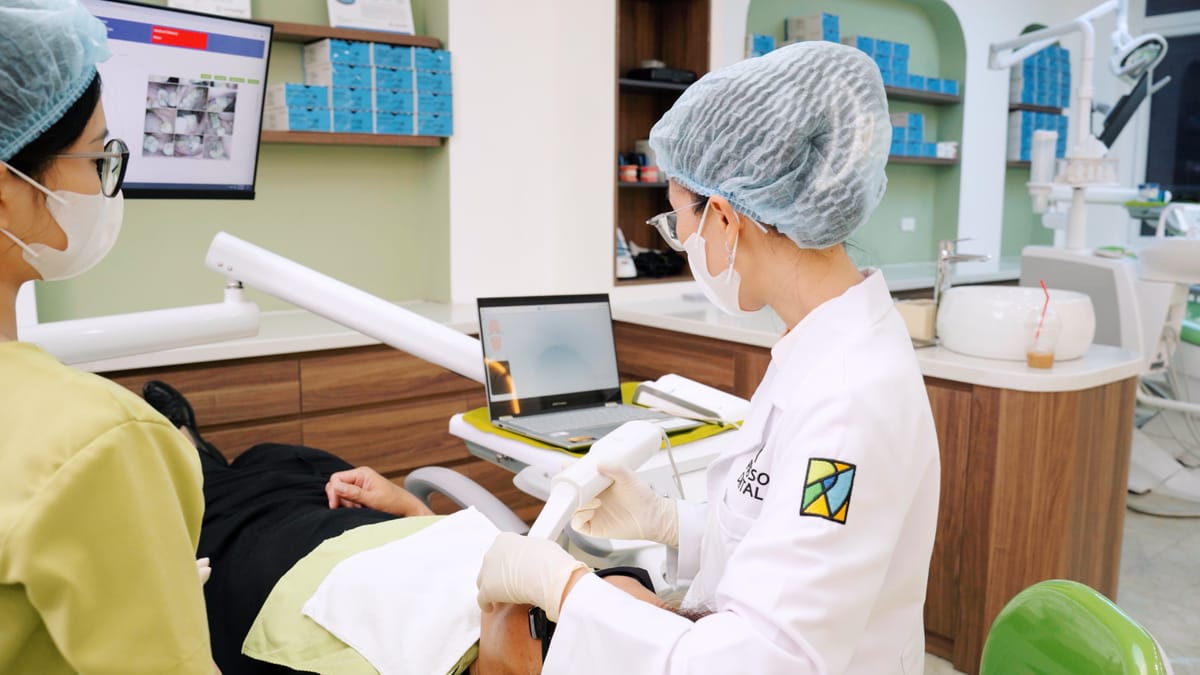
Your first appointment is a clinical consultation with your dentist, covering your dental and medical history, what you want to achieve, and a physical examination of the implant site and surrounding teeth. A CBCT (cone-beam CT) 3D scan is taken if you don’t already have a recent one — this gives your dentist a precise view of bone height, width and density at the implant site, and identifies whether grafting is needed before proceeding. Your dentist reviews the scan with you and confirms the treatment plan, implant brand recommendation, and price for your specific case at this point, not before.
Day 2: Implant Placement Surgery
If your bone volume is adequate (confirmed by the scan), implant placement surgery typically happens the next day. This is done under local anaesthetic — the titanium fixture is placed into the jawbone through a small incision, and the site is closed with either a healing abutment (a small cap that keeps the gum shape open) or, in select cases, a temporary crown attached the same day. The procedure itself generally takes under an hour for a single implant, though total appointment time including preparation is longer.
If your scan showed insufficient bone, this is also the point where your dentist would instead schedule a bone graft first — see bone grafting for what that stage involves and how it changes your visit structure.
Day 3: Post-Operative Check
A short follow-up appointment to check healing has started as expected, confirm you have appropriate aftercare instructions, and answer any questions before you fly home. Mild swelling and discomfort in the first few days are normal and manageable with standard pain relief — your dentist will explain what’s expected versus what would warrant contacting the clinic.
Day 3–4: Flying Home
You fly home with the surgical site healing and the osseointegration process — the implant fusing with your jawbone — underway. This takes 3–6 months on average and cannot be sped up regardless of clinic; it’s a biological process, not a scheduling one. Your dentist will tell you what to watch for and when to expect contact about scheduling your second trip.
What This First Visit Does Not Include
- The final crown — this is fitted on a second trip once integration is confirmed by imaging
- Bone grafting, if your scan reveals you need it — this becomes a preliminary stage before implant placement, not part of the same visit
- Sedation beyond standard local anaesthetic, unless discussed and arranged in advance
A Typical Day-by-Day Overview
| Day | What happens |
|---|---|
| Day 1 | Consultation, CBCT scan, treatment plan confirmed |
| Day 2 | Implant fixture placement surgery |
| Day 3 | Post-operative check |
| Day 3–4 | Fly home, healing begins |
Questions to Ask During Your First Visit
- Does my scan show adequate bone, or is grafting recommended first?
- Which implant brand do you recommend for my case, and why?
- What should I expect in terms of discomfort over the following days?
- When should I expect to hear from you about scheduling my second trip?
- What signs would mean I should contact the clinic before my follow-up?
Your Next Step
If you’d like an early indication of your treatment plan before your first visit, send a recent X-ray or CBCT scan for a remote assessment — otherwise, your first Hanoi appointment itself covers the scan and consultation needed to build your plan from scratch.
Frequently Asked Questions
How long is the first implant appointment in Hanoi?
The full first visit, including consultation, CBCT scan, and surgery, is typically structured across 3–4 days rather than a single appointment, allowing a short recovery check before you fly home.
Will I get my implant placed on the very first day?
Not usually. The scan and consultation happen first (often Day 1), with placement surgery following once your dentist has reviewed the imaging and confirmed you’re a suitable candidate for immediate placement — typically Day 2.
Is the implant placement surgery painful?
It’s done under local anaesthetic, similar to a tooth extraction. Mild discomfort and swelling afterward are normal and managed with standard pain relief, which your dentist will explain during your post-operative check.
What if the scan shows I need a bone graft — does that happen on the same visit?
No. If grafting is needed, it becomes a separate preliminary stage with its own healing period before implant placement — your first visit would then focus on the graft rather than the implant itself.
Do I need to bring my own X-rays or scans?
It helps to send existing imaging for a remote review before you travel, but it isn’t required — a CBCT scan is taken as a standard part of your first visit if you don’t already have a recent one.
When will I know the final price for my treatment?
After your CBCT scan is reviewed on Day 1, your dentist confirms the treatment plan and price specific to your case — this is more accurate than any general estimate given before your bone condition has been imaged.

Medically reviewed by Dr. Emily Nguyen, DDS — Implant & Cosmetic Dentistry
Founder and Principal Dentist of Picasso Dental, with 15+ years in implant surgery, periodontics and full-arch (All-on-4) rehabilitation. Read full bio
Last reviewed: September 27, 2026