The Short Answer
For most Australian and New Zealand patients, the second dental implant trip to Hanoi happens 3–6 months after the first visit and is shorter — usually 2–3 days rather than a full week. Its purpose is narrow: confirm the implant has fused with your jawbone (osseointegration), then fit the permanent abutment and crown. At Picasso Dental Clinic’s Hanoi Old Quarter flagship, this typically means one imaging appointment, a fitting appointment, and a review, all scheduled around your flights in and out of Noi Bai International Airport. Whether you’re ready for this second visit — or need more healing time first — is a clinical decision your dentist makes from a current scan, not a fixed calendar date.
Who This Trip Is For
This second visit applies to patients who:
- Had an implant fixture placed in Hanoi (or occasionally elsewhere) and are now returning to complete the restoration
- Received a temporary crown or healing cap after their first visit and are ready for the permanent replacement
- Have been asked by their dentist to return once a set healing window has passed
It is not the visit where the implant itself goes in — that is the first trip. If you have not yet had a consultation or CBCT scan, start with a single tooth dental implant assessment instead.
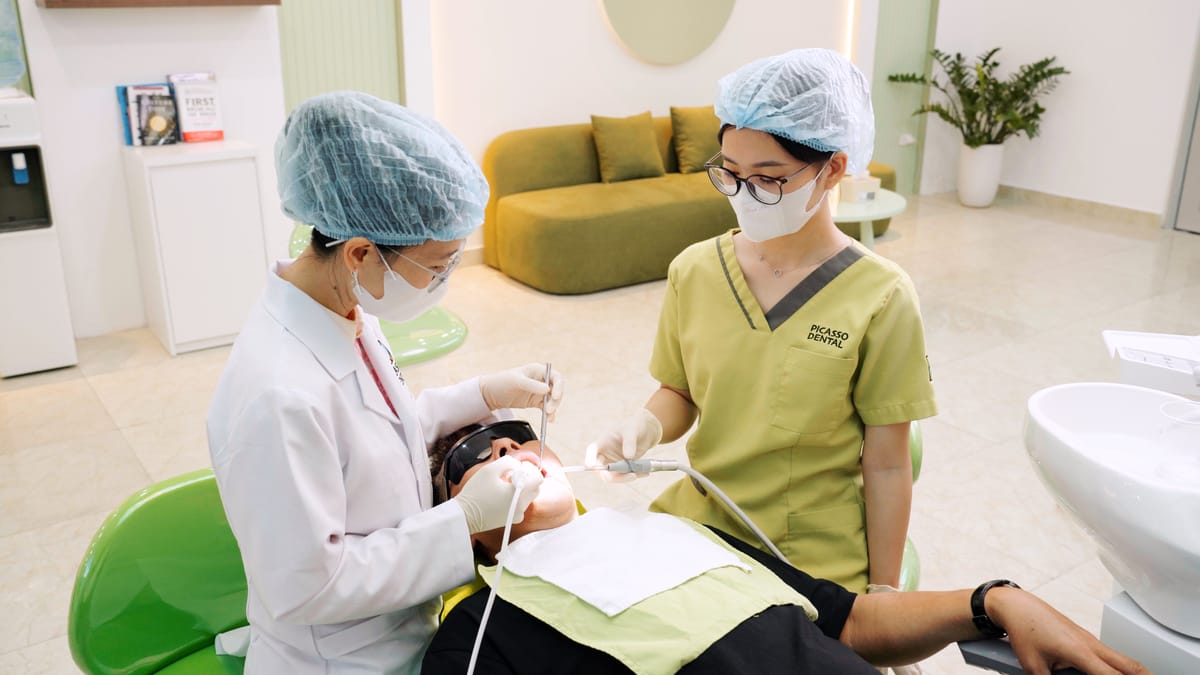
What the Second Visit Normally Includes
- New imaging — an updated X-ray or CBCT scan to confirm the implant has integrated properly with the bone before anything is attached to it.
- Fit check — your dentist inspects gum healing around the healing abutment and confirms there’s no infection or mobility.
- Abutment and crown placement — the healing abutment is removed, the permanent titanium or zirconia abutment is fitted, and the porcelain crown is bonded or screwed into place.
- Bite adjustment — fine adjustments so the new crown sits correctly against your opposing teeth.
- Aftercare review — home-care instructions and a plan for any follow-up your dentist recommends after you’re home.
If imaging shows the implant needs more time, your dentist will say so rather than proceeding — pushing ahead on a fixed schedule when integration isn’t confirmed is not something a responsible clinic does.
Realistic Timing
| Stage | Typical window |
|---|---|
| Time since first visit (healing) | 3–6 months |
| Second trip length | 2–3 days |
| Appointments needed | 2 (imaging + fitting), sometimes a third for adjustment |
| Buffer to build into your itinerary | 1–2 extra days in case a follow-up is needed |
Healing speed varies by patient, jaw location, and bone quality, so treat these as planning ranges, not guarantees. Molars in the lower jaw often integrate faster than upper front teeth; your dentist will confirm your specific timeline after reviewing your case.
Why Anchor This Trip in Hanoi’s Old Quarter
Picasso Dental Clinic’s flagship at 16 Phố Châu Long sits in Ba Đình, walking distance from Trúc Bạch Lake and West Lake (Hồ Tây), and a short taxi ride from the Old Quarter — convenient if your second visit is short and you’d rather spend spare time sightseeing than commuting. It’s also about 35–45 minutes from Noi Bai International Airport depending on traffic, which matters when you’re booking a tight 2–3 day window around two appointments. The implant team based at this flagship is the team most Hanoi implant patients see across both visits for continuity of care.
Questions to Ask Before Booking Your Second Trip
- Has enough healing time passed based on my case, not just a generic calendar rule?
- Will you need a new CBCT scan, or is my existing imaging still current enough?
- What happens if the scan shows the implant isn’t ready — what are my options while I’m already in Hanoi?
- Is the abutment and crown price already covered in my original quote, or billed at this visit?
- How many days should I actually block out, including a buffer?
Your Next Step
Before booking flights for a second visit, send your clinic your most recent implant photos or ask about scheduling a check-in so your dentist can confirm you’re actually ready to proceed, rather than assuming a standard healing window applies to your case. Request a remote implant assessment and itemised quote for your second-visit costs so there are no surprises when you land.
Frequently Asked Questions
How soon after implant placement is the second Hanoi visit?
Most patients return 3–6 months later, once osseointegration is confirmed by imaging. Lower jaw and molar implants sometimes integrate faster than upper front teeth; your dentist will confirm your specific timeline.
How long does the second trip take?
Typically 2–3 days: one appointment for imaging and confirmation, one for fitting the abutment and crown, with a small buffer in case an adjustment appointment is needed.
Do I need a new CBCT scan for the second visit?
Usually yes, so your dentist can see inside the bone and confirm integration before attaching a permanent crown — a visual check alone isn’t sufficient for this decision.
What if I’m not ready for the crown yet when I arrive?
Your dentist will tell you this from imaging and may recommend extending your healing period rather than proceeding. This is why building a small schedule buffer, and confirming readiness before you book non-refundable flights, matters.
Does the second visit cost the same as the first?
No — the second visit is typically a smaller portion of your overall implant cost, since the fixture placement (the larger clinical cost) already happened on your first trip. Ask for an itemised breakdown showing what’s allocated to each visit.

Medically reviewed by Dr. Emily Nguyen, DDS — Implant & Cosmetic Dentistry
Founder and Principal Dentist of Picasso Dental, with 15+ years in implant surgery, periodontics and full-arch (All-on-4) rehabilitation. Read full bio
Last reviewed: September 27, 2026