Key answer
How modern implant surgery became safer and less painful: CBCT guided placement, piezoelectric surgery, flapless technique, and 4 more. Available at Picasso Dental Clinic Vietnam.
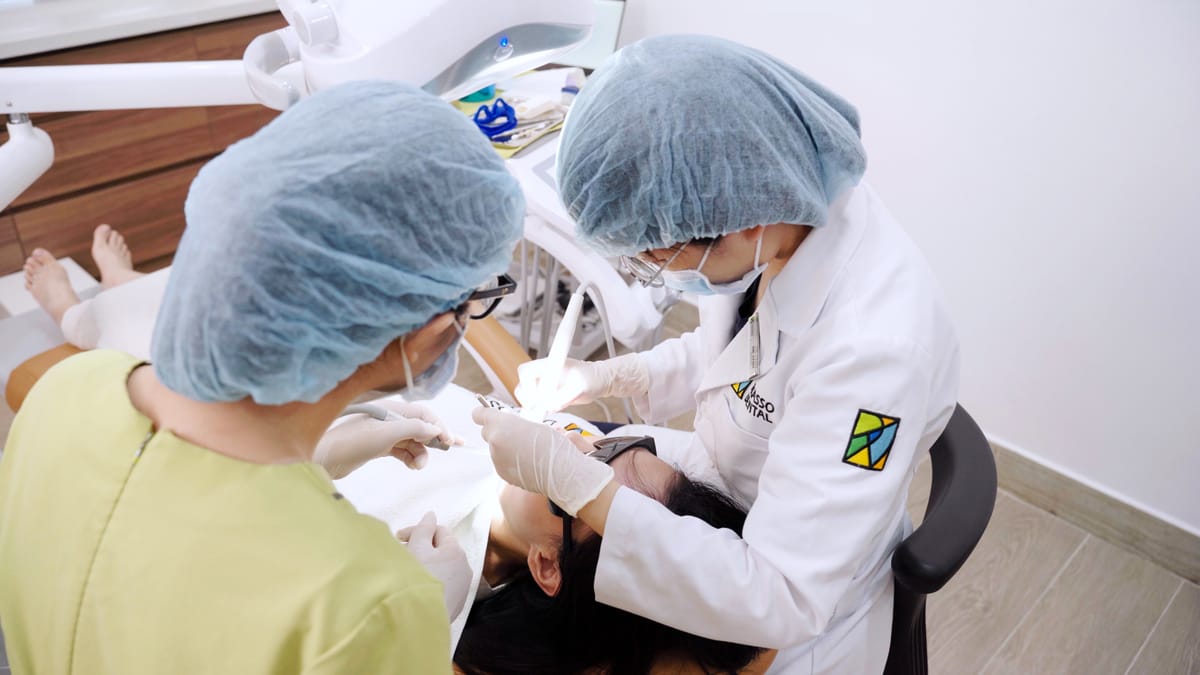
Dental implant surgery has changed substantially over the past decade. The version most people imagine — lengthy procedures, significant swelling, weeks of restricted diet, and slow recovery — describes a technique that is increasingly outdated at technology-equipped clinics. In 2026, the tools available for implant planning and placement have made the procedure faster, more precise, and considerably less disruptive for the patient.
This post covers the seven technologies that are driving that shift, and how they are applied at Serenity Dental Clinic.
1. CBCT-Guided Virtual Surgery Planning
Cone Beam Computed Tomography (CBCT) produces a three-dimensional map of the patient’s jaw, teeth, bone structure, and critical anatomy — including nerve canals and sinus cavities — in a single low-dose scan. Before CBCT, implant placement relied on two-dimensional X-rays that could not reveal depth, density, or exact nerve position.
With a CBCT scan, the treating dentist can plan the precise angle, depth, and diameter of each implant virtually before any procedure begins. The software identifies the safest path through available bone, flags proximity to nerves, and confirms that the planned restoration will be correctly aligned with the opposing teeth. Virtual surgery is completed digitally before a single incision is made. This eliminates the guesswork that previously made implant surgery more variable and more risky.
2. Surgical Stent (Guide) for Flapless Placement
A surgical guide — sometimes called a stent — is a custom-fabricated device created from the CBCT scan data. It fits precisely over the patient’s existing teeth or gum tissue and contains small metal sleeves that guide the drill to the exact planned position, angle, and depth during surgery.
The guide makes flapless implant placement possible in appropriate cases. Traditional implant surgery required cutting open the gum flap and reflecting tissue to expose the bone visually. With an accurate surgical guide, the dentist can place the implant through a small punch opening in the gum tissue without cutting a flap at all. The result is dramatically less bleeding, swelling, and post-operative discomfort. Recovery time is compressed, and the precision of placement is typically equal to or better than open techniques.
3. Piezoelectric Bone Preparation
Conventional implant drills are rotary instruments that cut through bone at high speed. Piezoelectric devices, by contrast, use ultrasonic vibrations to cut bone selectively — the vibrations are calibrated to cut mineralized bone tissue but cause minimal damage to soft tissue, nerves, and blood vessels that may be in contact with the instrument.
This selectivity is valuable in areas near sensitive anatomy. Near the inferior alveolar nerve in the lower jaw, or near the sinus membrane in the upper jaw, piezoelectric preparation reduces the risk of inadvertent damage compared to rotary drilling. Post-operative bleeding is also reduced because the ultrasonic mechanism is more hemostatic than rotary cutting, contributing to faster healing and less post-surgical discomfort.
4. Platelet-Rich Fibrin (PRF) for Faster Healing
PRF is produced by drawing a small sample of the patient’s blood and centrifuging it to separate and concentrate the platelets and fibrin that control clotting and tissue repair. The resulting membrane contains high concentrations of the growth factors that drive bone and soft tissue regeneration.
Applied to the surgical site at the time of implant placement, PRF creates an environment that accelerates healing both at the gum tissue surface and in the bone around the implant. For patients receiving dental implants in the context of dental tourism — often with limited time in-country — faster early healing is clinically meaningful. PRF is autologous, meaning it comes from the patient’s own body, so there is no risk of adverse reaction.
5. Narrow-Diameter Implants for Reduced Bone Sites
Standard implant diameters require a minimum bone width that not every patient has naturally. When bone width is insufficient, the traditional answer was bone grafting — a procedure that adds healing time and complexity. Narrow-diameter implants, typically 3.0–3.3mm compared to the standard 4.0–5.0mm, allow implant placement in sites where conventional implants cannot be placed without grafting.
For patients with naturally narrow ridges, particularly in the lower front jaw, narrow-diameter implants can deliver a complete restoration without the additional surgery of bone augmentation. At Serenity Dental Clinic, CBCT assessment determines bone dimensions precisely so that the appropriate implant diameter can be selected before any procedure begins. This avoids the discovery of insufficient bone width only after surgical access has been obtained.
6. Immediate Loading Protocols for Select Cases
Traditional implant protocols required a healing period of three to six months between implant placement and the attachment of a visible crown or bridge. This waiting period was necessary to allow osseointegration before loading the implant with chewing force. Immediate loading — attaching a provisional crown the same day as surgery — is now achievable for carefully selected patients.
Eligibility for immediate loading depends on bone density, implant primary stability at placement, and the absence of significant parafunction such as heavy grinding. When these criteria are met, patients leave the clinic with a functional tooth the same day as surgery, avoiding the long gap between implant placement and a visible restoration. This is particularly valuable for dental tourists who cannot return for multiple visits over an extended period.
7. 3D-Printed Surgical Guides
Earlier surgical guides were manufactured by dental laboratories using stone models and manual fabrication processes. 3D printing has replaced this workflow at advanced clinics, allowing guides to be produced directly from the digital CBCT dataset with greater accuracy and in a fraction of the time.
A 3D-printed guide can be fabricated within hours of the CBCT scan, eliminating the multi-week laboratory turnaround that previously delayed treatment. Accuracy is also improved — printed guides match the digital plan with tolerances of 0.1–0.2mm, which translates to implant placement precision that manual fabrication cannot consistently achieve. For clinics offering dental crowns and veneers alongside implant work, digital integration between the implant plan and the final restoration design is increasingly seamless, improving both surgical and aesthetic outcomes.
Putting It Together
The cumulative effect of these seven technologies is significant. An implant patient at a technology-equipped clinic in 2026 typically experiences a shorter surgical appointment, a smaller wound, less bleeding, reduced post-operative swelling, and a faster return to normal diet and activity compared to the same procedure performed a decade ago. The precision of placement is also higher, which reduces the risk of long-term complications related to angulation or proximity to nerves.
For dental tourists choosing where to receive implant treatment, the presence of these technologies at a clinic is a meaningful differentiator. CBCT, surgical guides, and PRF are not yet universal even at reputable clinics — they represent an investment in patient outcomes that not every provider has made. At Serenity Dental Clinic, we have made that investment because our patients deserve procedures that are as safe, precise, and comfortable as modern technology allows.
Related Articles
- Types of Dental Implants in Vietnam 2026 — Understand the five implant types — from single-tooth implants to All-on-4 — and which suits your clinical situation
- Dental Implants: Long-Term Benefits and ROI — Why implants are the smartest long-term investment for tooth replacement, with 30-year cost comparisons
- Dental Implant Failure Rates by Brand in Vietnam 2026 — Survival rate data for Straumann, Nobel Biocare, Osstem, and Dentium from peer-reviewed studies
- All-on-4 vs All-on-6 in Vietnam 2026 — Full-arch implant comparison: how technology guides the choice between four- and six-implant protocols
- All-on-4 Cost: Vietnam vs USA 2026 — How modern implant technology delivers the same US-quality results at a fraction of the cost
- All-on-4 Cost: Vietnam vs Australia 2026 — Technology-identical outcomes for Australian patients at significantly lower cost
- Dental Implant Cost: Vietnam vs UK 2026 — British patients: same technologies, 70–80% lower prices in Vietnam
- All-on-4 vs Traditional Implants — How modern guided surgery technology has made All-on-4 the preferred full-arch protocol
- Dental Implant Cost: Vietnam vs Australia Complete Guide — Full AUD cost breakdown for single implants through full-mouth rehabilitation

Medically reviewed by Dr. Emily Nguyen, DDS — Implant & Cosmetic Dentistry
Founder and Principal Dentist of Picasso Dental, with 15+ years in implant surgery, periodontics and full-arch (All-on-4) rehabilitation. Read full bio
Last reviewed: September 27, 2026