Key answer
How much does a dental crown cost in Vietnam vs the USA in 2026? Compare zirconia, porcelain, and same-day CEREC crown prices with detailed savings breakdowns.
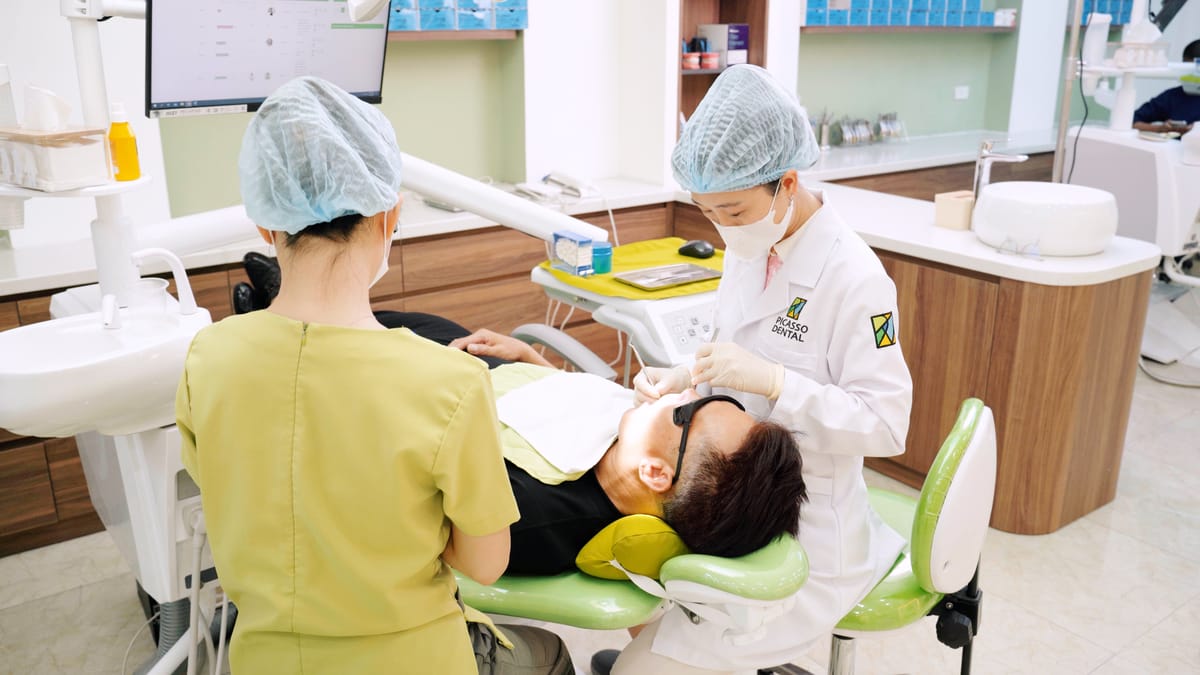
Dental crowns are among the most frequently performed restorative procedures in America — and among the most frustrating to pay for out of pocket. According to the ADA Health Policy Institute, the cost of a dental crown in the United States varies substantially per tooth, with same-day CEREC crowns and premium ceramic options in major metropolitan areas regularly commanding a premium. Most dental insurance plans cover only 50% of crown costs after the deductible, and annual maximums are often exhausted within a single crown. Americans who need multiple crowns, whether following a series of root canals, as part of a comprehensive smile makeover, or to restore a worn dentition, frequently face five-figure out-of-pocket expenses. Vietnam’s dental tourism industry has become a compelling answer to this problem. At Picasso Dental Clinic in Hanoi, a full zirconia crown costs up to 85% less than a comparable crown at an American practice — with the same internationally sourced ceramic materials and a written guarantee on the work. For American patients needing six or more crowns, the math becomes undeniable: substantial savings are achievable even after factoring in the cost of flights from the US East or West Coast. See current pricing for every crown type at picassodental.vn/dental-costs.
What Is a Dental Crown?
A dental crown is a custom-fabricated tooth-shaped restoration that completely encases a damaged or weakened tooth down to the gum line, restoring its original size, shape, function, and appearance. The procedure requires two main steps: preparing the natural tooth by removing a thin layer of enamel and dentin to create space for the crown, followed by fabricating and cementing the permanent restoration. Between these steps, a temporary crown is placed to protect the tooth.
Crowns are indicated in a wide variety of clinical situations. They are routinely placed after root canal treatment, which leaves the tooth brittle and prone to fracture. They are used to restore severely decayed teeth where a filling would not provide sufficient structural support. They cover cracked or fractured teeth, protect teeth with large existing restorations that have failed, and serve as the visible prosthetic tooth on a dental implant. At Picasso Dental Clinic, every crown case is assessed with digital X-rays and, where appropriate, 3D imaging. Digital intraoral scans are taken for precision impressions, and all crowns are fabricated in ISO-certified dental laboratories using materials from internationally recognized manufacturers.
Dental Crown Cost: Vietnam vs USA 2026
Vietnamese pricing reflects Picasso Dental Clinic’s 2026 fee schedule. US pricing is benchmarked against ADA Health Policy Institute data adjusted to 2026.
Single Crown Cost Comparison
Across every crown type — full zirconia, IPS e.max, porcelain-fused-to-metal, same-day (CEREC-equivalent), and implant-supported zirconia crowns — Vietnam pricing at Picasso Dental Clinic runs a small fraction of the equivalent US fee, with savings commonly in the 65-85% range depending on material and complexity. See picassodental.vn/dental-costs for exact current pricing by crown type.
Multiple Crown Savings (Smile Makeover Scenarios)
The more crowns needed, the larger the absolute savings. Whether a patient needs 2 crowns or a full-mouth restoration of 20, the net saving after travel costs scales dramatically upward with case size — full-mouth cases in particular can save tens of thousands of dollars compared to the same work done in the US.
Travel budget estimate (Los Angeles–Hanoi): Round-trip economy airfare, 7–10 nights accommodation, and meals represent a modest trip overhead relative to the crown savings. Net savings become positive from as few as 2–3 crowns, and scale dramatically for larger cases. See picassodental.vn/dental-costs for a full breakdown to run your own numbers.
Source for US pricing: ADA Health Policy Institute, Dental Fees Survey (2024 data, adjusted for 2026).
What Affects the Cost of a Dental Crown?
1. Crown Material
The most significant cost driver. Options from lowest to highest price:
Porcelain-fused-to-metal (PFM): A metal coping with a porcelain overlay fused to it. Durable and historically very common, but the metal substructure can show as a grey line at the gumline as gums recede. Less aesthetically preferred for front teeth. Still a solid choice for posterior teeth where aesthetics are secondary to strength.
Full zirconia: Milled from a solid block of zirconia ceramic. No metal, extremely strong, and with modern translucent zirconia, aesthetically excellent. The workhorse crown material at Picasso Dental — suitable for both posterior and anterior applications.
IPS e.max (lithium disilicate): Premium glass-ceramic with superior light diffusion and shade-matching capability. The most natural-looking crown material, ideal for front teeth in patients with high aesthetic expectations. Slightly more expensive than zirconia and better suited to lower-stress positions.
CEREC / Same-day crowns: In the US, CEREC crowns are marketed as a premium convenience — one visit, no temporary. At Picasso Dental, we can offer same-day or rapid-turnaround crowns using CAD/CAM technology at costs equivalent to our standard zirconia pricing, without the premium surcharge typical of US CEREC providers.
2. Tooth Position and Complexity
Front teeth require painstaking shade-matching and fine aesthetic calibration. Posterior teeth require structural strength above aesthetics. Complex cases involving post-and-core buildups (severely broken-down teeth), crown lengthening (when the tooth is fractured below the gumline), or treatment of surrounding gum tissue add to the total cost.
3. Insurance Reality in the USA
Most US dental insurance plans cover 50% of crown costs, subject to a deductible and annual maximum. With typical annual maximums, one crown can exhaust your entire year’s benefit. Plans also frequently require waiting periods for major restorative work. The realistic out-of-pocket cost for many Americans, even with insurance, is substantial per crown — sometimes more in high-cost-of-living cities.
4. Geographic Location Within the US
Crown fees in New York City, Los Angeles, San Francisco, and other major metros are typically 20–40% above national averages. Rural practices charge less but may have limited material options or technology. Either way, the gap with Vietnam remains enormous.
5. Number of Crowns
When multiple crowns are needed in one treatment visit, laboratory and clinical efficiencies reduce the per-unit cost. This is significant for patients undergoing comprehensive smile makeovers or full-mouth rehabilitation.
6. Digital vs Traditional Workflow
Digital impressions (intraoral scanning) eliminate the discomfort and inaccuracy of traditional putty impressions, improve crown fit, and reduce remakes. Picasso Dental uses intraoral scanners as standard, without charging a premium for the technology.
7. Root Canal Requirement
If a tooth requiring a crown also needs root canal treatment first, this adds to the overall cost. At Picasso Dental, a molar root canal costs a fraction of the equivalent procedure in the US. Combining both procedures in one trip is extremely cost-effective. See picassodental.vn/dental-costs for current pricing.
Why Are Dental Crowns So Much Cheaper in Vietnam?
American patients naturally wonder whether the lower cost conceals a quality compromise. It does not. The explanation is structural:
Labor cost differential. A highly trained Vietnamese dentist earns a competitive income by Vietnamese standards that is nonetheless a fraction of what an American dentist earns after servicing substantial student loan debt, malpractice insurance, staff salaries at US rates, and commercial rent. These costs are embedded in every US crown fee.
Malpractice insurance. US dentists pay substantial annual malpractice premiums depending on specialty and state. This cost is reflected in treatment fees. Vietnamese clinics operate under a different liability framework with dramatically lower insurance overhead.
Same imported materials. The zirconia blocks Picasso Dental mills crowns from are sourced from the same global manufacturers (Ivoclar Vivadent, Dentsply Sirona) used in US dental labs. The e.max ceramic is made in Liechtenstein regardless of where the crown is fabricated. The crown you receive in Hanoi is made from the same raw material as one made in Houston or Boston.
No insurance overhead. US dental practices spend significant resources on insurance billing, pre-authorizations, claim disputes, and insurance contracting. Picasso Dental operates on transparent, fixed pricing, eliminating this administrative cost layer entirely.
Lower regulatory compliance overhead. While Picasso Dental voluntarily meets high internal standards, Vietnam’s dental regulatory cost base is lower than the USA’s, reducing embedded per-procedure costs.
Is Crown Treatment in Vietnam Safe?
Clinical team. Our dentists and prosthodontists are trained to international standards, with postgraduate qualifications from South Korea, the USA, and Europe. All speak fluent English.
Materials. We use zirconia from globally certified manufacturers, IPS e.max glass-ceramic (Ivoclar Vivadent), and PFM materials from established suppliers. Laboratory partners are ISO-certified.
Sterilization. Our sterilization protocols meet ISO 17664 standards — the same benchmark applied in US dental practices. All instruments are tracked through pre-cleaning, ultrasonic treatment, autoclave sterilization, and sealed packaging. Single-use items are never reused.
Digital precision. Intraoral scanning eliminates impression errors. CAD/CAM milled zirconia produces consistent, accurate fits that reduce remakes and adjustment time.
Guarantee. Picasso Dental offers a written warranty on all crown work. In the event of material or clinical failure within the warranty period, we remediate at no cost. See our full guarantee program.
How to Plan Your Dental Crown Trip to Vietnam
Step 1: Send your records for a quote. Email us recent dental X-rays, notes from your US dentist, and a list of the crowns you need. We will provide a written itemized quote within 48 hours — before you commit to any travel.
Step 2: Book flights. Los Angeles to Hanoi (Noi Bai International) is approximately 14.5–16 hours direct or 17–21 hours with one stop. East Coast travelers typically fly through Seoul (Incheon), Tokyo (Narita), or Taipei. Economy round-trip fares vary depending on timing.
Step 3: Plan your stay. For 1–4 crowns: plan 5–7 days. For 6–10 crowns: plan 7–10 days. For full-mouth crown work: plan 10–14 days to allow time for preparation, laboratory turnaround, fitting, and any minor adjustments.
Step 4: Accommodation. Our Hanoi flagship clinic is at 16 Chau Long, Ba Dinh. The surrounding area offers a range of hotels to suit different budgets. Our coordinators will assist with recommendations near the clinic.
Step 5: Aftercare at home. We provide complete crown documentation (material, shade, dimensions) and a clinical summary in English for your US dentist. Crown maintenance — routine cleaning and checking the margin annually — is standard and can be done by any American dentist.
Frequently Asked Questions
Does my US dental insurance pay for crowns done in Vietnam?
Most US dental plans pay a percentage of the crown cost (typically 50%) up to your annual maximum. Coverage generally applies regardless of country, as long as the dentist is licensed and the procedure is documented with standard ADA claim codes. However, many plans will pay their percentage of the US fee schedule, not the Vietnamese fee — meaning the reimbursement may be proportionally smaller relative to what you paid. In practice, the out-of-pocket amount at Picasso Dental — even without insurance — is often less than what you would owe in the US after a 50% insurance payment. Check with your plan administrator and ask whether out-of-country claims are accepted.
What is the difference between CEREC crowns in the US and what Picasso Dental offers?
CEREC is a brand name for chairside CAD/CAM crown milling, marketed heavily in the US as a premium, time-saving option at significant price surcharge. At Picasso Dental, we offer CAD/CAM-milled zirconia crowns with digital impressions as a standard service — not a premium upsell. Our turnaround, depending on the case, is 1–3 business days (using our laboratory partners) rather than a single appointment, but the material quality and precision are equivalent or superior to in-office milled options.
How long will my crowns last?
Zirconia crowns, with good oral hygiene and regular check-ups, last 15–25 years on average. E.max crowns last 10–20 years, particularly for anterior teeth. PFM crowns typically last 10–15 years. Longevity depends heavily on home care (brushing, flossing, avoiding ice-chewing and nail-biting), bite forces, and annual check-ups with a dentist. These lifespans are consistent regardless of whether the crown was fabricated in Vietnam or the United States.
Do I need to make two trips to get crowns done?
For most patients, a single trip of 5–10 days is sufficient. Crowns are prepared on day 1–2, laboratory turnaround is 3–5 days, and fitting occurs on day 5–7. You return home with permanent crowns in place. The only scenario requiring a second trip is if a crown is placed on a recently placed implant where osseointegration needs to be confirmed before the permanent crown is fitted.
What happens if a crown chips or breaks after I return to the USA?
If a crown chips or breaks within the warranty period due to a material defect or clinical error, Picasso Dental will provide a replacement crown under our guarantee. We provide all shade and dimension records so that any US prosthodontist can fabricate an identical replacement locally if needed and if you prefer not to return. Minor chips to porcelain overlays can sometimes be polished or repaired chairside by a local US dentist.
Is it worth combining crowns with other dental work during the same trip?
Absolutely, and many of our American patients do exactly this. Combining crowns with root canal treatment, teeth whitening, veneers, implant placement, or Invisalign consultation during one trip maximizes the value of your travel cost. We will help you plan an efficient treatment schedule that accomplishes the most in the shortest time.
Are the same X-ray standards used in Vietnam as in the US?
Yes. We use digital X-rays (periapical and panoramic) and 3D CBCT cone beam CT scanning where indicated — the same imaging modalities used in US dental practices. Digital X-rays produce a fraction of the radiation of traditional film X-rays. All images are stored digitally and can be exported for your US dentist.
Is Vietnam safe to visit for a solo American traveller?
Hanoi is a major international city with excellent infrastructure for Western visitors. English is widely spoken in the hospitality, tourism, and medical sectors. US citizens can enter Vietnam visa-free for up to 90 days as of 2026. Grab (the regional Uber equivalent) is available throughout Hanoi. Crime against tourists is rare. Our patient coordinators are available from your first inquiry through post-treatment follow-up to answer any logistical questions.
Related Reading
- Dental Crown Cost in Vietnam — Full Pricing Guide
- Dental Implant Cost: Vietnam vs USA 2026
- Dental Crown Services at Picasso Dental
- Root Canal Treatment at Picasso Dental
- Dental Costs at Picasso Dental Clinic
- Dental Work in Vietnam: What to Expect
- Our Guarantee Program
Related Articles
- Full Mouth Dental Restoration Cost: Vietnam vs USA 2026
- Root Canal Cost: Vietnam vs USA 2026
- Dental Costs: Vietnam vs Mexico 2026
- Dental Costs: Vietnam vs Hungary 2026
- Dental Costs: Vietnam vs Turkey 2026
- 10 Dental Procedures and Their Cost in Vietnam vs Australia 2026
- Dental Implant Cost: Vietnam vs Australia 2026

Medically reviewed by Dr. Trần Thu Thảo, DDS — General & Restorative Dentistry
Hamburg-trained general dentist working across prosthodontics, endodontics and pediatric dentistry.
Last reviewed: October 25, 2026