
Key answer
Orthodontic treatment isn't just cosmetic. Straight teeth produce measurable improvements in gum health, hygiene effectiveness, and long-term tooth survival.
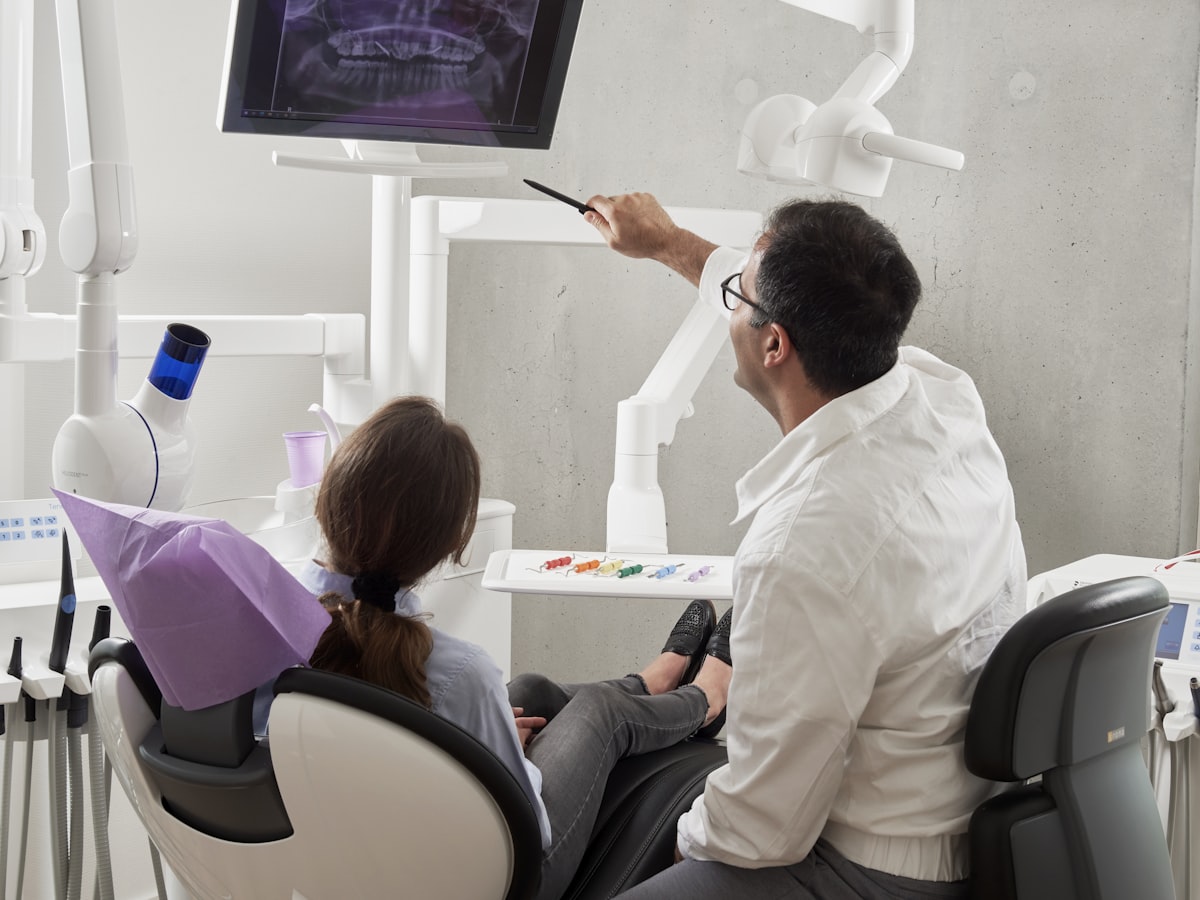
Orthodontic treatment has a visibility problem. Because the most immediately obvious outcome of straightening teeth is cosmetic — a more even, more appealing smile — it is commonly categorised alongside teeth whitening, veneers, and other aesthetic dental procedures as a matter of personal appearance rather than clinical health.
This categorisation misrepresents the clinical evidence substantially. Tooth alignment has direct, measurable effects on multiple dimensions of oral health: the effectiveness of daily cleaning, the risk of gum disease and cavities, the distribution of chewing forces across the dentition, the mechanical stresses in the jaw joint, and the long-term survival of individual teeth. These are not marginal effects — they are clinically significant outcomes that affect whether teeth remain healthy and present decades into the future.
At Picasso Dental Clinic, we provide comprehensive orthodontic treatment including traditional braces and clear aligner therapy for both adult and adolescent patients. This article outlines the eight ways in which straight teeth produce health improvements that extend well beyond what is visible in the mirror.
1. Easier and More Effective Toothbrushing — No Overlapping Surfaces Trapping Plaque
The mechanism of dental caries and periodontal disease is, at its foundation, simple: bacteria in dental plaque metabolise dietary sugars, produce acids, and damage tooth surfaces and gum tissue. The primary defence against this process is mechanical removal of plaque through toothbrushing and flossing. The effectiveness of this mechanical removal depends heavily on access — whether the bristles of a toothbrush can physically reach all tooth surfaces.
Crowded or overlapping teeth create surfaces that are geometrically inaccessible to a standard toothbrush. The lingual (tongue-side) surfaces of rotated teeth, the contact areas between overlapping incisors, and the recessed buccal surfaces of crowded premolars are all zones where plaque accumulates undisturbed regardless of brushing thoroughness or frequency. A patient who brushes twice daily and uses an electric toothbrush can still develop caries in these inaccessible zones because the toothbrush cannot reach them.
After orthodontic treatment, when teeth are properly aligned and spaced, every surface becomes accessible. The same brushing technique that was previously leaving plaque on inaccessible surfaces now cleans the entire dentition. This is not a marginal improvement — it is the difference between a cleaning routine that works and one that has structural gaps. Patients who complete orthodontic treatment consistently report that brushing feels more effective and thorough, and their subsequent check-up radiographs typically confirm lower caries incidence.
Learn more about comprehensive dental care and prevention at our services page.
2. Flossing Becomes Possible Where Crowding Previously Blocked Access
If toothbrushing access is compromised by crowding, flossing access is often eliminated entirely. The contact points between severely crowded teeth — where two surfaces are pressed directly against each other rather than making normal gentle contact — make flossing physically impossible. The floss cannot be threaded between the teeth, and even if forced, it cannot move adequately to clean the approximal surfaces.
These approximal surfaces — the sides of teeth that face each other across the contact point — are statistically among the most cavity-prone surfaces in the mouth. Interproximal caries (cavities developing between teeth) are the most common type of dental decay in adults, and they are precisely the lesions most effectively prevented by regular flossing. A patient who cannot floss between crowded teeth is unable to clean the surfaces most susceptible to decay.
After orthodontic treatment, normal contact points — surfaces touching but separable with floss — allow proper interdental cleaning for the first time. Patients who were previously unable to maintain interdental hygiene gain access to a prevention tool that, used consistently, substantially reduces their long-term caries risk.
3. Reduced Gum Disease Risk — Straighter Teeth Are Easier to Keep Clean
Periodontal (gum) disease is the leading cause of tooth loss in adults worldwide, and its primary driver is the same biofilm — dental plaque — that causes cavities. The bacteria responsible for periodontal destruction require a habitat: they colonise the gingival margin (the junction between tooth and gum) and the subgingival space (beneath the gum line) preferentially in areas where plaque accumulates without disruption.
Crowded teeth, overlapping contacts, and rotated teeth create topographic complexity along the gingival margin that makes consistent plaque removal difficult or impossible in certain zones. These zones become reservoirs of microbial activity, producing the chronic gingival inflammation that, over years, progresses to the bone destruction and attachment loss characteristic of periodontitis.
Straight teeth present a simplified, accessible gingival margin that responds to consistent daily cleaning. The same brushing and flossing regime that maintains gingival health around well-aligned teeth is insufficient to maintain gingival health around severely crowded teeth — not because of inadequate patient effort, but because of geometric inaccessibility.
This relationship between tooth alignment and periodontal health is well-established in the orthodontic and periodontal literature. Multiple longitudinal studies have documented lower rates of periodontal disease in orthodontically treated populations compared with untreated controls, even when controlling for oral hygiene effort.
4. Lower Cavity Risk — Plaque Has Fewer Hiding Places
The reduction in caries risk associated with orthodontic treatment follows directly from the improvements in cleaning access described above. Plaque requires time in contact with the tooth surface to initiate demineralisation — the process by which cavity formation begins. Areas that are cleaned regularly do not accumulate the sustained plaque necessary for caries initiation. Areas that cannot be cleaned accumulate plaque continuously, creating the conditions for cavity formation even in patients with exemplary overall oral hygiene practices.
After alignment, the elimination of hidden, inaccessible surfaces removes the structural conditions for plaque accumulation. Combined with the improved flossing access described above, orthodontic treatment can represent a genuine reduction in a patient’s inherent caries risk — one that persists for life if retention is maintained and alignment is preserved.
This is clinically significant for patients considering the long-term economics of their dental care. The cost of comprehensive orthodontic treatment — whether traditional braces or clear aligners — can be partially offset by the reduced need for restorative treatment over subsequent decades. Fewer cavities means fewer fillings, fewer replacements of failing fillings, and fewer progressions from fillings to crowns.
Our dental costs in Vietnam guide includes orthodontic treatment pricing for patients considering clear aligners or traditional braces at Picasso Dental Clinic.
5. Even Bite Distribution Reduces Crack and Wear Risk
A properly aligned bite — in which upper and lower teeth occlude with forces distributed evenly across multiple contact points — is mechanically stable. The chewing forces generated by the masseter and temporalis muscles are spread across numerous tooth surfaces simultaneously, keeping the stress per tooth surface within the physiological tolerance of enamel and dentine.
A misaligned bite concentrates these forces. When certain teeth are in premature contact — touching before others during the closing arc of the bite — they bear disproportionate load while the rest of the dentition remains underloaded. When certain teeth are out of alignment, opposing teeth make contact at angles that produce lateral and shear forces rather than the axial compressive forces that enamel is structurally adapted to withstand.
The clinical consequences of this uneven force distribution include accelerated wear facets on the prematurely contacting teeth, crack propagation through teeth subjected to repeated lateral forces, and cusp fractures in posterior teeth under chronic concentrated loading. Orthodontic correction of the bite — achieving a stable, even occlusion — removes the conditions that produce these mechanical failures, often dramatically extending the functional lifespan of individual teeth.
6. Reduced TMJ Strain From a Corrected Bite
The temporomandibular joints (TMJ) — the hinge joints connecting the lower jaw to the skull, located immediately in front of each ear — are subjected to loading with every chewing cycle. In a well-aligned bite, the muscles and ligaments stabilising the TMJ are balanced, load is distributed appropriately, and the joint operates within its physiological range without chronic stress.
In a significantly misaligned bite, the jaw must deviate — shift sideways, retract, or protract — to achieve tooth contact. This deviation imposes asymmetric loading on one TMJ relative to the other, and often requires sustained muscular effort from the masticatory muscles to maintain a functional bite position. Over time, this chronic asymmetric loading contributes to TMJ dysfunction: clicking, locking, pain in the joint or muscles, headaches, and in severe cases, disc displacement.
Orthodontic correction that achieves a stable, balanced bite eliminates the neuromuscular compensation required to achieve tooth contact, reduces asymmetric TMJ loading, and — in patients with early TMJ dysfunction related to malocclusion — often produces measurable improvement in TMJ symptoms. This is not universally the case (some TMJ disorders have causes unrelated to occlusion), but in patients whose TMJ problems correlate with their bite discrepancy, orthodontic correction frequently produces functional improvement.
7. Improved Breathing — Some Malocclusions Contribute to Mouth Breathing
The relationship between dental alignment and breathing is less commonly discussed than the structural and hygienic benefits above, but it is clinically real and, for affected patients, significantly important. Certain malocclusions — particularly significant vertical open bites (where the front teeth do not make contact even when the back teeth are closed) and severe Class II malocclusions (marked overbite with the upper jaw significantly forward of the lower) — are associated with habitual mouth breathing rather than nasal breathing.
Nasal breathing is physiologically preferable to mouth breathing in multiple respects. The nasal passages warm, humidify, and filter inhaled air before it reaches the lungs. Nasal breathing supports appropriate carbon dioxide balance and promotes deeper, slower respiratory patterns. Chronic mouth breathing, by contrast, dries the oral mucosa (increasing caries risk and gum disease susceptibility), disrupts the oral microbiome, and in growing children can contribute to the development of the very malocclusions that perpetuate it — a self-reinforcing cycle.
Orthodontic correction of malocclusions that contribute to mouth breathing can, in appropriate cases, facilitate a return to nasal breathing patterns. This is particularly relevant in younger patients where skeletal development is still influenced by orthodontic treatment.
Learn more about orthodontics and the full range of treatments at Picasso Dental Clinic’s services page.
8. Teeth Last Longer — Properly Aligned Teeth Wear Evenly Rather Than Developing Stress Fractures
The culmination of all the preceding benefits — improved cleaning, reduced gum disease, lower caries incidence, even bite distribution, reduced mechanical stress — is that properly aligned teeth survive longer as functional units. They accumulate less iatrogenic damage from uneven wear. They develop fewer cracks from concentrated biting forces. They lose less supporting bone to periodontal disease. They require fewer restorations, and the restorations they do receive last longer because they function in a mechanically sound environment.
This long-term tooth survival advantage is difficult to quantify in any single patient’s lifetime but is documented at the population level. Orthodontically treated adults consistently show better retention of their natural dentition into older age compared with untreated controls. The difference compounds: each tooth retained is a tooth not lost, not replaced with an implant or bridge, not absent from the dentition producing the adjacent tooth drift and bone loss that loss of a tooth initiates.
For adult patients at Picasso Dental Clinic considering whether orthodontic treatment is worthwhile, the framing question is not “will straight teeth look better?” — they almost certainly will — but “will straight teeth remain healthier for longer?” The evidence consistently answers yes.
Read more about orthodontic options, clear aligner treatment, and dental work in Vietnam, or contact our team to discuss whether orthodontic treatment is appropriate for your specific needs.
Related Pages
- Orthodontics at Picasso Dental Clinic — Invisalign, metal braces, ceramic braces, and lingual braces
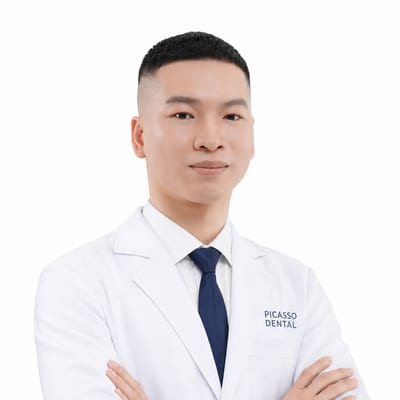
Medically reviewed by Dr. Phùng Văn Thuận, DDS — Orthodontics
Orthodontist with 10+ years and 1,500+ completed cases across fixed appliances, lingual orthodontics and Invisalign clear aligners.
Last reviewed: September 27, 2026