Key answer
Not everyone is an ideal candidate for dental implants. These 7 clinical criteria determine suitability — and what to do if you don't meet all of them.
Dental implants are widely regarded as the gold standard for replacing missing teeth — and with good reason. They function, feel, and look like natural teeth, and with proper care they can last for decades. But they are not the right solution for every patient at every stage of life.
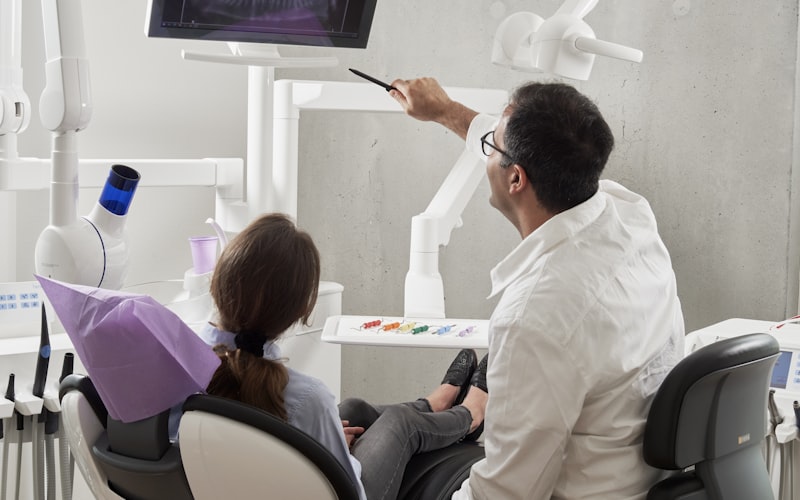
At Picasso Dental Clinic, we carry out a thorough candidacy assessment before recommending implants to any patient. This involves clinical examinations, digital X-rays, and often 3D CBCT cone beam scanning to evaluate the jaw in three dimensions. The seven criteria below are what our implant specialists look for — and understanding them will help you arrive at your consultation fully informed.
If you are also researching treatment costs, our dental costs guide covers implant pricing across our clinics in Hanoi, Da Nang, Ho Chi Minh City, and Da Lat.
1. Sufficient Jawbone Density and Volume
Dental implants are titanium posts anchored directly into the jawbone. For osseointegration — the process by which bone fuses around the implant — to succeed, there must be adequate bone volume and density at the implant site.
When a tooth is lost, the underlying jawbone begins to resorb (shrink) almost immediately because it is no longer stimulated by a tooth root. Patients who have been missing teeth for many years often have significant bone loss.
This does not automatically disqualify you. Bone grafting — including sinus lifts for upper back teeth — can rebuild lost bone before implant placement. At Picasso Dental Clinic, bone grafting is performed in-house, and many patients undergo grafting and implant placement as part of the same treatment plan. See our full overview of the dental implant procedure for how this is staged.
2. Healthy Gum Tissue Free of Active Periodontal Disease
Healthy gums are the foundation of any successful implant. Active gum disease (periodontitis) creates a bacterial environment that dramatically increases the risk of peri-implantitis — a serious infection around the implant that can lead to implant failure.
Before placing any implant, our periodontists will assess probing depths, bleeding on probing, and bone levels around existing teeth. If gum disease is present, it must be fully treated and controlled before implant surgery proceeds. This is non-negotiable.
The good news: most patients can achieve gum health with professional deep cleaning (scaling and root planing) and improved home care. Once stability is confirmed, implant planning moves forward.
3. Good General Health Without Uncontrolled Systemic Conditions
Implant surgery is a minor surgical procedure, and general health affects both healing and long-term success. Conditions that can complicate implant outcomes include:
- Uncontrolled diabetes — elevated blood sugar impairs wound healing and increases infection risk. Patients with well-controlled diabetes, however, have comparable success rates to healthy patients.
- Osteoporosis treated with bisphosphonates — certain medications in this class are associated with a rare but serious jaw condition called osteonecrosis.
- Active cancer treatment — chemotherapy and radiation to the head and neck region affect bone healing and immunity.
- Autoimmune conditions — some, but not all, autoimmune conditions require additional evaluation.
During your consultation at Picasso Dental Clinic, we take a detailed medical history and coordinate with your treating physician where needed. Many systemic conditions are manageable rather than absolute contraindications. Read more about dental work in Vietnam and how we handle complex medical cases.
4. Non-Smoker or Willing to Quit During Healing
Smoking is one of the most significant modifiable risk factors for implant failure. Tobacco smoke reduces blood flow to the gums and bone, impairs immune response, and dramatically slows the osseointegration process. Research consistently shows meaningfully higher implant failure rates in smokers than in non-smokers.
We do not refuse implants to smokers outright, but we strongly advise all patients to stop smoking for at least two weeks before surgery and for a minimum of three months during the healing phase. Patients who cannot commit to this are counselled about the elevated risk.
Vaping and other forms of nicotine delivery carry similar risks. Nicotine replacement patches and gum are acceptable short-term substitutes during the healing window.
5. Realistic Expectations About the Timeline and Process
Dental implants are not a quick fix. The full process — from initial assessment to fitting the final crown — typically takes three to six months, and sometimes longer when bone grafting is required. Understanding and accepting this timeline is an important part of candidacy.
Here is a typical sequence at Picasso Dental Clinic:
- Consultation and imaging (day one)
- Bone grafting if needed (healing: 3–6 months)
- Implant placement (healing: 3–4 months of osseointegration)
- Abutment and crown fitting (2–3 weeks for fabrication)
Patients travelling from Australia, the UK, or elsewhere for dental implants in Vietnam often combine their treatment across two trips, with remote monitoring in between. Our treatment coordinators plan every stage carefully to minimise the number of required visits.
6. Commitment to Long-Term Oral Hygiene
Implants do not decay — but the tissue and bone around them can still be destroyed by bacteria if oral hygiene is neglected. Peri-implantitis, essentially gum disease around an implant, is the leading cause of late implant failure.
Good implant maintenance means:
- Brushing twice daily with a soft-bristle or electric toothbrush
- Using interdental brushes or floss threaders around implant sites
- Using an antibacterial mouthwash
- Attending professional cleans every six months
Patients who struggle with oral hygiene or who have a history of periodontitis need to demonstrate consistent home care before implants are placed. This is as much a lifestyle commitment as it is a clinical one.
7. Missing One or More Teeth With No Untreated Decay in Remaining Teeth
This may seem obvious, but it is worth stating clearly: any active tooth decay must be treated before implant surgery begins. Placing an implant in a mouth with untreated cavities introduces unnecessary bacterial load and creates a higher risk of infection and failure.
Implants can replace a single missing tooth, several teeth, or an entire arch. Patients who are missing all or most of their teeth may be candidates for All-on-4 implants, which use four strategically placed implants to support a full-arch prosthesis.
If you are unsure whether you meet all seven criteria, do not be discouraged. Many of the factors above can be addressed with preparatory treatment. The goal of a candidacy assessment is not to disqualify you — it is to build a roadmap to the best possible outcome.
Take the Next Step
Picasso Dental Clinic offers free initial consultations at our Hanoi location at 16 Chau Long, Ba Dinh, as well as at our Da Nang, Ho Chi Minh City, and Da Lat clinics. Patients travelling from overseas can send X-rays and photographs in advance for a preliminary assessment.
To understand what the full process looks like and how our costs compare to Australia, the UK, or Canada, visit our dental costs guide or read our detailed introduction to dental work in Vietnam. You may also find our post on tooth replacement options useful for comparing implants with bridges and dentures before your consultation.
Our implant team combines advanced digital planning with internationally trained surgeons — so that when you do qualify, your outcome is as predictable as modern dentistry can make it.
See also: High-Quality Dental Implants in Vietnam — What defines quality in implant care beyond brand selection. Dental Implant Success Rate — How candidacy factors affect long-term implant survival rates. Complete Dental Implant Procedure Guide Vietnam — The full step-by-step process from consultation to final crown. 8 Implant Aftercare Mistakes in the First 30 Days — What to avoid once your implant is placed. 8 Things That Can Ruin a Dental Implant — Long-term threats that every implant candidate should understand. 5 Differences Between Mini and Standard Dental Implants — Understanding which implant type matches your anatomy and clinical needs.

Medically reviewed by Dr. Emily Nguyen, DDS — Implant & Cosmetic Dentistry
Founder and Principal Dentist of Picasso Dental, with 15+ years in implant surgery, periodontics and full-arch (All-on-4) rehabilitation. Read full bio
Last reviewed: September 27, 2026