Key answer
Thailand has been Asia's dental tourism leader for decades — but Vietnam is overtaking it on value. These 7 comparisons show why Vietnam now offers a superior proposition for most dental tourists.
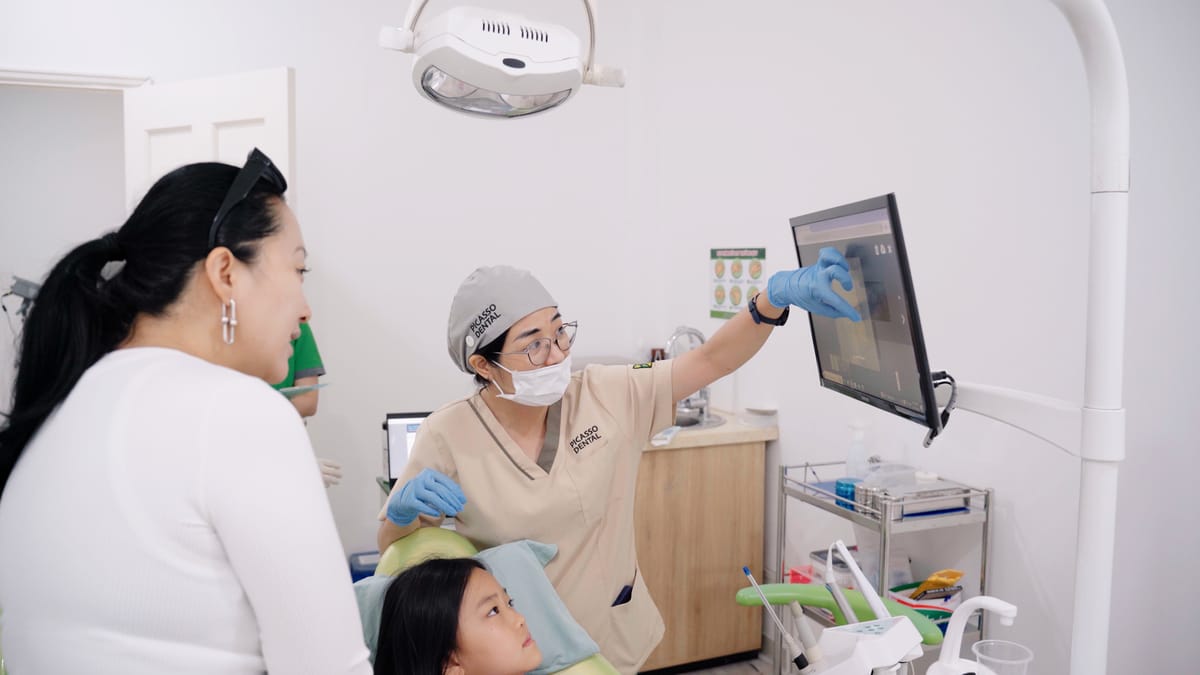
Thailand has dominated dental tourism in Southeast Asia for over two decades. Bumrungrad, Bangkok Dental Spa, and a constellation of internationally accredited clinics built a formidable reputation throughout the 2000s and 2010s, drawing patients from Australia, the Middle East, Europe, and beyond. The infrastructure, the marketing, and the patient volumes are all there.
But reputation built yesterday does not automatically reflect the best value available today — and for a growing number of international dental patients in 2026, Vietnam is now the sharper choice. Not marginally. Significantly.
This article presents seven specific, evidence-based reasons why Vietnam — and Hanoi in particular — now delivers better overall value for international dental patients than Thailand. If you are at the research stage of planning a dental trip to Southeast Asia, this comparison is worth reading before you book.
For a complete overview of what dental tourism in Vietnam looks like end-to-end, start with our complete dental tourism guide for Vietnam 2026.
1. Vietnam’s Lower Cost of Living Translates Directly to Lower Treatment Prices
The most fundamental reason Vietnam undercuts Thailand on dental pricing is not a promotional gimmick — it is macroeconomics. Vietnam’s cost of living is materially lower than Thailand’s in almost every category: rent, labour, utilities, and consumables. Those input costs flow directly into the fee structure at dental clinics.
In Bangkok, a single dental implant using a mid-tier implant system (Osstem or equivalent) typically runs USD 1,100–1,600 when you factor in the crown. At a top-tier Bangkok clinic with imported implant brands such as Straumann or Nobel Biocare, the same procedure can exceed USD 2,000.
In Hanoi, the equivalent procedures sit in a different bracket entirely. A Straumann implant with an all-ceramic crown at a reputable Hanoi clinic with internationally trained staff runs USD 900–1,300. Korean systems such as Osstem come in considerably lower. The cost differential is not noise — it is consistent across procedure types, from porcelain crowns and veneers to full-arch rehabilitations.
For patients planning multi-unit treatments — six veneers, four implants, a combination of crowns and whitening — the cumulative savings over Bangkok pricing can fund most of the return airfare or several extra nights of accommodation.
You can view current, transparent pricing for all major procedures at our dental costs page.
2. The Same Implant Brands at a Lower Total Cost
A common misconception among dental tourists is that lower prices in Vietnam mean inferior products. This is categorically false for clinics operating at the premium end of the Hanoi market.
The implant brands that define the global gold standard — Straumann (Switzerland) and Nobel Biocare (Switzerland), alongside Osstem (South Korea) — are all available in Vietnam, used daily by qualified specialists. The same is true of ceramic crown materials: Vita, IPS e.max, and Lava are all in active use at quality Hanoi clinics.
The price differential versus Bangkok does not arise from using different components. It arises from the labour and overhead cost structure described in point one. A dental technician fabricating your e.max crowns in Hanoi earns significantly less than their counterpart in Bangkok, even when both are skilled and certified. The clinical outcome is equivalent; the invoice is not.
When you evaluate a Vietnamese dental clinic, ask specifically which implant systems and ceramic brands they use, and request a written itemisation. At Picasso Dental Clinic, we are transparent about every component in your treatment plan.
3. A Less Saturated Market Means More Attentive Care
Thailand’s dental tourism industry is large, well-oiled, and in places resembles a production line. The biggest Bangkok clinics see dozens of international patients per day. Throughput optimisation is a commercial necessity at that scale — and while the clinical quality is generally high, the personal attention you receive as an individual patient can suffer.
Vietnam’s dental tourism market is younger and less saturated. The international patient volume at even Hanoi’s busiest clinics is a fraction of what Bangkok’s major players handle. The practical consequence is meaningful: longer consultation times, more unhurried treatment appointments, greater flexibility when your schedule requires adjustment, and a clinical team that genuinely remembers who you are.
Patients who have experienced both markets — and there are an increasing number of them — frequently cite this difference. The care feels less transactional. You are a guest and a patient, not case number forty-seven.
4. Hanoi and Da Nang Offer Genuine Cultural Tourism — Bangkok Increasingly Does Not
Dental tourism works best when the destination offers genuine value beyond the clinic. Treatment gaps, recovery days, and post-procedure downtime all need to be filled with something worthwhile. For patients travelling from Australia, the UK, or Western Europe, a trip that combines dental treatment with a memorable travel experience is far more compelling than one that does not.
Hanoi delivers on this. The Old Quarter is one of Asia’s great urban environments — dense, walkable, and layered with history from the French colonial era, Chinese imperial influence, and the American war. West Lake provides a quieter, more residential atmosphere within minutes of the dental districts. The national cuisine — pho, bun cha, bun bo Hue, cha ca — is world-class and suits post-treatment soft food requirements better than almost any other cuisine on earth. Hanoi’s opera house, the Temple of Literature, and the Ho Chi Minh Mausoleum are all within easy reach.
Bangkok has become one of the world’s great cities, but it has also become a place where international visitors increasingly report feeling processed through tourism infrastructure rather than experiencing it. The scale of commercialisation around the major tourist areas can feel overwhelming.
Da Nang, Vietnam’s third city, offers something else entirely: beach access, proximity to Hoi An, and a quieter pace that suits recovery perfectly. Several Hanoi patients extend their trip southward for exactly this reason.
For an in-depth comparison of the two dental hubs, see our guide to dental tourism in Hanoi vs Bangkok 2026.
5. Vietnam’s English Proficiency Has Improved Dramatically
One of the historical objections to Vietnam as a dental tourism destination was the communication challenge. Bangkok had a head start: decades of international tourism and a larger expatriate community had produced a city with broader functional English across the service sector.
That gap has narrowed substantially. Vietnam’s universities have prioritised English-medium instruction, and the generation of Vietnamese dentists now entering the profession in their late twenties and early thirties are frequently fluent. In Hanoi’s international dental clinics, English-language consultations, treatment planning discussions, and aftercare instructions are standard.
This matters for dental patients specifically, because informed consent, pain management instructions, and complication protocols all depend on clear communication. The language barrier that previously made some patients cautious about Vietnamese clinics is no longer the distinguishing factor it was five years ago.
At Picasso Dental Clinic, our clinical team and patient coordinators communicate comfortably in English across every stage of the patient journey — from the first inquiry email through to your final check-up.
6. Lower Visa and Entry Friction Since Vietnam’s 2023 E-Visa Reform
In August 2023, Vietnam extended its e-visa programme to citizens of all countries, extended the single-entry validity to 90 days, and added multiple-entry options. This was a significant policy shift that has directly reduced the administrative burden on dental tourists.
Prior to this reform, nationals from several Western countries needed to navigate letter-of-approval systems, agency-arranged visas on arrival, or embassy applications. The process was not prohibitive, but it added friction — and friction matters when patients are comparing destinations.
Thailand still offers a 30-day visa exemption for most Western nationalities (extendable once), which is a well-established system. But Vietnam’s updated e-visa regime is now arguably more flexible for the dental tourism use case, because most meaningful treatment plans — particularly multi-unit implant cases or full smile makeovers — benefit from 60-90 day stays to allow for healing phases, osseointegration checks, and final restorations.
Vietnam’s e-visa system now accommodates exactly that timeline without the need for extensions or border runs. The entry logistics, once a minor disadvantage for Vietnam, are now a genuine advantage.
7. Shorter Waiting Times at Quality Vietnamese Clinics
Demand for dental tourism services in Thailand has grown to the point where booking lead times at reputable Bangkok clinics — particularly for implant surgeons and cosmetic specialists — can stretch to weeks. Patients travelling on defined holiday windows sometimes find that the appointment availability does not align with their travel dates.
Vietnam’s dental tourism market, while growing quickly, has not yet reached that level of demand saturation. At quality Hanoi clinics, it is generally possible to schedule a comprehensive consultation within one to three days of arrival and begin treatment within the same week. For patients with limited time, this responsiveness is operationally important.
It also enables a more flexible treatment sequencing. If your clinician identifies a complication or recommends an adjustment to the original treatment plan after a CBCT scan, there is room in the schedule to accommodate that without cascading delays across a tight itinerary.
Practical Tips Before You Travel
If this comparison has moved Vietnam up your shortlist, we recommend reading our 9 practical tips for planning dental tourism in Vietnam before making any bookings. That guide covers what to prepare, how to communicate with your clinic in advance, what documentation to bring, and how to structure your itinerary around your treatment phases.
And when you are ready to compare procedure costs directly, our dental costs page provides a full pricing breakdown across implants, crowns, veneers, and other common procedures — with no hidden fees and no pressure.
Conclusion
Thailand built its dental tourism reputation over decades, and that reputation is not without foundation. For certain patients — those who specifically want JCI accreditation, those with very complex cases requiring subspecialties, or those who are already familiar with Bangkok — Thailand remains a reasonable choice.
But for the majority of international dental tourists evaluating Southeast Asia in 2026, Vietnam now presents a compelling case across every dimension that matters: price, product quality, clinical attention, cultural experience, visa logistics, English communication, and schedule flexibility. The gap that once separated the two destinations has closed — and in several respects, Vietnam has moved ahead.
Picasso Dental Clinic is located at 16 Chau Long Street, Ba Dinh, Hanoi. We welcome international patients for consultations, second opinions, and full treatment plans. Contact us to begin planning your dental visit.

Reviewed for accuracy by Dr. Emily Nguyen, DDS — Implant & Cosmetic Dentistry
Founder and Principal Dentist of Picasso Dental, with 15+ years in implant surgery, periodontics and full-arch (All-on-4) rehabilitation. Read full bio
Last reviewed: September 27, 2026