Key answer
Dental tourism to Vietnam isn't just about saving money — it's an extraordinary travel experience. Here are 7 reasons why patients combine treatment with a holiday.
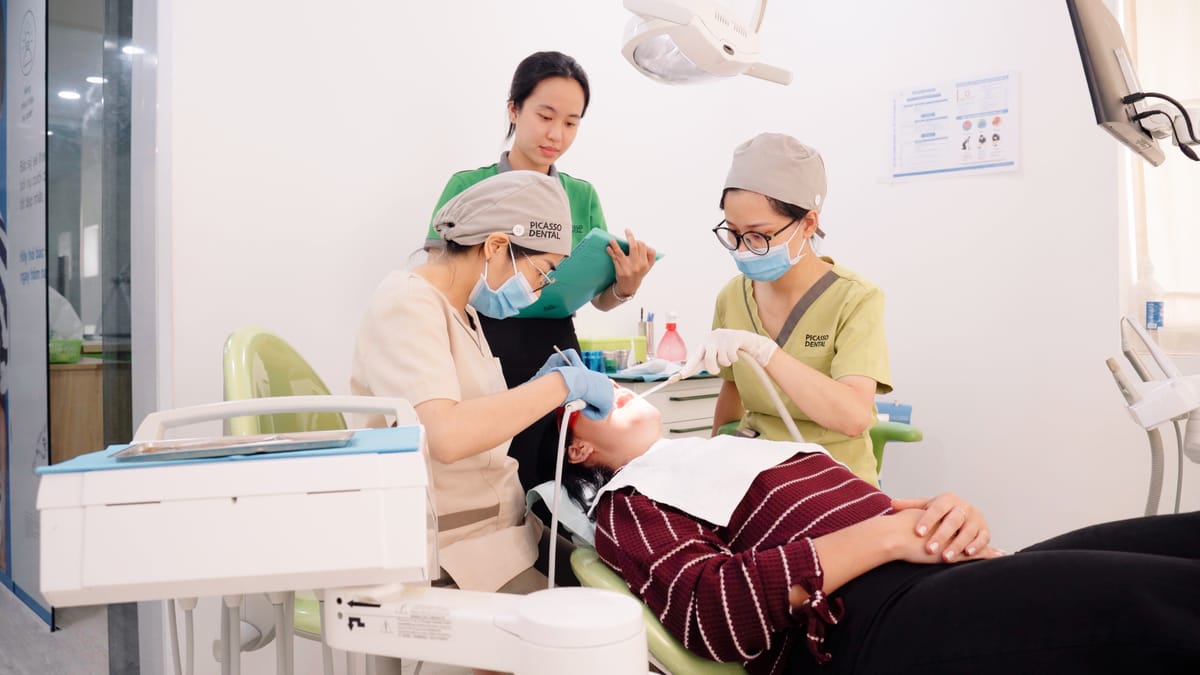
When patients from Australia, the UK, and Europe first enquire about dental treatment in Vietnam, the conversation typically begins with numbers — cost comparisons, savings calculations, the arithmetic of premium implants or full-arch veneers priced in Vietnamese dong versus Australian dollars. The financial case is, as any honest analysis confirms, overwhelming.
But the patients who make the trip and come back most enthusiastic about their experience rarely describe it primarily in financial terms. What they describe is a country — its food, its energy, its extraordinary landscapes, its warmth — that turned what might have been a purely transactional medical trip into one of the most memorable travel experiences of their lives.
This article documents seven reasons why combining a Vietnam holiday with dental treatment at Picasso Dental Clinic is not a compromise or a trade-off, but a genuinely compelling proposition in its own right.
1. Vietnam Is Genuinely World-Class for Food, Culture, and Landscapes
Vietnam has, over the past decade, established itself as one of the world’s most highly regarded travel destinations — not merely within Southeast Asia but globally. Condé Nast Traveller, Lonely Planet, and Travel + Leisure have consistently ranked Vietnam among the world’s top destinations, and the country’s tourism infrastructure has matured accordingly.
The cultural depth is remarkable for a country of Vietnam’s geographic size. Hanoi’s Old Quarter — a UNESCO-listed neighbourhood of narrow streets, ancient guild trades, French colonial architecture, and street food culture — is one of the most distinctive urban environments in Asia. Da Nang sits at the centre of a heritage corridor that includes Hội An Ancient Town (a UNESCO World Heritage Site), the Marble Mountains, and My Son Sanctuary. Ho Chi Minh City offers a different register entirely — a kinetic, modern metropolis with extraordinary museums, food markets, and nightlife.
For patients who have always been curious about Vietnam but never quite organised the trip, dental treatment provides the commitment mechanism that turns intention into action. The treatment is the reason to book; the country is the reward.
2. Treatment Gaps Between Appointments Are Ideal for Sightseeing
The timeline of most complex dental treatment creates a natural structure that works surprisingly well for tourism. Implant procedures, for example, involve placement of the implant fixture, a healing period of one to three weeks during which osseointegration begins, and then a follow-up appointment for impressions, abutment placement, and crown fitting. Veneer treatment involves consultation, preparation, temporary placement, and final bonding appointments separated by a few days to a week.
These inter-appointment windows — often three to seven days — are precisely the right length for day trips and multi-day excursions from the clinic city. Patients treating in Hanoi use this time to take the overnight train to Sapa, join a Ha Long Bay cruise, or explore Ninh Binh. Patients in Da Nang walk the lantern-lit streets of Hội An, visit My Son, or take a cooking class. The waiting time that would feel dead in a home-country treatment context becomes active, rich travel time.
Our international patient coordinators at Picasso Dental Clinic help patients structure their treatment schedules to maximise these windows. Learn more about dental work in Vietnam and how we plan treatment timelines around patient travel goals.
3. The Savings Fund the Holiday and More
The financial arithmetic of a dental tourism trip to Vietnam is worth stating plainly, because the savings are significant enough to reframe how patients think about the trip entirely. A patient from Sydney requiring six implants with Nobel Biocare fixtures, custom abutments, and zirconia crowns would face a substantial bill at a quality private clinic in Australia. The same treatment at Picasso Dental Clinic, with the same implant brand and comparable clinical quality, is available for a fraction of that cost.
After accounting for return flights from Sydney, a couple of weeks of excellent mid-range hotel accommodation in Hanoi, and a generous food and sightseeing budget, the total trip cost including treatment remains well below what the treatment alone would cost in Australia.
The surplus funds not just the holiday component of the trip but represents real, tangible financial improvement in the patient’s life. Many patients we see at Picasso Dental Clinic describe their dental tourism trip as the most financially rational decision they have made in years.
See our detailed dental costs in Vietnam breakdown for current pricing across all treatment categories.
4. Ha Long Bay, Hội An, and Sapa Are Within Easy Reach of Clinic Cities
One of the most practically important features of Vietnam’s tourism geography for dental patients is that the country’s most celebrated destinations are efficiently accessible from the four cities where major dental clinics — including Picasso Dental Clinic — are located.
From Hanoi, Ha Long Bay is a 3.5-hour drive, easily accessible as a two-night cruise. Sapa — the mountain town famous for its rice terraces and hill-tribe villages — is reachable by overnight train or four-hour bus. Ninh Binh, sometimes called “Ha Long Bay on land” for its karst limestone formations, is two hours by road. From Da Nang, Hội An is a 30-minute taxi ride. The Bà Nà Hills cable car (with its famous French Village and Golden Bridge) is less than an hour. From Ho Chi Minh City, the Mekong Delta is a half-day trip, the Cu Chi Tunnels are two hours, and the Vietnamese coast is within easy reach.
This geographic convenience means that patients are never choosing between treatment and travel — they are combining both, with each excursion fitting naturally around the treatment schedule.
5. Recovery Foods — Phở, Cháo, Fresh Juices — Are Perfect Post-Dental Soft Diet Options
One of the less obvious but genuinely useful aspects of recovering from dental treatment in Vietnam is the exceptional alignment between traditional Vietnamese cuisine and the dietary requirements of the post-treatment period. After implant placement, extraction, or significant restorative work, patients are advised to follow a soft diet for several days to several weeks, avoiding hard, crunchy, hot, or sticky foods.
Vietnam’s food culture provides an almost perfectly curated soft-diet menu. Phở — Vietnam’s iconic noodle soup, made with slow-cooked bone broth, soft rice noodles, and tender meat — is nutritious, warm (not hot), and requires no significant chewing. Cháo, the Vietnamese rice porridge, is gentle on healing gum tissue and available in dozens of variations, including chicken, fish, and pork with ginger. Fresh fruit juices — mango, guava, passion fruit, watermelon — are ubiquitous at street stalls and café menus. Steamed tofu, soft fish dishes, and light soups round out a recovery diet that is genuinely more varied and interesting than the equivalent options available in most Western cities.
Learn more about Vietnamese foods that support dental recovery in our guide to traditional Vietnamese foods and oral health.
6. Vietnam Is Safe, Welcoming, and Easy for First-Time Visitors
For patients who have not previously travelled to Southeast Asia, Vietnam is consistently rated as one of the safest and most visitor-friendly countries in the region. Violent crime against tourists is extremely rare. The country has a low incidence of the traveller health risks (particularly mosquito-borne illness) that affect some of its neighbours. Transport infrastructure in major cities has improved substantially, with Grab (Vietnam’s dominant ride-hailing app) providing safe, metered, English-navigable transport for most intra-city journeys.
English is widely spoken in the tourist districts of Hanoi, Da Nang, and Ho Chi Minh City, and at all major hotels, restaurants, and attractions. Signage in key areas is bilingual. Payment infrastructure has modernised rapidly — most restaurants, shops, and services accept international credit and debit cards.
For patients travelling alone — which a significant proportion of dental tourists do — this ease of navigation is not trivial. It means that the cognitive and logistical overhead of the trip does not add stress to what is, for some patients, already an unfamiliar experience of travelling specifically for medical care.
7. Many Patients Extend Their Trip and Explore Multiple Cities While Their Restorations Are Being Made
The laboratory phase of complex restorative work — particularly full-arch zirconia restorations, multiple-unit bridge fabrication, or full sets of porcelain veneers — takes approximately five to ten working days at a quality dental laboratory. During this time, patients are in temporary restorations, comfortable to travel, and have a structured return appointment date.
Experienced dental tourists at Picasso Dental Clinic use this window strategically. A patient treating in Hanoi might take a four-day trip to Da Nang and Hội An during lab fabrication, returning to Hanoi for their fit and delivery appointment. A patient at our Da Nang clinic might spend the lab window in Ho Chi Minh City. Others use the time to travel north to Sapa, explore the Central Highlands, or take a slow journey along the coast.
The result is that a dental tourism trip to Vietnam — particularly for full-arch reconstruction or comprehensive veneer work — naturally expands into a two-to-three week itinerary that covers multiple Vietnamese destinations. Patients return home with a new smile, a substantially lighter financial burden, and a travel experience that stands independently of the treatment that occasioned it.
For practical guidance on structuring a dental tourism trip around your treatment timeline, read our 9 tips for planning dental tourism in Vietnam or contact Picasso Dental Clinic’s international patient team directly.

Reviewed for accuracy by Dr. Emily Nguyen, DDS — Implant & Cosmetic Dentistry
Founder and Principal Dentist of Picasso Dental, with 15+ years in implant surgery, periodontics and full-arch (All-on-4) rehabilitation. Read full bio
Last reviewed: September 27, 2026