
Key answer
Bruxism damages teeth silently during sleep. A custom night guard from Serenity International Dental Clinic protects your teeth, jaw, and restorations.
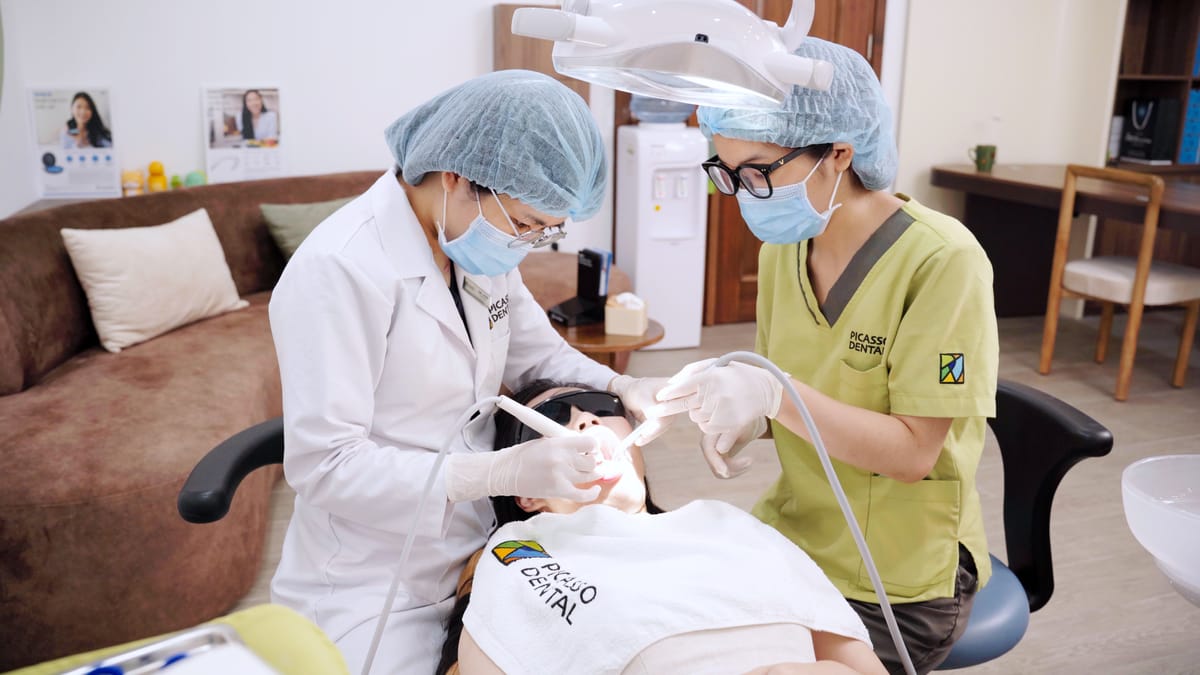
Bruxism — the habitual grinding or clenching of teeth, most commonly during sleep — is one of the most destructive dental conditions that patients are largely unaware they have. Unlike a cavity that you can see, or a toothache that demands your attention, bruxism operates in silence during the hours when your conscious mind is completely absent. By the time a patient (or their partner, who is kept awake by the grinding sound) notices something is wrong, the damage to tooth structure is often extensive and expensive to repair.
The global estimate is that 8–10% of adults grind their teeth during sleep, though the true prevalence is likely higher because many mild-to-moderate cases go undiagnosed for years. At Serenity International Dental Clinic, we identify bruxism patterns in patients during routine check-ups through clinical signs — characteristic wear facets on the biting surfaces, enamel chipping at the incisal edges, sensitive teeth, and jaw muscle hypertrophy — and recommend a custom occlusal night guard as the primary protective intervention. These five reasons explain exactly why a night guard can be genuinely life-changing for teeth grinders. For information on related dental services and costs, visit our services page and dental costs page.
1. Prevent Enamel Wear That Cannot Be Reversed
Tooth enamel is the hardest biological substance in the human body — harder than bone — but it has a critical limitation: it cannot regenerate or repair itself. Once enamel is worn away, it is gone permanently. The body has no mechanism for replacing it. The only clinical options for managing severe enamel loss are restorative: veneers, crowns, or composite bonding to rebuild the lost structure.
Bruxism generates biting forces of 200–400 N during grinding episodes — significantly higher than the 80–150 N produced during normal chewing — and applies these forces repeatedly, rhythmically, and for extended periods during sleep. Over months and years, this progressive mechanical abrasion flattens the cusps of posterior teeth, shortens the vertical height of anterior teeth, and thins the enamel layer to the point where the underlying dentine becomes exposed.
Exposed dentine is yellow rather than white, is hypersensitive, and is far more susceptible to decay than enamel. It also cannot absorb the same functional loads as enamel, accelerating further breakdown. A custom night guard absorbs and distributes the grinding forces across an acrylic surface rather than directly between tooth-to-tooth contacts, preventing enamel abrasion from occurring at all. You can read more about managing hypersensitivity — a common outcome of enamel wear — in our post on reducing tooth sensitivity.
2. Protect Crowns, Veneers, and Implants From Grinding Forces
For patients who have already invested in dental restorations — porcelain veneers, ceramic crowns, implant-supported prosthetics, composite bonding — bruxism represents a specific and serious threat. The forces generated during bruxism are orthogonal to the direction these restorations are designed to handle.
Porcelain veneers are designed to resist shear forces from normal chewing but are vulnerable to the tensile and compressive forces generated during lateral grinding movements — the characteristic back-and-forth of nocturnal bruxism. Grinding can fracture or delaminate a veneer months after it has been perfectly placed. Ceramic crowns on posterior teeth are at risk of fracture under the extreme compressive loads of clenching. Implant-supported restorations, which lack the periodontal ligament’s shock-absorbing function, transmit grinding forces directly to the bone-implant interface — contributing to peri-implant bone loss over time.
A custom night guard eliminates this risk by intercepting the grinding forces before they reach the restorations. For patients who have undergone cosmetic treatment, full-mouth rehabilitation, or implant placement at Serenity International Dental Clinic, a night guard is not optional — it is part of the long-term protection plan for the investment you have made. For more information on protecting your restorations, visit our dental work in Vietnam guide.
3. Reduce Jaw Muscle Tension and Morning Headaches
The muscles responsible for jaw movement — the masseter, temporalis, and medial pterygoid — are among the strongest and most fatigue-resistant muscles in the body relative to their size. During sleep bruxism, these muscles contract repetitively for extended periods, sometimes for several hours per night. The result is a degree of muscular fatigue and tension that many patients have come to accept as simply how they always feel in the morning.
The most common complaint associated with bruxism-related muscle tension is temporal headaches — headaches that begin at the temples or radiate from the jaw angle upward. Many patients have been prescribed migraine medications or investigated for neurological causes before the dental origin of their recurring headaches is identified. Other common symptoms include jaw stiffness on waking, facial soreness, ear pain, and difficulty opening the mouth fully — collectively classified as temporomandibular disorder (TMD) symptoms.
A well-fitted custom night guard changes the neuromuscular activity of the jaw during sleep by altering the proprioceptive input from the occlusal surfaces. In most patients, this reduces the intensity and frequency of grinding episodes, allowing the masticatory muscles to rest properly during sleep. Patients who have worn a custom guard consistently for 4–6 weeks commonly report significantly reduced morning headaches, less jaw stiffness, and improved sleep quality. If you are currently experiencing jaw pain and are not sure whether bruxism is involved, schedule a clinical assessment at Serenity International Dental Clinic — diagnosis is straightforward.
4. Prevent Cracked Teeth That Require Crowns or Extraction
The forces generated by bruxism — particularly clenching, where extreme vertical loads are applied without movement — can cause teeth to crack. Dental cracks range from superficial craze lines (cosmetically visible but clinically benign) to incomplete fractures that extend into dentine, to complete crown fractures, to catastrophic vertical root fractures that require extraction.
The cracked tooth syndrome is particularly insidious: a crack through dentine causes sharp, transient pain on biting that disappears immediately, making it difficult for patients to localise or describe consistently. Many patients with cracked teeth attribute the symptom to sensitivity or a “weird feeling” and delay seeking treatment until the crack has propagated to an extent that requires either a full-coverage crown (if the crack is above the gumline) or extraction (if it has extended into the root).
A night guard significantly reduces the risk of crack initiation and propagation by absorbing and distributing the compressive clenching forces across its acrylic surface. While no guard eliminates crack risk entirely for severe bruxers, a custom-fitted hard acrylic guard is the most effective conservative intervention for preventing cracked tooth syndrome. This is particularly important for patients with posterior teeth that already have large existing restorations — heavily filled teeth are more crack-susceptible than intact ones. For information on the cost of crowns if repair is needed, visit our dental costs page.
5. Improve Sleep Quality by Reducing Jaw Clenching Tension
The relationship between bruxism and sleep quality is bidirectional and complex. Bruxism is associated with arousals from deeper sleep stages — the grinding episodes tend to occur during transitions between sleep phases — and the muscle tension and microarousals generated by bruxism reduce the proportion of restorative deep sleep (slow-wave sleep) and REM sleep a patient achieves per night.
Poor sleep quality, in turn, is associated with increased psychological stress and anxiety — both of which are recognised as precipitating factors for bruxism. The result is a self-reinforcing cycle: stress drives bruxism, bruxism disrupts sleep, disrupted sleep increases stress, increased stress intensifies bruxism.
A custom night guard breaks into this cycle at the physical level — reducing the mechanical grinding activity and the associated muscle tension, which in turn reduces the frequency and intensity of arousals during sleep. Many patients report that wearing a night guard consistently produces a measurable improvement in how rested they feel on waking, independent of any change in their sleep environment or habits. When bruxism is severe, our clinical team at Serenity International Dental Clinic may also discuss adjunct treatments — botulinum toxin injection to the masseter muscle is an effective option for reducing clenching force in patients with persistent, severe bruxism that is not adequately managed by a guard alone.
Custom vs Over-the-Counter: Why the Difference Matters
Pharmacies and online retailers sell over-the-counter (OTC) bite guards in standard sizes, and many patients try these before visiting a dentist. OTC guards have one significant clinical limitation: they do not fit precisely to the individual patient’s dentition, which means they can shift during use, alter the bite relationship, and in some cases actually increase clenching activity rather than reducing it.
A custom night guard fabricated from impressions of your actual teeth — as provided at Serenity International Dental Clinic — fits precisely to your arch, maintains the correct occlusal vertical dimension, and does not impede normal breathing or jaw positioning during sleep. For patients who have tried OTC guards and found them uncomfortable or ineffective, the experience of a properly fitted custom guard is often transformative.
If you are in Vietnam for a broader dental treatment visit, a custom hard acrylic night guard can be fabricated and fitted within your trip timeframe. Explore the full range of preventive and protective services we offer at our services page, and contact us to discuss whether a night guard is the right protective intervention for you.
Related Reading
- Fractured and Broken Teeth — How bruxism leads to cracked and fractured teeth and when restorative treatment is needed
- All You Need to Know About Dental Amalgam Safety — How grinding can accelerate wear on existing restorations including amalgam fillings
- Thumb Sucking and Tips to Help Your Child Stop — Childhood oral habits that affect dental development and may contribute to bruxism patterns
- 8 Things Your Dentist Sees That You Don’t Notice — What clinicians detect at a routine check-up
- Night Guards for Table Tennis Players — How competitive athletes manage tournament-stress grinding, a useful perspective if your bruxism is tied to pressure or sport

Medically reviewed by Dr. Trần Thu Thảo, DDS — General & Restorative Dentistry
Hamburg-trained general dentist working across prosthodontics, endodontics and pediatric dentistry.
Last reviewed: September 27, 2026