Key answer
Hanoi and Ho Chi Minh City's expat communities consistently choose Serenity International Dental Clinic. Here are the 5 reasons why.
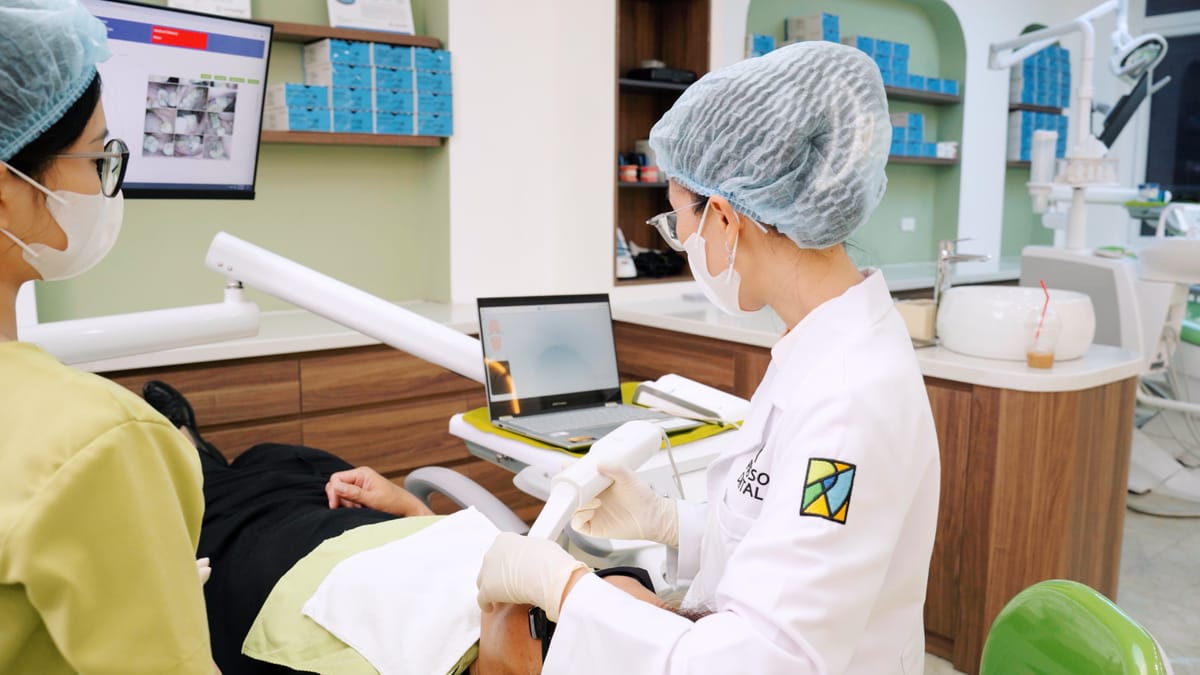
Dental care is one of the quieter but more consequential decisions an expat makes after arriving in Vietnam. In countries with familiar healthcare systems — the UK’s NHS, Australia’s Medicare, North American employer insurance — the choice of dentist is often made by inertia: whoever is on the approved provider list, whoever is closest to the office, whoever a colleague uses. The underlying quality of care is assumed to be within an acceptable range by virtue of systemic accreditation.
In Vietnam, that assumption of uniformity does not apply. The range of clinical quality in the local dental market is genuinely wide. Some clinics operate to international standards that are comparable with — and in some respects superior to — private dental practices in Western countries. Others do not. For an expat establishing long-term dental care in Vietnam, choosing correctly matters, and the consequences of choosing poorly — substandard restorations, inadequate sterilisation, communication failures in clinical contexts — compound over time.
Serenity International Dental Clinic has become the preferred dental provider for the English-speaking expat communities in Hanoi and Ho Chi Minh City. This article explains the five specific reasons why that preference is consistently expressed.
1. English-Speaking Clinical Team — No Language Barrier for Ongoing Care
The most common source of dental anxiety among expats in Vietnam is not procedural — it is communicative. The fear of being unable to describe pain accurately, to understand a diagnosis clearly, to ask meaningful questions about treatment options, or to express shade or aesthetic preferences in a restoration, sits underneath many expat dental enquiries we receive.
At Serenity International Dental Clinic, the resolution of this concern is structural, not incidental. Our clinical team conducts consultations, diagnosis, treatment planning discussions, and post-operative instructions in English. This is not a translation service layered over a Vietnamese-language clinical process — it is clinical communication in English from the treating clinician.
The practical significance of this is substantial. Dentistry is a discipline in which the patient’s subjective experience — their description of pain quality, location, and onset; their aesthetic preferences; their sensitivity concerns; their questions about alternatives — is clinically important. A patient who cannot articulate these things to the person making clinical decisions is not fully participating in their own care. At Serenity, they can.
This matters particularly for ongoing expat care — not just the first visit, but the annual check-up, the bite adjustment eight months after a crown, the sensitivity query that arises while eating. Every interaction in the clinical relationship benefits from direct, fluent English communication.
Explore our full range of dental services to understand the treatments available to expat patients at all three clinic locations.
2. Consistent Quality Across All Three Locations — Same Standards Whether in Hanoi, Da Nang, or Ho Chi Minh City
Expats in Vietnam are mobile. Professionals relocate between Hanoi and Ho Chi Minh City for work assignments. Families visit Da Nang for extended holidays. Teaching and NGO personnel rotate between postings. The ability to receive consistent, continuous dental care across different cities — from a clinic that knows your history and operates to the same standards regardless of location — is a genuine practical advantage.
Serenity International Dental Clinic operates three locations: our flagship Ngoại Giao Đoàn clinic in Hanoi, our Da Nang clinic, and our Ho Chi Minh City clinic. Across all three, the clinical protocols are standardised: the same sterilisation systems, the same equipment specifications, the same implant and restorative material brands, the same treatment documentation standards.
When a patient who was first treated at our Hanoi location visits our Da Nang clinic for a check-up, their clinical records are accessible, their treatment history is known, and the clinical team operates in the same way. There is no recalibration required, no need to explain your history from scratch, no uncertainty about whether the standards match.
For expats whose professional lives involve movement between Vietnamese cities — and there are tens of thousands of them — this geographic consistency is not a minor convenience. It is a meaningful feature of a long-term healthcare relationship.
3. Transparent Pricing With No Surprise Invoices
Pricing opacity is one of the most frequently cited sources of frustration in dental care across Southeast Asia. The experience of receiving an itemised invoice significantly higher than the quoted price — with unexplained additions for materials, consultation fees, consumables, or unspecified technical charges — is common enough that experienced expats approach dental quotations with healthy scepticism.
Serenity International Dental Clinic operates a fully transparent pricing model. Before treatment commences, patients receive a written treatment plan with itemised costs. That document specifies what will be done, what materials will be used (including implant brand and model where relevant), and what the total cost will be. The final invoice matches the quoted figure. If the clinical picture changes during treatment — which occasionally occurs — the patient is informed and must approve any cost change before additional work proceeds.
This commitment to pricing transparency reflects a straightforward principle: dental care decisions should be made on the basis of clinical need and patient choice, not on the basis of financial surprises that emerge only after treatment is complete. Expats who have experienced opaque billing elsewhere report that this transparency is one of the things they value most about their experience at Serenity.
Our dental costs in Vietnam guide provides benchmark pricing for all major treatments.
4. Comprehensive Services That Eliminate the Need for Specialist Referrals
A common inconvenience of dental care in fragmented markets is the referral chain. A general dentist identifies a need for periodontal treatment and refers to a specialist. The periodontist identifies a need for implant treatment and refers to an oral surgeon. The oral surgeon completes implant placement and refers back to the general dentist for the crown. Each referral involves a new consultation, a new set of administrative processes, and — potentially — an additional set of costs.
At Serenity International Dental Clinic, the clinical team encompasses the full spectrum of dental specialties: general dentistry, cosmetic dentistry, orthodontics (including clear aligners), implantology, periodontics, endodontics, oral surgery, and paediatric dentistry. Complex multi-specialty treatment — a full-arch implant rehabilitation requiring bone grafting, implant placement, and prosthetic design — is coordinated internally, with the treating clinicians communicating directly with each other.
For expats managing comprehensive dental needs — the kind that accumulate over years without regular care in a previous posting, or the kind that develop with age and require multi-specialty attention — this integration is clinically and logistically significant. One clinic, one set of records, one treatment coordinator, one trusted clinical relationship.
See the full list of treatments available at our services page.
5. Loyalty and Continuity of Care — Patient History Is Maintained Across Visits
Long-term dental health requires longitudinal data. A dentist who sees you once and never again has no baseline. A dentist who has seen you every six months for three years has a richly contextualised understanding of how your dentition changes over time — which surfaces show early wear, which areas accumulate calculus, which restorations are ageing well and which are approaching end of life.
At Serenity International Dental Clinic, patient records are maintained comprehensively across visits and across locations. Every appointment is documented with clinical notes, radiographic records, photographs where relevant, and treatment details. When you return — whether after six months, after a year, or after a two-year absence for a posting overseas — your clinical history is complete and accessible.
This continuity has clinical value that compounds over time. Early caries detected at a routine six-month check-up because a dentist has a baseline radiograph from two years prior is a filling. The same lesion missed because there is no baseline — and detected two years later at a different clinic — is potentially a root canal. The value of continuity is not always visible in any single appointment, but it is measurably significant over the timescale of an expat’s dental health.
The expat community in Vietnam is large, diverse, and long-established. Serenity International Dental Clinic has been a trusted part of that community’s healthcare landscape for over fifteen years. For expats at any stage of their posting — newly arrived and establishing care, mid-posting and maintaining health, or preparing to depart and wanting comprehensive documentation of their dental status — we welcome the opportunity to be your long-term dental home in Vietnam.
Read more about dental work in Vietnam for an overview of clinical standards and what to expect from quality care in the country.
Related Articles
- 6 Common Myths of Getting Dental Work in Vietnam
- 6 Dos and Don’ts When Having Dental Work Done in Vietnam
- 9 Questions to Ask Any Dental Clinic in Vietnam Before You Book
- 8 Reasons Vietnamese Dental Care Quality Rivals Much More Expensive Countries
- Dental Work in Vietnam From A to Z
- When Should You Get Dental Treatment Done in Vietnam
- 10 Reasons Serenity International Dental Clinic Treats Patients From 60+ Countries
- Vietnam’s Affordable Healthcare System: Ready for Global Health Tourism
- Vietnam’s Dental Tourism Market Set to Reach USD 5.5 Billion by 2030
- Vietnam Dental Tourism Facts and Figures 2014
- Travel Insurance for Dental Work Abroad: What You Need to Know
- Dental Work in Vietnam for Australians: Complete Cost Savings Guide
- 10 Reasons Dental Implants in Hanoi Cost 70% Less Than in Australia
- 7 Reasons Serenity Dental Hanoi Is the Highest-Rated Clinic for International Patients — the factors behind Serenity’s consistent top ratings from international patients

Reviewed for accuracy by Dr. Emily Nguyen, DDS — Implant & Cosmetic Dentistry
Founder and Principal Dentist of Picasso Dental, with 15+ years in implant surgery, periodontics and full-arch (All-on-4) rehabilitation. Read full bio
Last reviewed: September 27, 2026