Key answer
Invisalign delivers life-changing results — but only when patients go in prepared. These 10 facts separate successful Invisalign journeys from disappointing ones.
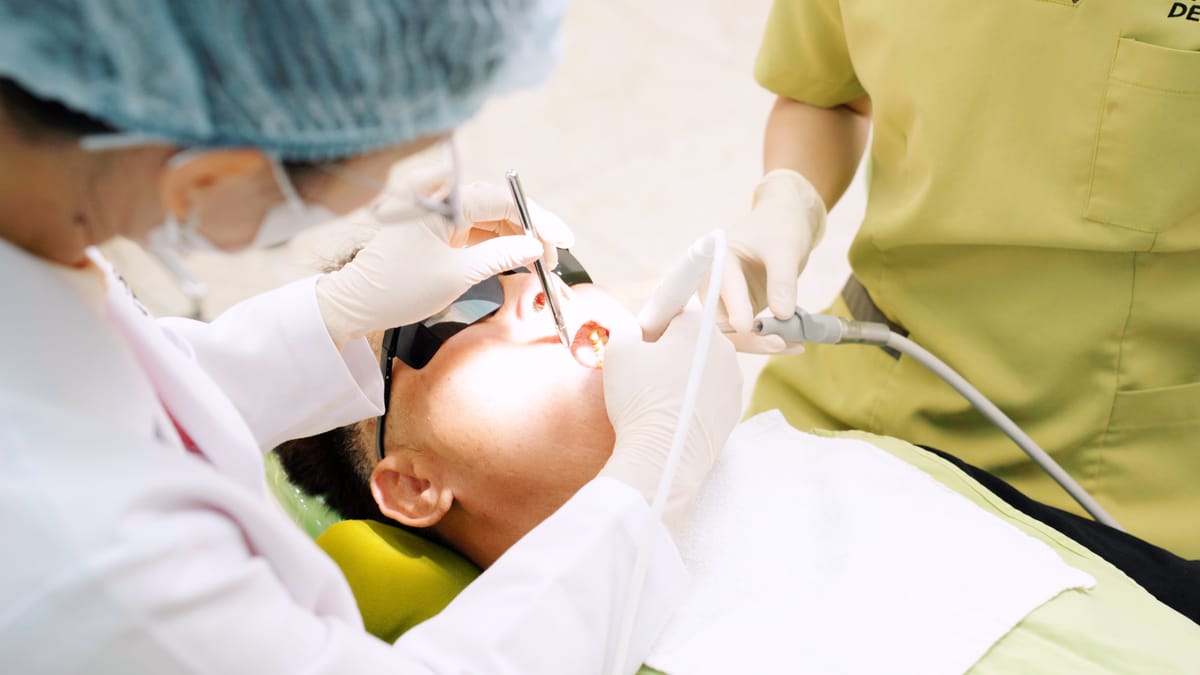
Invisalign has transformed orthodontics. The ability to straighten teeth using a series of clear, removable aligners — without the brackets, wires, and dietary restrictions of traditional braces — has made orthodontic treatment accessible and acceptable to millions of adults who would never have considered metal braces.
But Invisalign is not a passive treatment that simply happens to you. It is a highly active collaboration between you and your orthodontist, and patients who go in without understanding what is truly required frequently experience slower progress, extended treatment timelines, and results that fall short of expectations.
At Serenity International Dental Clinic, we believe informed patients get better outcomes. This guide covers the ten things our clinical team tells every Invisalign patient before their treatment begins — the facts that separate successful journeys from frustrating ones. For a broader overview of why adults are choosing Invisalign, see our post on 8 reasons adults choose Invisalign over metal braces.
1. Compliance Is Non-Negotiable: 22 Hours Per Day
The most important thing to know before starting Invisalign is also the most frequently underestimated: aligners must be worn for 22 hours every day — not 18, not 20, not “most of the time.”
Teeth move in response to sustained, consistent pressure. Invisalign aligners create that pressure by fitting very slightly tighter than the current tooth position. When aligners are worn for fewer than the required hours, the pressure is insufficient to move teeth to their target position before the next aligner is due. The result is that subsequent aligners fit poorly, treatment stalls, and refinements (additional aligner series) become necessary to get back on track.
The 22-hours-per-day figure leaves just two hours for eating, drinking anything other than water, and tooth cleaning. That is realistically one or two meals per day with aligners out. Every snack, every tea, every coffee, every glass of wine — aligners come out first.
Patients who treat aligner wear as optional or approximate almost universally experience extended treatment times. Patients who take the 22-hour requirement seriously, every single day, achieve their prescribed outcome on schedule.
Be honest with yourself before starting. If your lifestyle — frequent business lunches, long social dinners, a habit of constant snacking — makes 22-hour daily wear genuinely difficult to maintain, discuss this with your orthodontist before committing to Invisalign. There are cases where traditional braces produce better outcomes for patients who struggle with compliance.
2. You Will Need Attachments on Many Teeth
Many patients are surprised to discover that “invisible” Invisalign involves small, tooth-coloured composite resin bumps glued directly onto their teeth. These are called attachments, and they are essential to how Invisalign achieves complex tooth movements.
Aligners are smooth plastic shells. Without attachments, they can only tip teeth — they cannot effectively rotate teeth, move teeth vertically, or create the precise three-dimensional movements needed for good outcomes. Attachments act as handles: the aligner’s precisely engineered pockets grip the attachments to exert force in a specific direction that the aligner alone could not achieve.
The number and placement of attachments varies based on your individual treatment plan. Some patients have just a few; others have them on nearly every tooth. Attachments are bonded with the same composite material used for tooth-coloured fillings and are matched to your tooth colour as closely as possible — but they are visible under close inspection and can be felt by your tongue until you adapt.
Attachments are removed at the end of treatment with no damage to the tooth surface.
3. Refinements Are Normal and Included
When patients complete their first series of Invisalign aligners and their teeth have not quite reached the planned final position, refinements are prescribed. Refinements are additional series of aligners — a new scan, new trays — designed to close the gap between where the teeth are and where the treatment plan said they would be.
Refinements are not a sign of treatment failure. They are built into the Invisalign system because teeth are biological structures that do not always move exactly as computer modelling predicts. Most complex cases require at least one round of refinements; comprehensive adult cases often require two or more.
At Serenity International Dental Clinic, refinements are included within the original treatment fee for Invisalign cases, which is why it is important to understand exactly what is and is not included before signing any treatment agreement. Clarify with your orthodontist upfront whether refinements are covered in your quoted price and, if so, how many rounds are included.
When you start Invisalign, plan mentally for a treatment that may take longer than the initial estimate. Patients who enter treatment expecting a fixed twelve-month endpoint and then require refinements are often frustrated. Patients who understand that the target is the final result — not the timeline — maintain better compliance and achieve better outcomes.
4. Retainers Are Forever
Invisalign straightens your teeth. Retainers keep them straight. These are two entirely separate phases, and many patients fail to understand that the retainer phase is permanent.
After completing Invisalign treatment, your teeth are held in their new positions by the elastic fibres of the periodontal ligament — the connective tissue that connects teeth to the jaw bone. These fibres have a memory: they want to pull teeth back toward their original positions. This tendency, called orthodontic relapse, occurs in virtually every patient to some degree if retainers are not worn.
In the first six months after completing treatment, retainers must be worn at night every night without exception. After six months, the requirement typically reduces to every other night, then to several nights per week as the fibres gradually adapt. But “every few nights” remains the requirement indefinitely for most patients — not for a year or two, but for the rest of your life.
Patients who do not understand this commitment before starting treatment are often shocked at the end and may discontinue retainer wear prematurely. The consequence — and it is common — is relapse. Teeth drift back, and the entire investment in Invisalign is gradually undone.
This is not a flaw in the Invisalign system; it is a biological fact of orthodontics that applies equally to metal braces. Any orthodontic treatment requires permanent retainer wear.
5. Not All Cases Are Suitable for Invisalign
Invisalign is a remarkable system, but it has limitations. Not every orthodontic case can be effectively treated with clear aligners, and choosing Invisalign for a case that requires fixed appliances can result in inadequate correction, wasted time, and wasted money.
Cases that typically require traditional braces or other fixed appliances rather than Invisalign include:
- Severe skeletal discrepancies — significant jaw misalignment that requires orthognathic surgery or appliances that can only work with fixed brackets
- Large vertical discrepancies — significant deep bite or open bite may be beyond Invisalign’s force delivery capability
- Severely rotated teeth — particularly premolars and molars, where rotation beyond 20–25 degrees is difficult to achieve with aligners alone
- Intrusion of multiple posterior teeth — complex molar movement that requires the anchorage of fixed appliances
- Unextracted wisdom teeth — may interfere with aligner fit and tooth movement
A thorough assessment by an experienced Invisalign provider — including a full set of records (photos, X-rays, and ideally a 3D iTero scan) — is the only reliable way to determine whether your case falls within Invisalign’s effective treatment range. For additional perspective on the benefits and limitations of straight teeth, see our post on 8 ways straight teeth improve oral health.
6. There Will Be a Speech Adjustment Period
Clear aligners sit over your teeth and change the shape and volume of the oral cavity. For the first one to two weeks of treatment — and again every time a new set of aligners is fitted — you will likely experience a noticeable change in how you speak.
The most common speech effect is a mild lisp on sibilant sounds (S, Z, SH). Patients who speak professionally — presenters, teachers, lawyers, actors, customer-facing roles — find this more disruptive than those who do not.
The good news is that the brain adapts remarkably quickly. Most patients find their speech has fully normalised within one to two weeks of wearing their first set of aligners. Transition to new aligner sets typically causes only a very brief readjustment.
Practical strategies for managing the speech period:
- Read aloud at home for 10–15 minutes each day during the first week to accelerate adaptation
- Warn colleagues or clients in advance if you have professional speaking commitments in the first fortnight
- Avoid removing aligners during public speaking events, as the change back and forth is more disruptive than simply wearing them consistently
7. Cleaning Aligners Properly Is Essential
Aligners that are not cleaned properly become discoloured, develop bacterial biofilms, and can transfer unpleasant odours and bacteria to your teeth. Proper aligner hygiene is both an aesthetic and a clinical requirement.
The correct aligner cleaning protocol:
- Rinse aligners in cool water every time you remove them — never hot water, which warps the plastic
- Brush aligners gently with a soft toothbrush and a small amount of clear, uncoloured hand soap (not toothpaste, which is abrasive and will scratch the surface)
- Soak aligners in Invisalign Cleaning Crystals or denture cleaning tablets for 15–30 minutes once daily
- Rinse thoroughly after any soaking before reinserting
Do not eat or drink anything except plain water with aligners in. Coloured beverages — coffee, tea, juice, wine — will permanently stain aligners within minutes. Food particles trapped under aligners create a perfect environment for decay-causing bacteria.
Never wrap aligners in a tissue or napkin — this is the leading cause of accidentally discarding them.
8. Cost Comparison: Invisalign vs Traditional Braces
In Vietnam, professional Invisalign treatment typically costs more than traditional metal braces but is priced significantly below what patients from Australia, Europe, and North America would pay at home. The cost difference between Invisalign and metal braces at Serenity International Dental Clinic reflects the greater clinical and laboratory resources required for Invisalign — but both options are priced very accessibly by international standards.
When comparing costs, consider:
- Aligners vs braces fee: Invisalign is typically 20–40% more than metal braces for equivalent case complexity
- Refinements: Confirm whether these are included in your quoted price
- Retainers: End-of-treatment retainers are usually charged separately — confirm the fee
- Appointments: Invisalign typically requires fewer clinic visits than braces, saving time and travel cost
- Total value: For patients travelling from overseas, the all-in cost of Invisalign in Vietnam — including flights and accommodation — is often less than the local cost of braces alone in their home country
9. The iTero Scan Process: What to Expect
Invisalign treatment planning begins with a digital scan rather than traditional impression moulds. The iTero intraoral scanner captures a precise 3D model of your teeth in approximately five to ten minutes — a process that is completely comfortable, non-invasive, and far more accurate than conventional impressions.
During the scan:
- A small, handheld scanner wand is passed slowly over your teeth from multiple angles
- The 3D model builds in real time on a screen you can watch
- No impression material is placed in your mouth — no gagging risk
- The scan also captures the colour and texture of your teeth for the treatment visualisation
After scanning, your orthodontist uses the ClinCheck software to design your tooth movement plan in three dimensions. You will be shown a simulation of how your teeth will move at each stage and what your predicted final result looks like — allowing you to review and discuss the planned outcome before any aligners are fabricated.
10. What Happens If You Lose an Aligner
Losing an aligner happens. Patients accidentally throw them away, leave them at restaurants, forget them while travelling, or have them destroyed by pets. It is important to know what to do before it happens.
If you lose an aligner:
- Do not panic — it is fixable, but speed matters
- Contact your orthodontist as soon as possible
- In the meantime, wear your previous aligner (one set back) to prevent teeth from drifting; do not leave teeth with no aligner in for multiple days
- If you are close to the end of the current aligner set, your orthodontist may advise you to move to the next set early
- A replacement aligner can be fabricated, but this involves manufacturing time and may incur an additional fee depending on your treatment agreement
Prevention:
- Always store aligners in their hard case when not in your mouth — never in a pocket or wrapped in a tissue
- Name your case or keep it with your phone so it travels with you
For complete information on our Invisalign services and pricing, see our Invisalign treatment page.
Starting Invisalign with Confidence
Invisalign is one of the most rewarding dental investments available — when patients go in prepared, comply with the 22-hour wear requirement, maintain their aligner hygiene, and commit to retainer wear for life. The ten facts in this guide are what separate patients who love their Invisalign experience from those who feel disappointed.
At Serenity International Dental Clinic, our Invisalign consultations include a full iTero scan, a ClinCheck simulation of your results, and a detailed discussion of your case’s suitability, timeline, and all associated costs — including refinements and retainers. Book your consultation today to see what Invisalign can do for your smile. If you are also evaluating other aligner brands, our guide to 5 differences between Invisalign, ClearCorrect, and generic aligners will help you make a well-informed brand choice.

Reviewed for accuracy by Dr. Emily Nguyen, DDS — Implant & Cosmetic Dentistry
Founder and Principal Dentist of Picasso Dental, with 15+ years in implant surgery, periodontics and full-arch (All-on-4) rehabilitation. Read full bio
Last reviewed: September 27, 2026