Key answer
Dental implants in Hanoi cost dramatically less than in Australia. Here are the 10 structural reasons why — and why quality doesn't suffer.
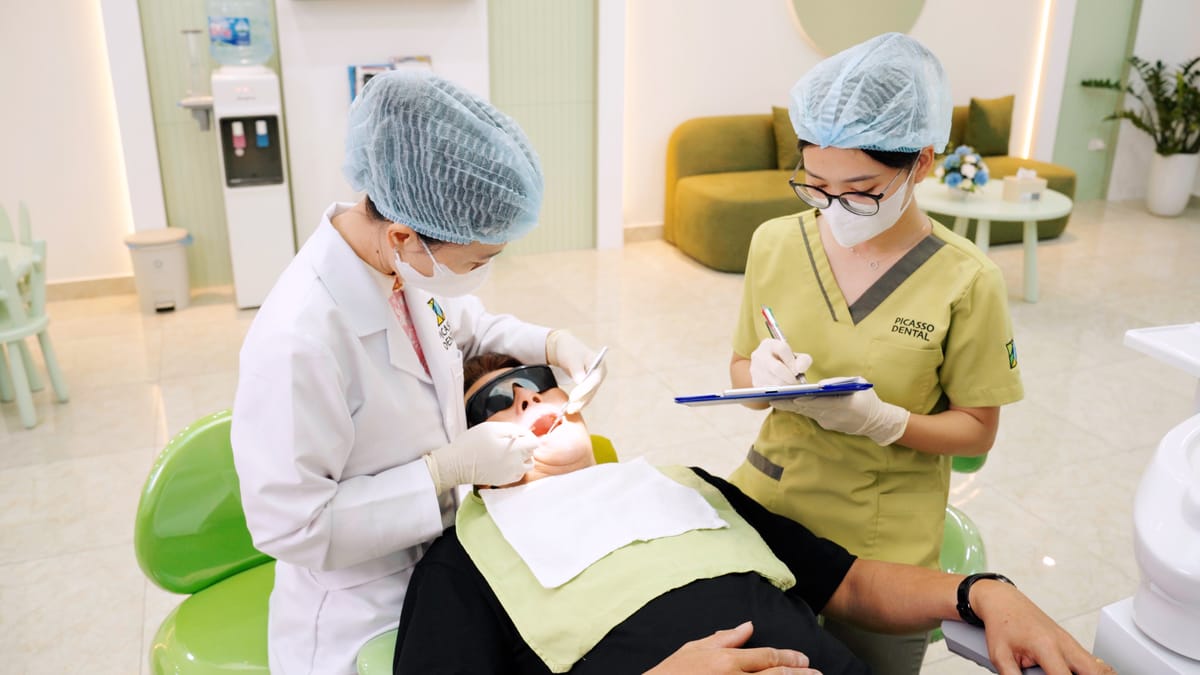
Patients arriving at Serenity International Dental Clinic from Australia are often genuinely puzzled. They’ve been quoted a substantial sum per implant back home. Here in Hanoi, the same procedure — same Nobel Biocare or Straumann implant, same surgical protocol, same ceramic crown — costs a fraction of that. The savings on a full-arch case can be very significant. See current pricing at picassodental.vn/dental-costs.
The immediate question is always the same: what’s the catch?
The honest answer is that there isn’t one — not in the way most patients fear. The price difference is structural. It has nothing to do with shortcuts in materials, sterilisation, or clinical expertise. It reflects ten distinct economic and systemic factors that separate the Vietnamese dental market from Australia’s.
Understanding those factors isn’t just reassuring — it’s the foundation for making a genuinely informed decision about dental work in Vietnam. Australian patients who want to compare the same procedure in AUD can review dental implants for Australian patients at our sister site, Vietnam Dental Holiday.
1. Lower Cost of Living Reduces Clinic Operating Costs
TL;DR: A central Sydney or Melbourne dental practice pays substantial commercial rent every month. A premium Ba Dinh location in Hanoi costs a fraction of that, and every other overhead — utilities, cleaning, consumables — is priced against Vietnam’s cost base. Lower operating costs let procedure prices fall without margins becoming unsustainable.
The single largest driver of dental pricing in any country is the cost of running a clinic. In Sydney or Melbourne, a dental practice pays substantial commercial rent in central locations. Staff costs, utilities, cleaning contracts, insurance — every overhead expense is pegged to Australian living costs.
In Hanoi, those same expenses exist at a fraction of the price. A well-equipped clinic in a premium Ba Dinh address — such as our location at 16 Chau Long — costs a fraction of what an equivalent Sydney address would cost. Utilities, maintenance staff, and consumables are all priced against Vietnam’s cost base, not Australia’s.
When operating costs are lower, the procedure cost can be lower without reducing margins to the point where the business becomes unsustainable. The clinic isn’t subsidising your treatment — it’s operating in a different economic environment.
2. Dentist Salaries Are Lower but Training Is Equivalent
TL;DR: Australian implant specialists earn a high six-figure salary; their Vietnamese counterparts earn far less in absolute terms — but training quality is equivalent. Many of Hanoi’s leading implantologists hold postgraduate qualifications from German, US, South Korean, or French universities. The salary gap reflects local purchasing power, not clinical competence.
This is the factor that causes the most concern — and the most misunderstanding. In Australia, a specialist implant dentist may earn a substantial salary per year. In Vietnam, a highly qualified implant surgeon earns significantly less in absolute terms.
But that salary difference does not reflect a difference in training quality. Vietnam’s dental training system follows internationally recognised standards. Many of Vietnam’s leading implantologists hold postgraduate qualifications from universities in Germany, the United States, South Korea, and France. Continuing professional development in Vietnam is rigorous and internationally connected.
The salary difference is purely a function of purchasing power and local economic conditions — not of clinical competence. A Vietnamese dentist earning a fraction of an Australian dentist’s salary is often living at a comparable or higher standard of living relative to their local economy.
For patients, this means the human expertise involved in placing your implant is equivalent — while the cost of that expertise, billed against a Vietnamese cost base, is dramatically lower. See our dental costs guide for a full breakdown.
3. Lab Costs Are a Fraction of Western Prices
TL;DR: An Australian dental lab charges a significant fee per implant crown. Vietnamese labs produce equivalent-quality work — including digitally milled zirconia — at a fraction of that cost. Hanoi labs already export to European and American practices at local pricing, so the same labs serve domestic clinics on the same cost base.
The crown or prosthetic component that sits on top of your implant is fabricated in a dental laboratory. In Australia, the lab fee for a single implant crown — fabricated domestically — is a significant cost. That fee is passed through to the patient, often with a clinical markup.
Vietnamese dental laboratories produce work of equivalent quality at dramatically lower cost. Hanoi and Ho Chi Minh City have a well-developed dental laboratory sector serving both domestic and international export markets. Labs producing crowns, abutments, and full-arch prosthetics for European and American dental practices do the same work for Vietnamese clinics at local pricing.
At Serenity International Dental Clinic, we use in-house and partner laboratories that meet international standards — including digital milling of zirconia crowns — without the cost structure of a Western lab.
4. No Insurance Billing Overhead
TL;DR: Insurance administration adds 15–25% to the operational cost of an Australian dental practice — pre-approvals, disputed claims, dedicated billing staff. Vietnamese clinics operate almost entirely on direct-pay, so that overhead simply doesn’t exist. Patients aren’t paying for a billing department they don’t need.
In Australia, a significant portion of a dental clinic’s administrative budget is consumed by insurance billing. Processing private health insurance claims, managing pre-approvals, handling disputes, and maintaining the administrative staff to navigate multiple insurer systems is genuinely expensive. Industry estimates suggest that insurance administration adds 15–25% to the operational cost of an Australian dental practice.
In Vietnam, dental clinics operate almost entirely on a direct-pay basis. International patients pay directly — no insurer involvement, no pre-approval process, no billing department, no disputed claims. The administrative infrastructure required to run a Vietnamese clinic is lean by comparison.
That overhead reduction flows directly into procedure pricing. You’re not paying for a billing department you don’t need.
5. Government Healthcare Subsidies Keep Infrastructure Costs Low
TL;DR: Vietnamese dental graduates leave training without the enormous debt load that drives Australian fees upward for decades. State subsidies for medical education and infrastructure keep underlying costs low across the healthcare sector — costs that Australian clinics must bake into every procedure.
Vietnam’s government maintains significant involvement in healthcare infrastructure — hospital construction, medical education subsidies, public health investment, and regulatory frameworks that keep certain costs low across the healthcare sector. These structural subsidies don’t directly reduce private dental clinic fees, but they do support the underlying cost environment in which those clinics operate.
Medical training, for example, is partially subsidised by the Vietnamese state, which means dental graduates enter the workforce without the enormous debt load that Australian dental graduates often carry. That debt load — and the decades of high earnings required to service it — is a significant driver of Australian dental fees that simply doesn’t exist in the same form in Vietnam.
6. Same Implant Brands Are Available at Lower Margins
TL;DR: Picasso Dental Clinic uses the same Nobel Biocare (Sweden/USA), Straumann (Switzerland), and Osstem (South Korea) implants found in Australian practices. The titanium fixture itself costs a similar wholesale price worldwide — the gap is in markup, not hardware. Lower overheads compress the margin without compromising the implant.
One of the most common misconceptions about dental tourism is that overseas clinics use inferior implant brands. At Serenity International Dental Clinic, we use the same premium implant systems available in Australia: Nobel Biocare, Straumann, and Osstem.
These implants are manufactured in Switzerland, Germany, and South Korea respectively and are shipped globally. The implant component itself — the titanium fixture — costs a similar wholesale price wherever in the world it is purchased.
The difference is in the markup. Australian dental practices, operating with higher overheads and within a market with fewer competing implant providers, apply a higher margin to the implant component. In Vietnam, a competitive market and lower overheads mean that margin is compressed — without compromising the implant itself.
When you receive a Nobel Biocare implant in Hanoi, you are receiving the same Nobel Biocare implant that would be used in Sydney. Visit our dental implants service page for more on the brands we use.
7. Competition Among Clinics Keeps Pricing Sharp
TL;DR: Hanoi, Da Nang, and Ho Chi Minh City have dense, competitive dental markets — patients can and do compare clinics, request second opinions, and negotiate. Australia’s dental sector at the premium end is far less competitive, with fewer specialist practices per capita and limited choice in regional areas. Vietnamese market dynamics keep prices honest.
Hanoi, Da Nang, and Ho Chi Minh City all have competitive dental markets with a large number of qualified clinics serving both domestic and international patients. That competition — particularly among international-standard clinics targeting dental tourists — exerts significant downward pressure on pricing.
In Australia, the dental market is less competitive at the premium end. Fewer specialist implant practices, higher barriers to entry, and lower patient volume per practice means that clinics have more pricing power. Patients in regional Australia often have very limited choice, which further reduces competitive pressure.
In Vietnam’s major cities, patients can and do compare clinics, request second opinions, and choose based on price-quality trade-offs. That market dynamic benefits patients — and it’s part of why dental work in Vietnam has become a major industry.
8. Vietnam’s Dental Education Produces Internationally Trained Specialists
TL;DR: Vietnam’s leading dental schools — including Hanoi Medical University and University of Medicine and Pharmacy in HCMC — meet international curriculum standards. A high proportion of Vietnam’s implant specialists hold fellowships from Germany, the US, France, South Korea, or Japan, with active memberships in ICOI and the ITI (International Team for Implantology).
Vietnam has invested significantly in dental education over the past two decades. The country’s leading dental universities — including the University of Medicine and Pharmacy in Ho Chi Minh City and Hanoi Medical University — produce graduates who meet international curriculum standards.
More importantly, Vietnam has a strong tradition of postgraduate study abroad. A high proportion of Vietnam’s implant specialists have completed fellowships or master’s programmes in Germany, the US, France, South Korea, or Japan. Many have attended international implant congresses and maintain memberships in bodies such as the International Congress of Oral Implantologists (ICOI) and the ITI (International Team for Implantology).
Clinical outcomes data from established international-standard clinics in Vietnam is consistent with outcomes reported in Western dental literature. The expertise exists — it’s just priced against a different economic backdrop.
9. Currency Exchange Multiplies Your Purchasing Power
TL;DR: The Australian dollar buys a large number of Vietnamese Dong, and Vietnamese clinics typically quote international patients in USD. Even with USD/AUD volatility, the exchange rate amplifies an already structural saving — the same Nobel Biocare implant procedure costs a fraction in Hanoi of what it costs in Sydney, making it a paid-from-savings, not paid-from-credit, decision.
For Australian patients, the currency conversion itself is a significant component of the savings. The Australian dollar currently buys a large amount of Vietnamese Dong. That exchange rate means that even if a Vietnamese clinic’s fees were identical in local currency terms to what you’d pay in Australia, the AUD cost would be a small fraction of the domestic price.
Of course, Vietnamese clinics quote in USD for international patients, and the USD/AUD exchange rate is the relevant comparison. But that exchange rate still works significantly in favour of Australian visitors. When the same Nobel Biocare implant procedure costs a fraction in Hanoi of what it costs in Sydney, the exchange rate amplifies savings that are already structural.
Patients who travel to Vietnam for dental implants and veneers frequently find that the treatment cost — including flights and accommodation for a two-week trip — is still substantially less than the domestic treatment cost alone.
10. The Absence of Dental Insurance Markup Eliminates 20–30% Cost Inflation
TL;DR: In Australia, third-party insurance payment inflates list prices 20–30% across the dental market — a well-documented healthcare-economics phenomenon. Vietnam’s dental market is almost entirely direct-pay, so prices reflect what patients actually pay from their own funds. There’s no list-price-inflation game to fund insurer negotiations.
In Australia, the existence of private dental insurance has paradoxical effects on dental pricing. Because patients with insurance are somewhat price-insensitive — they believe their insurer is absorbing the cost — practices in insurance-dominated markets often set higher list prices. This is a well-documented phenomenon in healthcare economics: the presence of third-party payment inflates list prices across the market, even for patients who pay out of pocket.
In Vietnam, the dental market is almost entirely direct-pay. Prices are set against what patients — both local and international — will actually pay from their own funds. That direct-pay discipline keeps prices honest and transparent.
The result is that the Vietnamese dental market doesn’t carry the 20–30% price inflation that insurance-mediated markets tend to accumulate over time. You’re seeing the real cost of the procedure, not a list price inflated for insurance negotiation purposes.
What This Means for Australian Patients
These ten factors combine to produce a pricing differential that is genuine, stable, and structurally sound. Dental implants in Hanoi are not cheap because corners are being cut. They are affordable because the economic environment that produces them — from training costs to lab fees to clinic overheads to insurance administration — is simply different from Australia’s.
Serenity International Dental Clinic operates across Hanoi (16 Chau Long, Ba Dinh), Da Nang, and Ho Chi Minh City, providing internationally trained dental care with premium implant brands, full digital diagnostics, and English-language treatment coordination for international patients.
For patients considering making the trip, the key questions are not about quality — they are about logistics, timing, and choosing the right clinic. Our dental costs guide covers pricing in detail, and our dental tourism overview explains what to expect from the process. For patients who have already started researching, the 10 most common dental tourism mistakes is essential reading before you book.
The savings are real. The quality is real. The decision simply requires the same due diligence you’d apply to any significant healthcare choice.
More Hanoi Implant Guides for Australian Patients
Curious how these numbers play out for your specific case? These deeper guides break down implant pricing, recovery, and travel logistics by brand and by procedure.
Pricing & Value
- Straumann Implant Cost in Hanoi: Guide for Australian Patients
- Nobel Biocare Implant Cost in Hanoi: Guide for New Zealand Patients
- Osstem Implant Cost in Hanoi: Guide for Australian & New Zealand Patients
- Dentium Implant Cost in Hanoi: Guide for Australian Patients
- Upper-Arch All-on-4 Cost in Hanoi: Guide for New Zealand Patients
- Bone Graft and Implant Package Cost in Hanoi: Guide for Australian Patients
- Sinus Lift Plus Implant Cost in Hanoi: Guide for New Zealand Patients
- Implant, Abutment and Crown Cost Breakdown in Hanoi: Guide for Australian & New Zealand Patients
- Hidden Costs of an Overseas Implant Trip in Hanoi: Guide for Australian Patients
- Paying for Implant Treatment in AUD or NZD in Hanoi: Guide for New Zealand Patients
Procedure & Recovery
- How Long to Wait Between Implant Trips in Hanoi: Guide for New Zealand Patients
- Temporary Teeth During Implant Healing in Hanoi: Guide for Australian & New Zealand Patients
- Implant Swelling Day by Day in Hanoi: Guide for Australian Patients
- Implant Pain Day by Day in Hanoi: Guide for New Zealand Patients
- Soft-Food Plan After Implant Surgery in Hanoi: Guide for Australian & New Zealand Patients
- Warning Signs After Implant Surgery in Hanoi: Guide for New Zealand Patients
Travel Planning
- Remote Implant Consultation Before You Fly in Hanoi: Guide for Australian & New Zealand Patients
- Which X-Rays to Send Before an Implant Trip in Hanoi: Guide for Australian Patients
- Dental Records to Bring for Implant Treatment in Hanoi: Guide for New Zealand Patients
- Airport-to-Clinic Guide for Implant Patients in Hanoi: Guide for Australian & New Zealand Patients
Related Articles
9 Reasons Australians Save on Dental Treatment in Vietnam — a broader look at why Vietnam is the top destination for Australian dental tourists
Dental Work in Vietnam for Australians: Complete Cost Savings Guide
8 Reasons Vietnamese Dental Care Quality Rivals Much More Expensive Countries
Vietnam’s Dental Tourism Market Set to Reach USD 5.5 Billion by 2030
6 Reasons Dental Tourism to Vietnam Has Grown 40% Since 2022
Vietnam’s Affordable Healthcare System: Ready for Global Health Tourism
5 Reasons Expats Living in Vietnam Choose Serenity International Dental Clinic

Medically reviewed by Dr. Emily Nguyen, DDS — Implant & Cosmetic Dentistry
Founder and Principal Dentist of Picasso Dental, with 15+ years in implant surgery, periodontics and full-arch (All-on-4) rehabilitation. Read full bio
Last reviewed: September 27, 2026